South African Design: Past and Present
24 Jun 2026
- South African Design: Past and Present reveals the nature of the country’s design identity.
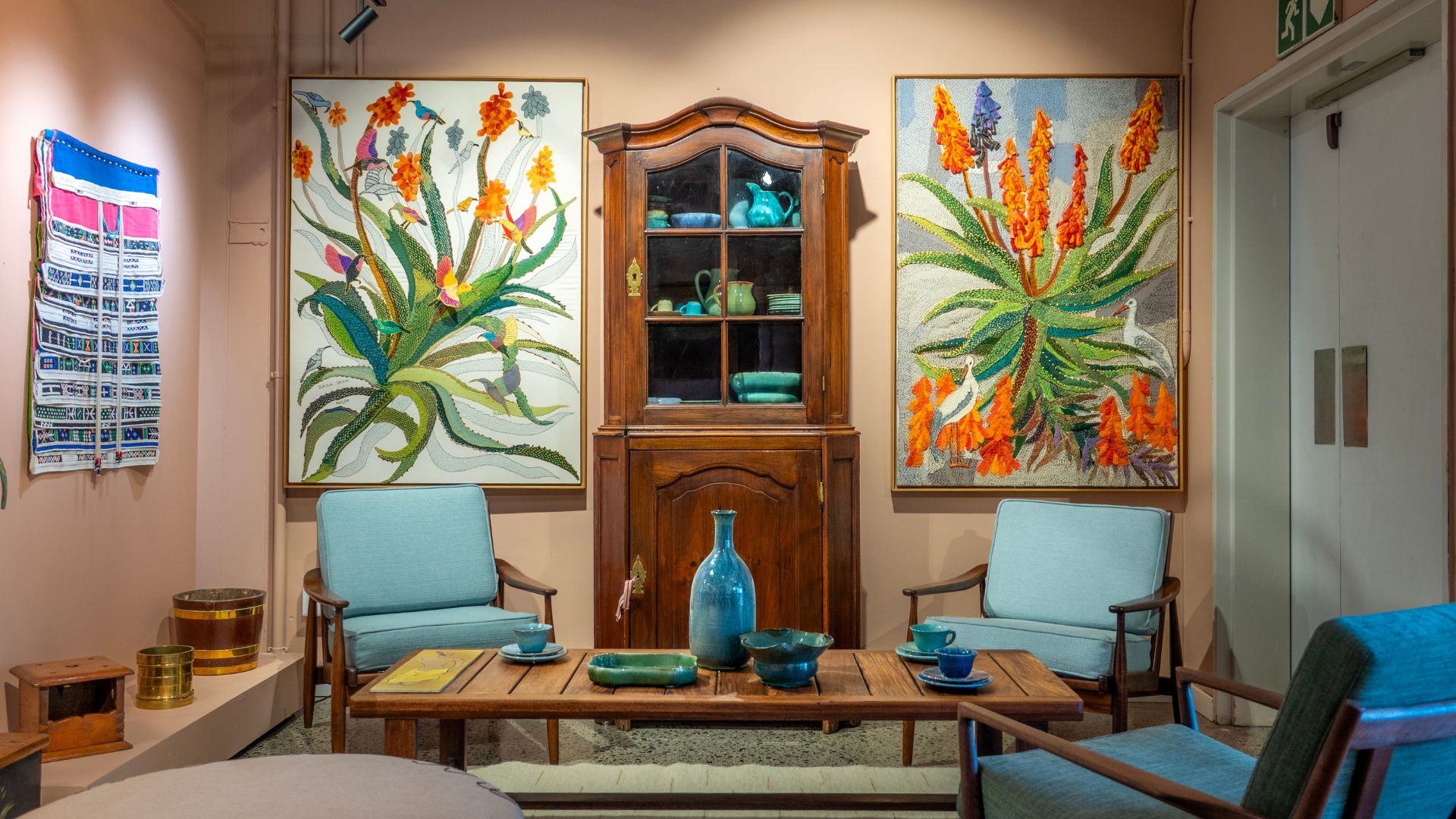
- Interior designer Justin Van Breda has curated gallery scenes that take visitors on a visual journey.
- Ceramics reveal the breadth of South African making traditions, from Rorke’s Drift and Kalahari Studio to Ardmore and Linn Ware.
- The 19th-century Transvaal Imperial brass bushel recalls a unique chapter in South Africa’s political history.
Strauss and Co is delighted to present South African Design: Past and Present, a timed-online auction running from 5 June to 24 June 2026. The sale brings together top-drawer local makers and designers covering ceramics, weaving and glass, sculpture and furniture.
Alongside the June Interiors sale, this month’s special design focus has been brought to life by London interior designer, and Craft School South Africa founder, Justin van Breda. Selecting a key paint colour for each room and an anchor piece for every scheme, Justin has created a gallery experience built on visual connections rather than categories. “I wanted to maintain a good intersection between art and furniture, anchoring with major artworks and ensuring that the eye never stops journeying,” he explains.
These visual stories remind us that South African design resists easy definition. It draws on social and historical influences, heritage craft practices, material traditions, resourcefulness, innovation and a profound sense of place. It’s a design culture rich in narrative and embracing of its multiplicity.
Blending contemporary with historical or craft with design, Justin’s curation suggests that the strength of South African design lies in the conversations that occur between objects, histories and makers. For example, an 18th century Cape display cabinet (Lot 512, estimate R25 000 – R30 000) looks at home alongside a Casamento hand-stitched ottoman (Lot 505, estimate R45 000 – R50000). Likewise, Mash T’s beaded Tutu 2.0 pendants (Lots 492 & 493, estimate R9 000- R11 000 each), a Frystark mid-century modern dining suite (Lot 498, estimate R22 000 – R26 000) and jewel-like David Reade glass vessels (Lots 56-65) make beautiful companions.
The sale’s ceramics reveal the breadth of South African making traditions, from the indigenous narratives of a Kalahari Studio plate (Lot 404, estimate R3 000- R4 000) to the experimental forms of a Rorke’s Drift vessel (Lot 420, estimate R3 000 – R5 000). At the contemporary end of the spectrum, Lucie de Moyencourt’s joyful ceramic shells (Lot 54, estimate R5 000 – R30 000) demonstrate how local makers continue to reinterpret colour, form and pattern in distinctly personal ways.
Both Liz Lacey’s glass free form bowl (Lot 466, estimate R4 000 – R6 000) and Rodney Band’s wild olive bowl (Lot 482, estimate R45 000 – R50 000) disclose the expressive potential of material honesty and sculptural form. Similarly, Penny Gumbi’s Zulu pot (Lot 479, estimate R6 000 – R8 000) nods to minimalism while drawing on objects rooted in Zulu pottery traditions.
South African furniture design answers to functionality in varied forms, from the bold but lean aesthetic of a Tonic cabinet (Lot 495, estimate R15 000 – R20 000) to the vernacular identity of a Transvaal tambotie rusbank (Lot 514, estimate 20 000 – R22 000). The 19th-century Cape Riversdale cupboard (Lot 521, estimate R60 000 – R80 000), meanwhile, bears the inlaid block feet that are a hallmark of the region’s cabinetmaking tradition.
The auction also explores South Africa’s continuing dialogue between craft and contemporary design. Woven, beaded and textile traditions have become a deep current within South African design, with makers drawing on inherited skills to produce objects that feel entirely fresh. The same can be seen in contemporary art, where woven textiles are becoming a rising trend within the auction and art fair scene. The result is a design culture in which the boundaries between art, craft and design remain fluid.
Unlike many established European design traditions, South African design has developed through a convergence of indigenous knowledge, colonial influences, local materials and modern global perspectives. South African Design: Past and Present offers collectors and design professionals a window to acquire something that bears the unique imprint of the country’s makers.
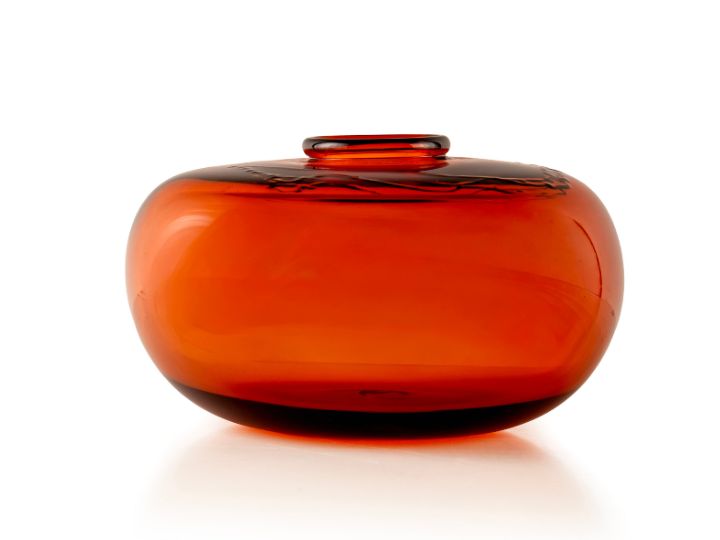
David Reade
Orange bulbous glass vase
R 4 000 – 6 000
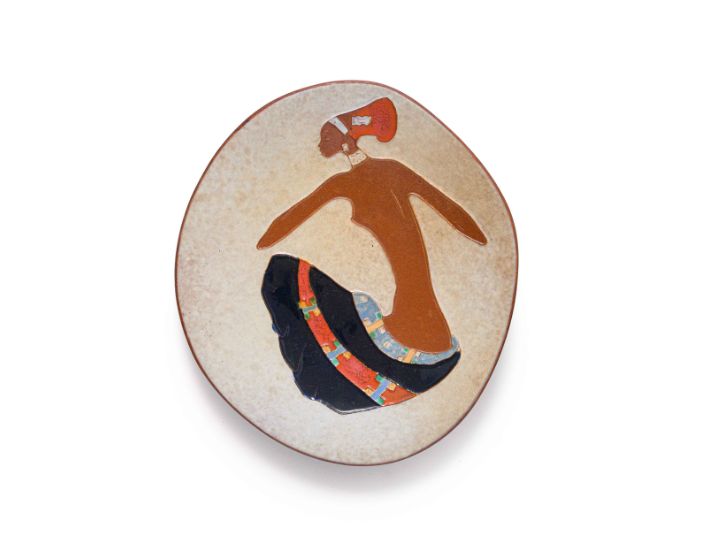
Kalahari Studio
Organic-shaped plate with figural motif wearing skirt and headdress
R 2 500 – 3 000
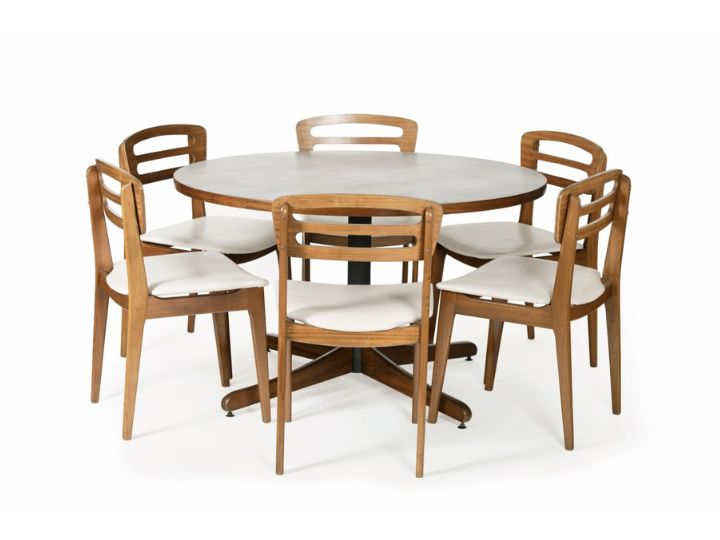
Frystark mahogany ‘Status’ dining suite, South Africa, mid-20th century
R 22 000 – 26 000
Current Press Releases
October
- 5 Oct 2026 Browse Strauss & Co October sales: Art, Books & Zines
- 7 Oct 2026 Raising a Glass to Excellence: Cape Winemakers Guild Auction Achieves R18 223 000
- 7 Oct 2026 Strauss & Co celebrates silver’s place in Cape history and the rituals of dining
- 7 Oct 2026 Repatriated Stern painting and unique Baselitz linocut lead Strauss & Co’s fourth International Sale
September
- 7 Sep 2026 Tim Atkin MW's SA Special Report Features Top Wines
- 17 Sep 2026 Competitive bidding drives strong results at Strauss & Co’s Cape Town Evening Sale
- 18 Sep 2026 September ART: artists living and working across Africa and the diaspora
- 25 Sep 2026 South African jewellers turn still life into wearable art for Strauss & Co Woordfees exhibition and sale
- 25 Sep 2026 Natural diamonds take centre stage at Strauss & Co
- 29 Sep 2026 Mid-century modern design leads strong Strauss & Co auction results
August
- 4 Aug 2026 Blue-chip South African art drives strong results at Strauss & Co
- 6 Aug 2026 Strauss & Co Celebrates Modern & Contemporary Art at Inaugural KZN Art Fair
- 7 Aug 2026 A Celebration of Walter Battiss and South African Printmaking in Strauss & Co's August Online Auctions
- 17 Aug 2026 42nd Cape Winemakers Guild Auction returns with its most diverse wine lineup yet: 58 rare wines will go under the hammer
- 26 Aug 2026 Mid-Century Modern: The Making of Modern Design
- 26 Aug 2026 Maggie Laubser, Irma Stern and Penny Siopis lead Strauss & Co’s flagship September sale
July
- 3 Jul 2026 Major Pierneef landscape and Kentridge tree studies anchor Strauss & Co’s July Evening Sale
- 7 Jul 2026 Strauss & Co July sales led by art critic, Sean O'Toole's selection
- 24 Jul 2026 Strauss & Co Sponsors Ceramics Western Cape’s 2026 Premier Award
- 27 Jul 2026 Welgemeend Art Month returns with a group exhibition exploring the journey from artistic idea to finished work
- 27 Jul 2026 Dreaming Impossible Things
June
- 2 Jun 2026 Record results for Sekoto and Siopis lead buoyant Strauss & Co Johannesburg sale
- 3 Jun 2026 Magnificent Diamond Jewellery Goes Under the Hammer at Strauss & Co
- 3 Jun 2026 Strauss & Co go live at Hermanus FynArts in 2026
- 8 Jun 2026 Strauss & Co June sales show strong Eastern Cape focus
- 8 Jun 2026 June Interiors: Furniture, Silver, Ceramics & Glass
- 9 Jun 2026 Strauss & Co offers private collection of Ardmore Ceramics
- 11 Jun 2026 Ugandan Artist Katesi Jacqueline Kalange is the 2026 Cassirer Welz Award Winner
- 12 Jun 2026 A curated survey of South African art | June Spotlight Sale
- 15 Jun 2026 Consignments invited for the second edition of Art Auction East Africa | Strauss & Co
- 22 Jun 2026 The Wines That Built South Africa
- 24 Jun 2026 South African Design: Past and Present
- 25 Jun 2026 Strong results for modern and contemporary art and design in Strauss & Co’s June sales
May
- 8 May 2026 100 Years: Lalique, Silver and Art from the collection of Vera Dubin.
- 13 May 2026 Important paintings by Gerard Sekoto and Penny Siopis in Strauss & Co’s flagship Johannesburg sale
- 19 May 2026 Rare works by Jean Welz from the collection of his son, Strauss & Co’s founding director Stephan Welz, poised to go under the hammer
- 19 May 2026 Historical wines from Bouchard Pere et Fils
- 19 May 2026 Magnificent Jewels: Where Necklaces Shape the Modern Jewellery Collection
- 27 May 2026 Major works by Sekoto and Siopis headline Strauss & Co’s flagship modern and contemporary sale
April
- 8 Apr 2026 Strauss & Co April auctions offer historically important African works
- 10 Apr 2026 The Poets Are Working
- 21 Apr 2026 Heirloom Futures: A Contemporary Fashion Exhibition and Benefit Auction at Norval Foundation
- 28 Apr 2026 Strauss & Co May Auctions Lead with Unmissable Photography Collection
March
- 3 Mar 2026 Artist Proof Studio at 35: A continuing commitment to artists, access and excellence
- 4 Mar 2026 Solid auction result in February for private collection underscores Strauss & Co’s specialist leadership in handling single-owner sales
- 5 Mar 2026 Strauss & Co once again brings significant collection to market in March
- 10 Mar 2026 Generations of Collecting: An Important Collection of Cape Silver, Oriental Ceramics, Furniture and Art
- 12 Mar 2026 Layered, Personal, Bold: The New Way To Wear Heritage, Presented By Strauss & Co’s Uncovered Classics Jewellery Auction
- 18 Mar 2026 Important private collections feature in Strauss & Co March sales of modern and contemporary art
- 18 Mar 2026 Strauss & Co flagship March auctions of modern and contemporary art open with Sterns from Boiskin Art Collection
- 18 Mar 2026 Uncovered Classics: Strauss & Co Explores The Wearing Of Stories
- 30 Mar 2026 Strauss & Co brings the magic to Cape Town, realising superb results across the week’s sales
February
- 4 Feb 2026 Faces of Cape Town: Portraits by Irma Stern
- 5 Feb 2026 Georgina Jaffee’s landmark collection of pan-African art explores hair as subject, material and metaphor
- 5 Feb 2026 Strauss & Co’s February Sale Explores the Story of Contemporary Art Through A Collector’s Legacy
- 5 Feb 2026 Portway to Cohen: A Collector’s Legacy and Other Properties
- 9 Feb 2026 A fine collection of wines from the Rhône Valley, and my late friend, David Brice
- 9 Feb 2026 Strauss & Co Total Art Sales Increase by 26% in 2025
- 16 Feb 2026 Fibre & Form - celebrating Africa’s vibrant woven traditions
- 26 Feb 2026 Beyond Visibility: A Method of Inquiry
January
December
- 19 Dec 2025 2025 Chairperson’s Report
November
- 4 Nov 2025 Strauss & Co unearths rare Single Cask Brandies in an exclusive Cape Fine Brandy Auction
- 4 Nov 2025 The Starcke Collection of African Art to Go Under the Hammer at Strauss & Co
- 4 Nov 2025 Strauss & Co November Flagship Sales offer landmark museum-exhibited South African modern art including Pemba, Laubser and Preller
- 7 Nov 2025 Tanzanian modernists shine in the inaugural Art Auction East Africa
- 11 Nov 2025 Suite of Rare Early Wildlife Drawings by William Kentridge from the Engen Collection poised to go under the hammer at Strauss & Co
- 14 Nov 2025 November Auction Week | Johannesburg, 17-19 November 2025
- 18 Nov 2025 Strauss & Co Achieves Exceptional Results for Rare Early William Kentridge Wildlife Drawings from Engen Collection
- 27 Nov 2025 Strauss & Co offers accessible works in year-end auctions
October
- 7 Oct 2025 Q3 Update and Announcement by Frank Kilbourn
- 7 Oct 2025 Reservoir curates 2025 Toyota Stellenbosch Woordfees Benefit Auction with Strauss & Co
- 9 Oct 2025 Stern portrait and Picasso seascape highlight Strauss & Co’s third International Sale
- 15 Oct 2025 Strauss & Co partners with Art Auction East Africa to bolster secondary market for East African art
- 24 Oct 2025 Celebrating Silver - including The Mary Eleanor Hibbert Collection Part II
- 27 Oct 2025 Foschini and RICH MNISI celebrate 100 x 10, turning fashion into philanthropy
- 27 Oct 2025 Gary Player Signature BMW 7 Series up for Auction
- 29 Oct 2025 Strauss & Co establishes a new benchmark price for Stern portraits of female sitters
September
- 4 Sep 2025 Bordeaux, Burgundy, Champagne, the Rhône Valley, Iberia and additional finds from around the world
- 4 Sep 2025 Mid-Century Modern Furniture & Design: A Journey Through Design History
- 9 Sep 2025 Tretchikoff: New Discoveries of Exceptional Beauty
- 18 Sep 2025 September ART and Embodied: A Selection of Works Exploring the Figure
- 18 Sep 2025 Strauss & Co Fine Wine Auction: Engen Cellar Collection
- 22 Sep 2025 The Luxury Edit: Designer Handbags and Accessories
- 25 Sep 2025 Strauss & Co announces programme for 2025 Toyota Stellenbosch Woordfees
- 26 Sep 2025 The Fine Jewellery Sale
August
- 1 Aug 2025 August Online Auctions - Horizons: Selected South African Landscapes and Seascapes and August ART
- 19 Aug 2025 15 Years of the Cassirer Welz Award and announcement of the 2025 Award Winner
- 20 Aug 2025 Strauss & Co Fine Wine Auctions Redefines the Market
- 25 Aug 2025 Rare works by celebrated Durban painter Andrew Verster to be offered in September sale
- 29 Aug 2025 Two Cape icons, Stern and Tretchikoff, highlights of Strauss & Co’s flagship Cape Town auction series, including single-artist sale for Verster
July
- 3 Jul 2025 Landmark Exhibition: Irma Stern: A Modern Artist between Berlin and Cape Town
- 3 Jul 2025 Eastern Cape Echoes: Selected Works from Tsitsikamma to Lusikisiki, July ART, Johannesburg spotlight sale & more
- 4 Jul 2025 Welgemeend Art Month announces the title and focus on their anchor exhibition for 2025
- 9 Jul 2025 Strauss & Co auction series focuses on contemporary ceramics, Pierneef prints and artworks collected by soprano Mimi Coertse
- 16 Jul 2025 The Enduring Allure of Emerald Jewellery
- 16 Jul 2025 The highly anticipated Heat Winter Arts Festival program has been announced
- 24 Jul 2025 Auction heavyweights Pierneef and Hylton Nel deliver solid results at Strauss & Co’s live sales in Johannesburg
- 29 Jul 2025 Auction Results – IMPR: Etchings and Linocuts by JH Pierneef
- 30 Jul 2025 Welgemeend Art Month returns with major exhibition and bold new pledge fund
June
- 4 Jun 2025 The Engen Collection: Mapping South African Art Through Corporate Patronage
- 8 Jun 2025 June ART: Modern and Contemporary Art
- 9 Jun 2025 Making Impressions: Deborah Bell & David Krut, Collaboration in Print
- 12 Jun 2025 High-value works by Warhol, Stern and Kentridge anchor Strauss & Co’s exciting winter auction
- 12 Jun 2025 What the Fook? A landmark single-artist auction from Strauss & Co celebrates the inspired life of Walter Battiss
- 19 Jun 2025 Mary Eleanor Hibbert Cape Silver Collection': A One-of-a-Kind Cape Silver Collection
- 25 Jun 2025 South African Design: Past & Present - A Journey Through Materials and Memory
- 25 Jun 2025 Abstract Visions Realised: Engen Collection achieves R1.7 million at Strauss & Co
May
- 2 May 2025 May ART with Selected Works from the Chris Tugwell and Matthys Swanepoel Collections
- 2 May 2025 Linn Ware: Celebrating the Ceramics of Olifantsfontein
- 5 May 2025 Leading Icons of South African Modernism
- 5 May 2025 Tretchikoff’s Lady from the Orient (1955) leads Strauss & Co’s flagship sale
- 14 May 2025 Honouring The Golden Legacy of Jewellery and Its Grandeur
- 22 May 2025 Strauss & Co’s Bold Mix of Global Icons and Rising Stars Comes to Market This May
- 28 May 2025 Vladimir Tretchikoff Painting Smashes World Auction Record at Strauss & Co Sale in Johannesburg
- 30 May 2025 New Pan-African Collaboration Aims to Promote East African Moderns to Wider Global Market
April
- 1 Apr 2025 Gerard Sekoto’s 1947 self-portrait is the toast of the global north
- 11 Apr 2025 April ART: Expressions of Labour and Form
- 14 Apr 2025 A Celebration of Diversity in Fine Cape Wine: Three New Icon South African Producers
March
- 14 Mar 2025 Return of the Big Five - Pioneer modernists headline Cape Town Auction Week
- 20 Mar 2025 March Interiors: A Timed Online Sale Featuring Exceptional Antiques
- 25 Mar 2025 A Timeless Selection of Heirlooms and Historical Treasures
- 27 Mar 2025 Paris Calling: Strauss & Co’s Five-sale Cape Town Auction Week Celebrates French Influence on South African Art
February
- 3 Feb 2025 Woven Legacies: Tradition & Innovation
- 7 Feb 2025 Strauss & Co’s Perspectives on Africa is a Journey Through Modern and Contemporary Art
- 15 Feb 2025 Strauss & Co’s marquee live auction Perspectives on Africa features top modern and contemporary art
- 21 Feb 2025 The Norval Sovereign African Art Prize 2025
- 26 Feb 2025 Strauss & Co’s February Sales record strong collector interest in Modernist Painting and Contemporary Mohair Tapestry
- 28 Feb 2025 March ART - A Tribute to South Africa-influenced Art with Special Focus on writer Melvyn Minnaar
January
- 21 Jan 2025 Kalahari Studio: Honouring the Past, Shaping Legacies
- 31 Jan 2025 February ART — An Array of Mediums and Rare Archival Works
December
- 2 Dec 2024 Celebrate the Festive Season with a Unique Christmas-themed auction, “Twelve Days of Christmas”
- 12 Dec 2024 Botterblom Collection by Frances vH Mohair Studio
November
- 1 Nov 2024 Celebrating the 2024 Earthshot Prize through the exhibition – A Reinvented Vocabulary: The Recycled in Contemporary Art
- 6 Nov 2024 The Everard Group Phenomenon
- 14 Nov 2024 Irma Stern portrait of an elite Rwandan woman tops Strauss & Co’s Johannesburg Flagship Auction
- 15 Nov 2024 Four Curated Online Sales in November
- 27 Nov 2024 Strauss & Co launches a BUY NOW DROP SHOP with a "Midnight-to-Midnight Sale"
October
- 1 Oct 2024 October ART - a feast of art, sculpture, lithography and books
- 2 Oct 2024 Strauss & Co unearths rare Single Cask Brandies in a new and exclusive Cape Fine Brandy Auction
- 9 Oct 2024 Strauss & Co’s annual International Sale returns with bold works by modernist icons Chagall and Picasso
- 11 Oct 2024 Strauss & Co Announces an Exceptional Spring Auction Highlighting Stunning Gems
- 17 Oct 2024 Strauss & Co Unveils Celebrating Silver: Timeless Luxury Auction
- 24 Oct 2024 Bidders from 20 countries bring global enthusiasm to Strauss & Co’s International Sale
- 25 Oct 2024 Honouring the legacy of Dr Conrad Strauss
- 28 Oct 2024 Superb portraits by Gratrix, Kentridge, Muholi, Pemba and Stern lead Strauss & Co’s November Flagship Sales
September
- 3 Sep 2024 September ART
- 4 Sep 2024 A peak-period Tretchikoff painting, suffused with beauty and glamour, leads Strauss & Co’s September Auction Week
- 18 Sep 2024 Auction Record for Tretchikoff
- 24 Sep 2024 Works by Chagall and Picasso headed for Toyota Stellenbosch Woordfees, courtesy of Strauss & Co
- 25 Sep 2024 Strauss & Co hosts “YGGDRASIL” at Toyota Stellenbosch Woordfees 2024
- 30 Sep 2024 LIGHTING UP LONDON THIS OCTOBER: LOOKING TOWARDS FREEDOM – Womxn Artists from Africa
August
- 13 Aug 2024 The Appointment of Strauss & Co's Advisory Board Members
- 26 Aug 2024 Ways of Seeing: South African and International Photography
- 30 Aug 2024 From ceramics to tapestry, painting to photography, furniture to glass, Strauss & Co announces its rich spring auction programme
July
- 10 Jul 2024 Sculpted Narratives: Exploring the malleable qualities of ceramic art
- 12 Jul 2024 Debut Pretoria Auction at Pierneef’s Former Home & Studio
- 22 Jul 2024 Pretoria auction confirms sustained collector appetite for Nico Masemola, Hylton Nel and J.H. Pierneef
- 23 Jul 2024 Together for Pangolins: Charity Auction
- 27 Jul 2024 August Art Month at Welgemeend
- 31 Jul 2024 August ART, with a focus on art from KwaZulu-Natal
June
- 3 Jun 2024 Sweets & Fortified Wine Auction: a rich offering of vintage wines that have stood the test of time
- 4 Jun 2024 Revisiting the work of South African painter Lettie Gardiner in Strauss & Co’s diverse June online ART sale
- 5 Jun 2024 Announcing the 2024 Cassirer Welz Award Recipient
- 9 Jun 2024 Strauss & Co Presents: South African Design, Past & Present - A Celebration of Artisanal Excellence
- 10 Jun 2024 The people have voted: SA artists at the 2024 Venice Biennale come up tops at Strauss & Co’s Johannesburg auction
- 19 Jun 2024 Art Rooted in Nature: A Celebration of South African Art inspired by the Natural World
- 28 Jun 2024 Strauss & Co auction celebrates the heritage and global impact of Eastern Cape artists
- 29 Jun 2024 Single-Owner Private Collection of Fine Wines from Bordeaux, Rhône Valley, South Africa, Italy and more going under the hammer.
May
- 6 May 2024 Art for all Seasons in Strauss & Co’s May Online Sale including a selection of works from the Cecil and Thelma Skotnes Estate
- 7 May 2024 Single-Owner Private Collection of Fine Wines from Burgundy, Bordeaux, Rhône Valley, and More to Be Auctioned by Strauss & Co
- 8 May 2024 A major Stern painting from 1930 leads Strauss & Co’s diverse catalogue of modern and contemporary art at its May sale in Johannesburg
- 8 May 2024 Strauss & Co expands its regional presence, offering valuations, sales & talks across the country
- 9 May 2024 The Diamond Edition Day & Evening Sale
- 17 May 2024 The irrepressible Irma Stern, a star of multiple editions of the Venice Biennale, leads Strauss & Co’s Johannesburg Evening Sale
- 22 May 2024 Two important drawings by William Kentridge, an artist revered globally, at Strauss & Co auction in Johannesburg
- 31 May 2024 Strauss & Co Announces Nature-Inspired Art Auction to Coincide with Hermanus Fynarts Festival 2024
April
- 2 Apr 2024 Myths, Legends, Deities: Strauss & Co explores historical and cultural narratives through art
- 8 Apr 2024 Through an African Lens: Strauss & Co announces sponsorship and event guide to 2024 Venice Biennale
- 16 Apr 2024 Do you know the value of your art? Strauss & Co to host valuation day in Windhoek
- 26 Apr 2024 Reflections on how the 2024 Venice Biennale is an inflection point for change - Frank Kilbourn, Executive Chairperson, Strauss & Co
March
- 4 Mar 2024 Important Collection of original works by 19th-Century Artist Thomas Bowler Goes Up for Auction
- 4 Mar 2024 ART WORLD LEADERS: Marlene Dumas, Irma Stern & Lisa Brice this month at Strauss & Co
- 4 Mar 2024 The Venice Connection: Strauss & Co auction features more than a dozen artists feted at the Venice Biennale since 1950
- 7 Mar 2024 Strauss & Co to offer a highly important Zanzibar portrait by Irma Stern with excellent museum credentials
- 25 Mar 2024 A Collector’s Cornucopia: Furniture, Ceramics & Silver at Strauss & Co
- 26 Mar 2024 Brisk trade at Strauss & Co’s late-summer auction culminates in red-hot prices for works by Brice, Preller, Stern and Sekoto
February
- 5 Feb 2024 Rhône-Themed Auction kicks off first Strauss & Co wine auctions for the year
- 9 Feb 2024 Woven Legacies – Celebrating the evolution of artisanal craftsmanship
- 12 Feb 2024 Strauss & Co Opens in London
- 26 Feb 2024 Strauss & Co is a vital contributor to Cape Town’s pulsating month of summer art activities
- 29 Feb 2024 But is it Surrealist? London audiences will finally get to see and debate Alexis Preller’s audacious symbolist paintings
- 29 Feb 2024 The 2014 Vintage plays the starring role in the Strauss & Co March wine auction
January
- 30 Jan 2024 A special focus on The White House Gallery in Strauss & Co’s online sale showcases rare international prints
- 30 Jan 2024 A new exhibition by Strauss & Co and Kalashnikovv Gallery celebrates the legacy of South African Modernist Alfred Thoba
- 30 Jan 2024 Chairperson's Report
- 31 Jan 2024 Important Cinga Samson painting leads 2024 edition of Strauss & Co’s collaborative African art auction