David Goldblatt
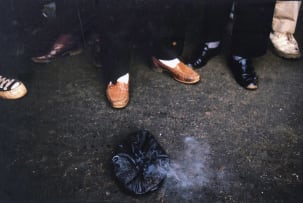
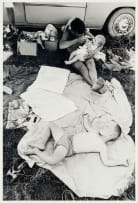
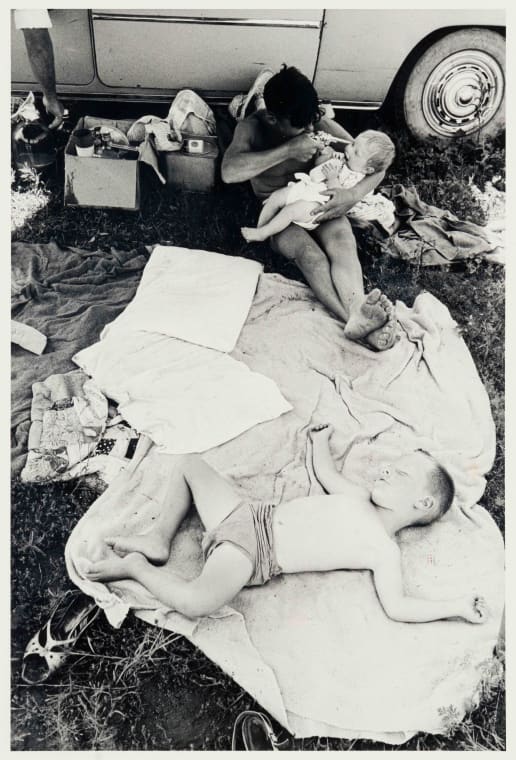
Picnic at Hartebeespoort Dam on New Year’s Day, Transvaal (North-West Province), 1965
About the SessionFraming a Nation: The Garth Walker Photography Collection and Other Properties presents a selection of photographs from the personal archive of acclaimed graphic designer and photographer Garth Walker. Born in Pretoria, he trained at Technikon Natal in the 1970s, where he met artist Stephen Inggs, a life-long friend. Walker emerged as a pivotal figure in South African graphic design and visual culture in the 1990s through his design firm Orange Juice Design. In 1995 he launched the influential print magazine i-jusi as a platform to showcase new graphic design, typography and illustration. Later issues were sometimes exclusively devoted to photography.
Prominent artists featured in i-jusi included Roger Ballen, Conrad Botes, David Goldblatt and Anton Kannemeyer. It has been exhibited in over 25 countries and is held in the collections of the Museum of Modern Art, New York, Victoria and Albert Museum, London, and Bibliotèque Nationale d'France, Paris. Beyond the magazine, Walker is best known for the unique, custom typeface he produced for the Constitutional Court of South Africa in 2004. Inspired by street typography and prison graffiti, his typography is featured on the court’s building façade.
A longstanding collector, notably of Zulu headrests and nineteenth-century KwaZulu-Natal photography, Walker began acquiring contemporary South African photography in the early 2000s. His choices were instinctual and guided by his interest in vernacular design and the country’s rich documentary photography tradition. He acquired early works by Pieter Hugo, Zanele Muholi and Guy Tillim, before their international rise to prominence. His collection includes personal documentary work by the award-winning photojournalists Jodi Bieber and Greg Marinovich, as well as an important photo from 1965 by David Goldblatt taken at Hartebeespoort Dam north of Johannesburg. The influence of American documentary registers in his holdings of Stephen Shore and Rosalind Fox Solomon.
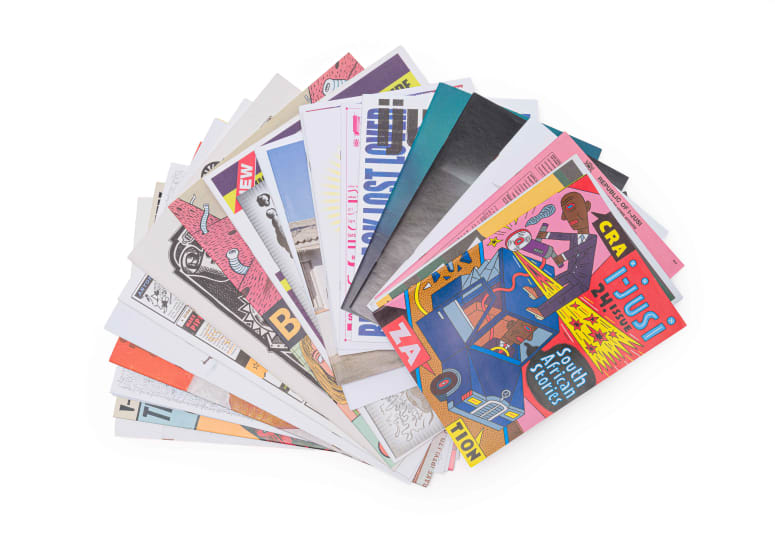
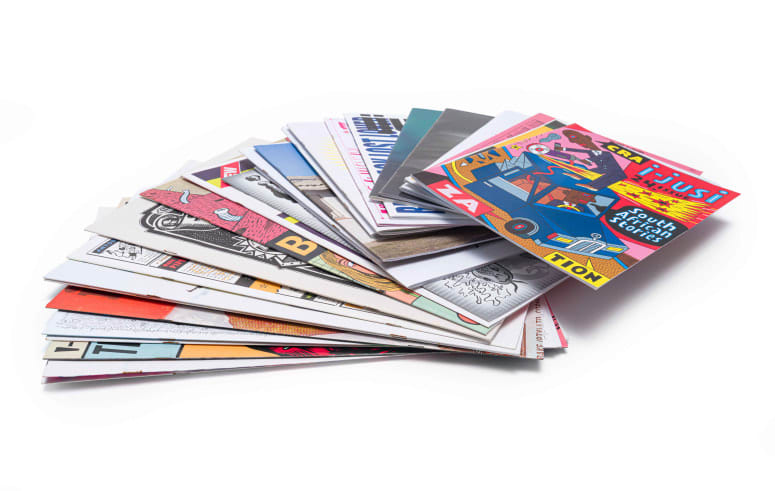
A highlight of this auction is the inclusion of i-jusi Portfolios #1, #2 and #3, produced to sustain the magazine’s independent publication and featuring seminal works by South African artists. Portfolio #3, with a photographic focus curated by Pieter Hugo, underscores the collaborative impulse shaping this material. The collection offers a rare opportunity to acquire works from a defining moment in the evolution of post-apartheid visual culture.
LOT 3
David Goldblatt
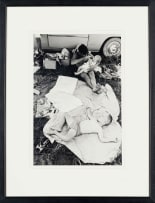
Picnic at Hartebeespoort Dam on New Year’s Day, Transvaal (North-West Province), 1965
Incl. Buyer's Premium & VAT
About this Item
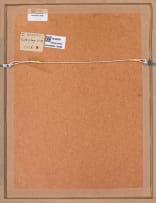
signed, dated 1/1/65 and inscribed with the negative number '3/B517' on the reverse
Notes
Another example is in the Victoria and Albert Museum Collection.
When David Goldblatt published his photographic essay on Afrikaners in 1968, a national newspaper published the works across its front page beneath the headline: Bloed sal kook oor dié fotos (Blood will boil over these photographs). The paper’s outrage centered on the artist’s refusal to idealise his subjects, depicting farmers unshaven and sweat-stained, which was seen to be in opposition to the nationalist ideal of the ordentlike people, a term broadly translating to describing notions of decency and respectability. Picnic at Hartebeespoort Dam embodies Goldblatt’s controversial approach, presenting a scene of ordinary leisure, a casual display that the nationalist imagination found deeply unsettling.1
This present lot was acquired directly from the artist at a time when no one was actively collecting his work. All prints obtained during this period came from his personal archive and were printed by the artist’s hand. This was Garth Walker's first purchase from Goldblatt, made with a deliberate interest in his early work. Goldblatt was, by his own admission, not very fond of the darkroom, opting not to organise a print-to-order arrangement, and an editioned print was equally unappealing. Because of this, this print was the only one Goldblatt had available of this image at the time. It was framed at the point of original acquisition and has remained in its original framing since.2
1. Unknown Author (no date) A4 Arts Foundation, David Goldblatt: Picnic at Hartebeespoort Dam on New Year's Day, Transvaal (North-West Province), 1965, online, https://www.a4arts.org/works/rec36AwwbrqiFJhsw-picnic-at-hartebeespoort-dam-on-new-year-s-day-transvaal-north-west-province-1965, accessed 29 May 2025.
2. Email correspondence with Garth Walker, 2025.
Exhibited
Stevenson, Johannesburg, Some Afrikaners Revisited, 24 October to 25 November 2006, another example exhibited.
Goodman Gallery, Johannesburg, On Common Ground, 28 July to 25 August 2018, another example exhibited.
Literature
David Goldblatt (1975) Some Afrikaners Photographed, Cape Town: Murray Crawford, another example illustrated.
David Goldblatt (2007) Some Afrikaners Revisited, Roggebaai: Umuzi, another example illustrated on page 213.
Ivor Powell, David Goldblatt and Karolina Ziebinska-Lewandowska (2008) David Goldblatt: Structures of Dominion and Democracy, Centre Pompidou: Steidl, another example illustrated.
Goodman Gallery (2010) David Goldblatt: Kith, Kin and Khaya - South African Photographs, exhibition catalogue, Cape Town: Goodman Editions, another example illustrated on page 58, with the title Haartebeespoort.
Provenance
Acquired from the artist by the current owner, 17 September 2004.
The Garth Walker Photography Collection.
The present lot forms part of a selection of photographs from the personal archive of acclaimed designer Garth Walker. Born in Pretoria and trained at Technikon Natal in the 1970s, Walker is best known for designing the unique typeface adorning the Constitutional Court of South Africa. He was also the publisher of i-jusi, a magazine for experimental graphic design and photography exhibited in 25 countries and held in important international collections. A discerning collector, Walker began acquiring contemporary South African photography in the early 2000s, guided by an instinct for vernacular image-making and documentary practice. The collection includes work by internationally acclaimed documentarians Jodi Bieber, David Goldblatt, Pieter Hugo, Greg Marinovich, Zanele Muholi and Guy Tillim. A key highlight is the inclusion of i-jusi Portfolios #1–3, with Portfolio #3 curated by Pieter Hugo. The collection offers a rare opportunity to acquire works from a defining moment in the evolution of post-apartheid visual culture.
More from Framing a New Nation