Erik Laubscher
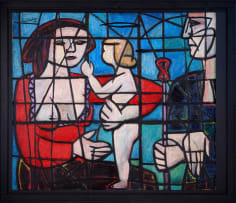
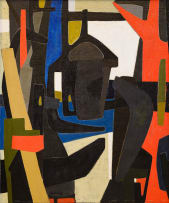
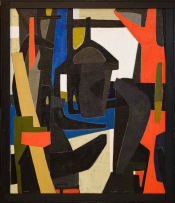
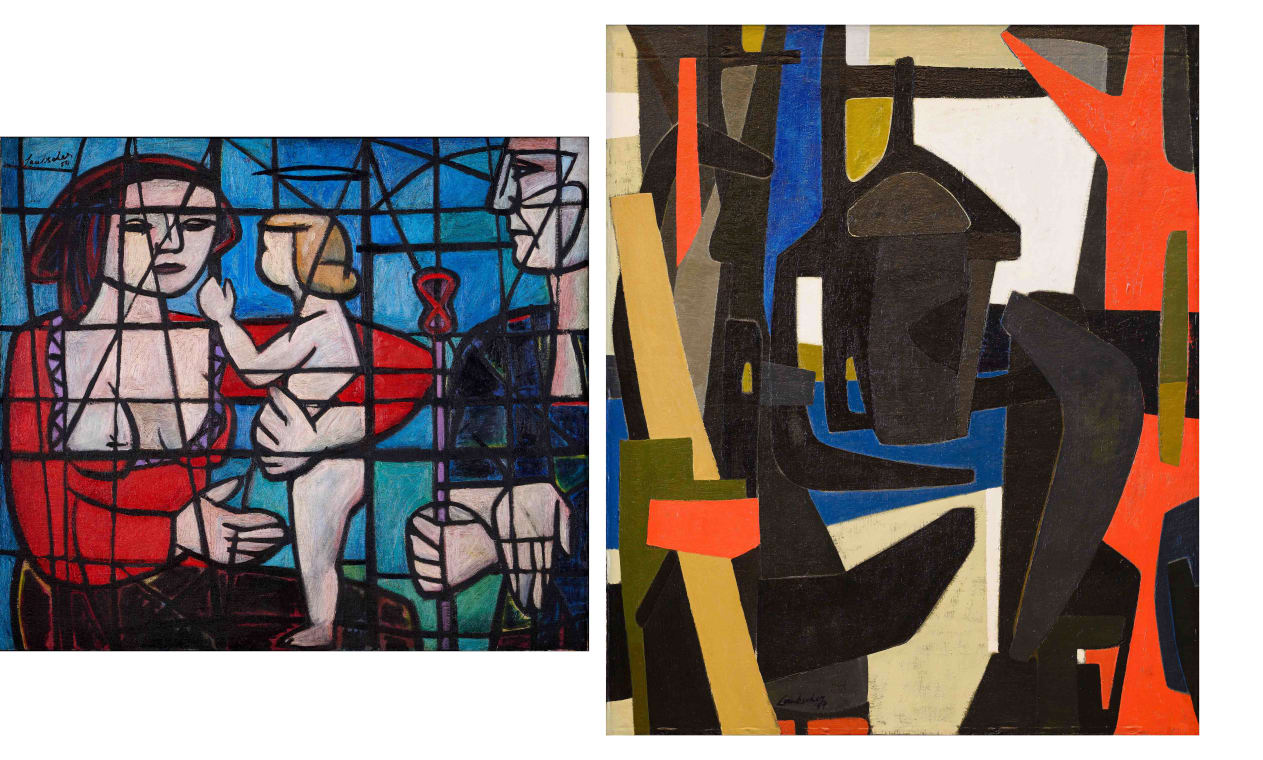
Young Family (recto); Construction (verso)
About the SessionSpanning 4 centuries of global art history, The International Sale, presents 127 exceptional lots by artists from 27 countries across five continents. The auction highlights masterworks ranging from 17th century European paintings to post-2000 editions by contemporary artist's such as Mr Brainwash (lot 51), Jim Dine (lots 83-86), Isaac Julien (lot 108), Jeff Koons (45), and Lucas Samaras (lot 107 and 110). The sale is anchored by important pieces from Georg Baselitz, Erik Laubscher, Shirin Neshat, and a newly repatriated 1935 portrait by Irma Stern.
The auction's diversity is driven by rare museum-quality highlights, led by Irma Stern's Two Women (lot 31), which returns to South Africa after decades in a Berlin private collection. It is joined by Erik Laubscher's rare recto-verso painting Young Family / Construction (lot 48), an Iranian-American artist Shirin Neshat photographic portrait linked to her award-winning Turbulent installation (lot 66), and a uniquely hand-coloured linocut by German master Georg Baselitz titled Das Pferd, Im Wald und auf der Heide Series (The Horse, in the Forest and on the Heath Series) (lot 72).
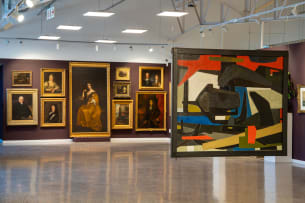
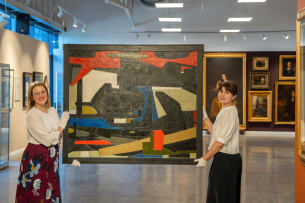
LOT 48
Erik Laubscher
Young Family (recto); Construction (verso)
About this Item
signed and dated 54 on the recto; signed and dated '59 on the verso
Provenance
Collection of the Artist, thence gifted to his oldest child, Michéle.
Exhibited
Contemporary School of Art, Cape Town, 24 September to 1 October 1955, cat. no. 5, with the title Study for Stained Glass Window.
Sasol Art Gallery, University of Stellenbosch, Retrospective Exhibition of Work by Erik Laubscher, 25 June to 31 July 1994, cat. no. 26.
SMAC Gallery, Stellenbosch, Erik Laubscher: A Major Retrospective Exhibition, 5 December 2009 to 25 February 2010.
Literature
Hans Fransen (2009) Erik Laubscher: A Life in Art, Stellenbosch: SMAC Art Gallery, the recto illustrated in colour on page 44 with the title Young Family and the verso illustrated in colour on page 259.
Notes
When the verso of the work was first exhibited in 1955, the reported title was Study for Stained Glass Window. The 2009 publication gives the title as Young Family. When Laubscher gifted the work to his daughter he told her that the title was simply Family.
Recto
Erik Laubscher’s time in Paris had a profound impact on his studio output for nearly two decades. He not only experienced firsthand the art that had drawn him to Paris after completing his studies in London but also encountered fellow South Africans drawn to the city seeking their own inspiration. This cohort included the writer Jan Rabie, the painters Eugene Labuschagne and Leo Théron and others. The serendipity of this move was cemented when he met another student enrolled at the Académie Montmarte, the French-born Claude Bouscharain (fig 1), who had returned from the Art Student League in New York.

(fig 1) Erik Laubscher (1950) Solitaire Portrait of Claude Bouscharain. Claude Bouscharain was both muse to Erik, mother to their children, and well respected artist in
her own right. While this drawing draws on the influence of Cézanne, Erik’s other portraits of
Claude from the 1950s are more stylised in rendering.
In September 1951, Erik held his first major exhibition in Cape Town. Sales were modest but he received favourable press reviews and was invited to exhibit with New Group artists and the International Club. Claude arrived in Cape Town on 14 October and the couple married the following day. Becoming a father in February 1952 with the arrival of Michéle, added responsibilities to the young artist’s time that made full-time studio practice untenable. Imbued with creative enthusiasm and a desire to share his knowledge, Laubscher undertook periods of teaching. In 1953 he acquired the Continental School of Art, where he had been a student of Maurice van Essche in the period leading up to his studies in London. Having taken over the space, he hoped to provide students with an alternative to the traditional teachings at the Michaelis School of Art. Erik relaunched the school as the Contemporary School of Art and its curriculum did not focus on a rigorous academic structure. An article in Laubscher’s clipping book (Volume 1946 to 1979) shares the experiences of students at the school (fig 2). He promoted an open door policy that allowed students from all walks of life to attend classes and become part of the larger studio conversation.
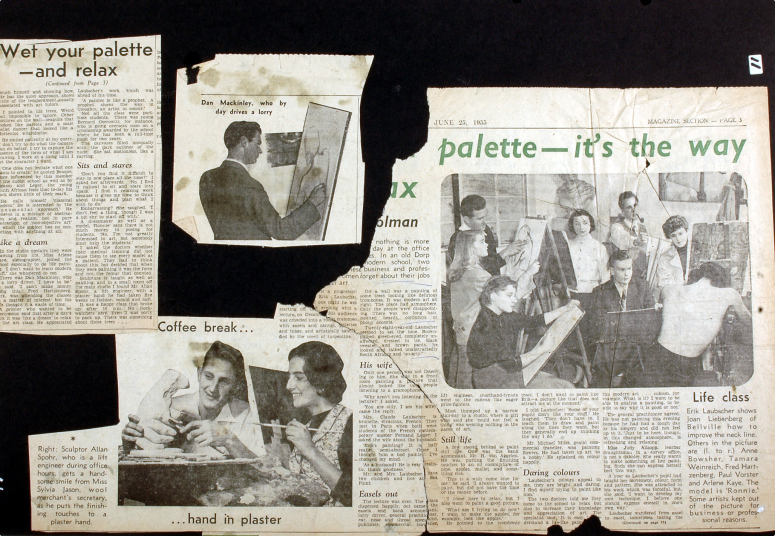
(fig 2) An article in Laubscher’s clipping book (Volume 1946 to 1979) shares the experiences of students at the school. Included in this news clipping is a quote by Claude where she remarked: "Erik’s painting. It is half
realist, semi-abstract. Once I thought him a bad painter. I’ve changed my mind. As a husband? He
is very realistic , thank goodness."
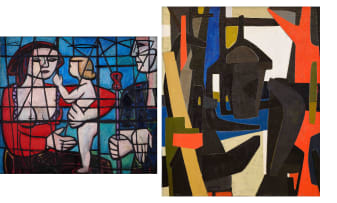
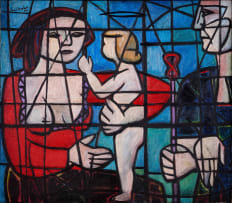
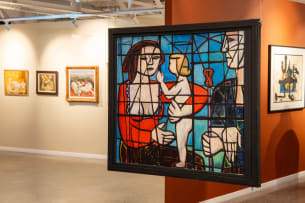
In September 1955, Erik held a solo exhibition from his studio at the school premises. Included was a work numbered 5 titled Study for a Stained Glass Window. This painting is described in a review as a couple with a child rendered in a transitional style. Matthys Bokhurst characterised it as a work that ‘transitions from reality to abstraction’. The painting subsequently became known as Family Group (1954) and depicts Erik, Claude and Michéle. The strong black lines mimic the lead lines of a stained glass window. This writer suggests that among the many exhibitions Erik would have experienced in Paris, this would have included seeing Fernand Léger’s studies for the commission of the stained-glass window for the apse wall of the Église du Sacré-Cœur at Audincourt (fig 3). Léger exhibited the preparatory works at the Museum of Modern Art in Paris at the end of 1950. Léger and his contemporaries were credited with revolutionising stained glass by treating windows as monumental elements receptive to bold design a significant departure from traditional religious illustrations. Léger achieved this by departing from lead lines as a mere physical support and instead utilising the material to create bold black outlines that exaggerated geometric fragmentation.
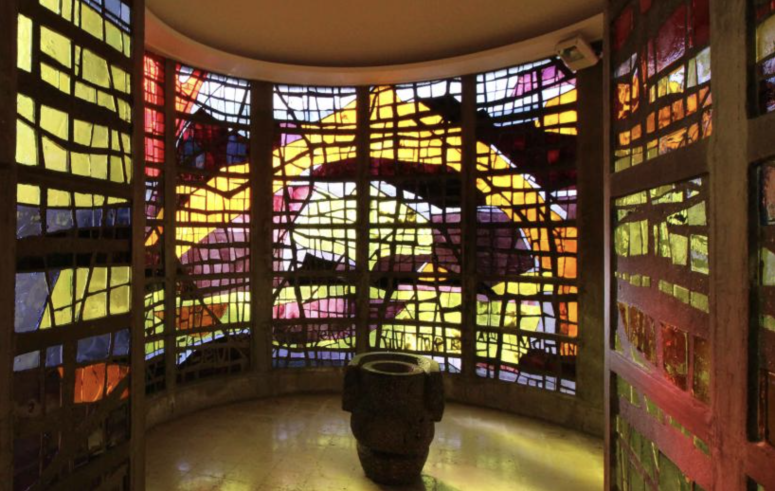
(fig 3) Fernand Léger’s stained-glass window on the apse wall of the Église du Sacré-Cœur at Audincourt, France.
Laubscher’s palette draws on Léger’s work in this familial composition. Claude’s arm encircles Michéle in a display of maternal protection while Erik, shown in profile (fig 4), holds a mahlstick. A mahlstick is a tool used to provide support and steadiness to an artist when working on a large artwork. It also keeps their hand from making contact with wet medium thus mitigating smudging and pigment transfer. The intense alizarine crimson of Claude’s blouse is offset by the radiant layers of cerulean blue which create a shimmering effect. Decades later Leo Théron spoke of the magic of coloured glass in its ability to create a prism through which the observer could see into eternity. This draws on the principles applied by Antoni Gaudí in the design of La Sagrada Família in Barcelona. Gaudí eschewed traditional biblical illustrations and replaced them with sweeping abstract gradients of deep blues and greens (the cool dawn) contrasted with fiery reds and yellows (the setting sun). If these influences are considered in the creation of this painting, the artist was articulating his own future surrounded by family (Claude was likely pregnant with their second child when Erik made this work) continuing to paint while also being aware of his increasing obligations to his growing family (fig 5). In an interview in 1955, Claude remarked when asked about her husband that as a painter his work was half realist, semi-abstract but that as a husband he was very realistic.
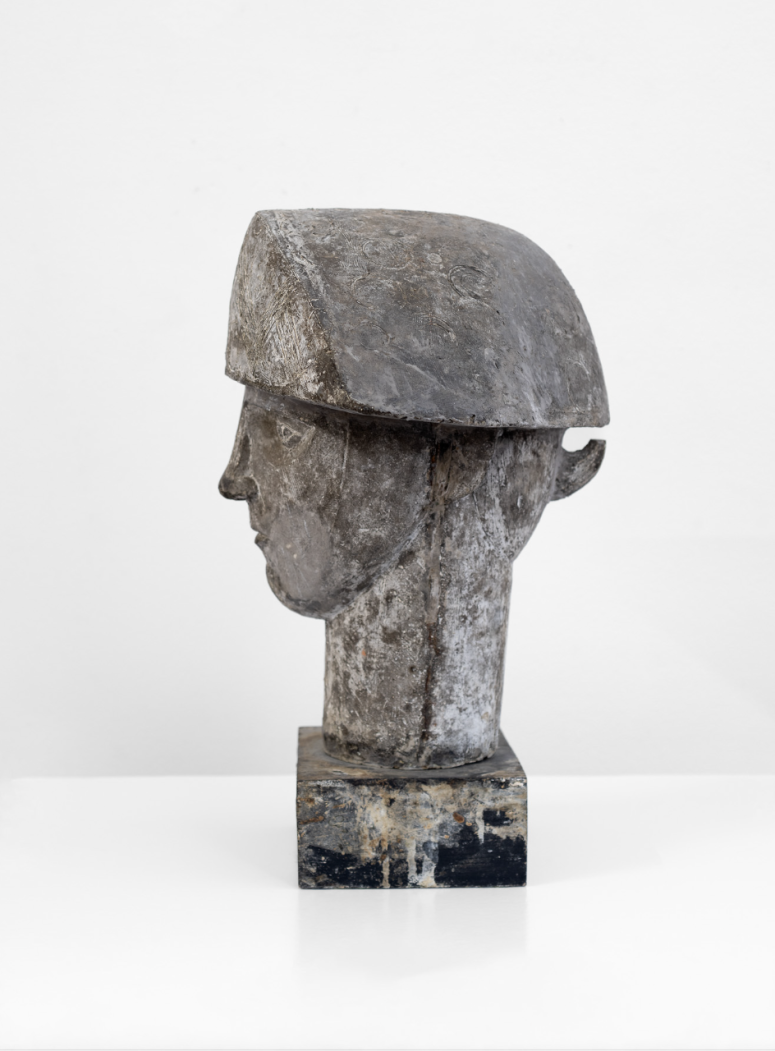
(fig 4) Bruce Arnott was a colleague and friend of the Laubscher’s. The sculpture here, titled Heroic Head is a visual tribute to Erik Laubscher, the profile clearly marrying with Laubscher’s own likeness
of himself.
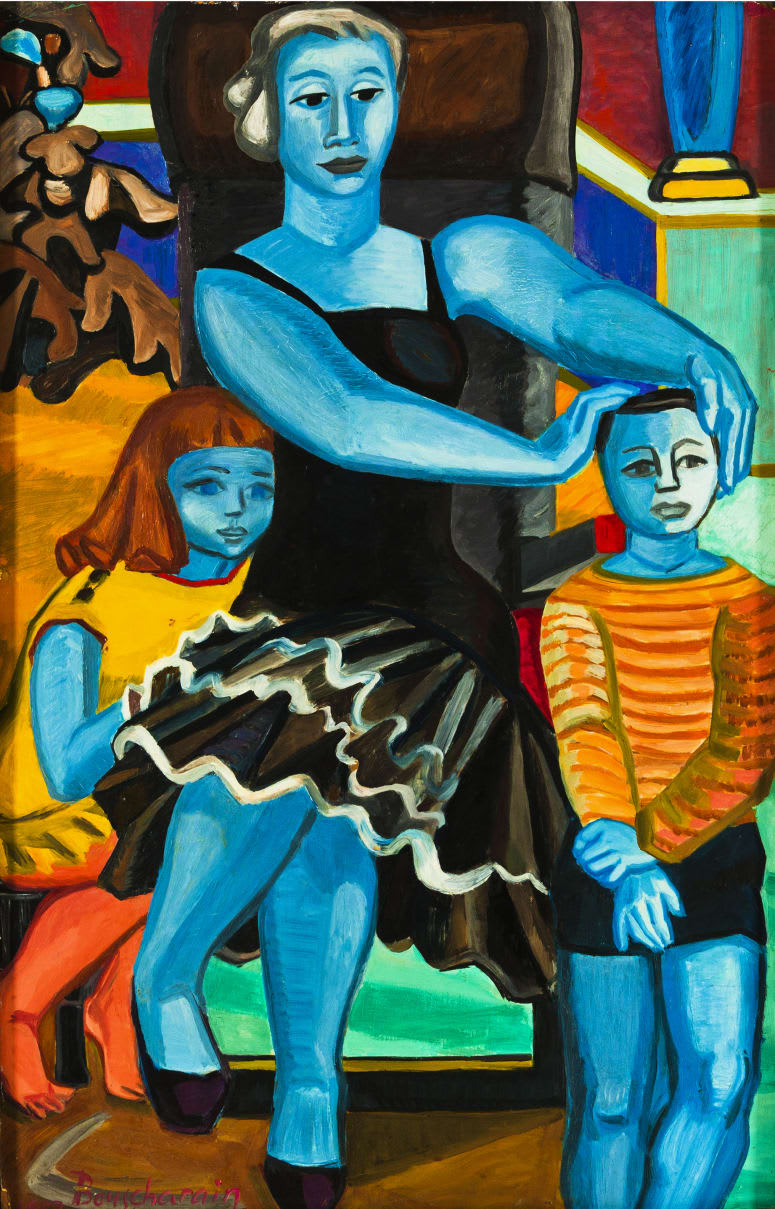
(fig 5) Claude Bouscharain (c. 1950s) Mother and Children. This 1957 painting by Claude Bouscharain, shows Claude with Michéle and Pierre. This author
recognises the creative riff between the artist couple and Claude’s painting can be seen as a witty
counterpoint to Erik’s 1954 painting. Perhaps even more pointedly given his repurposing of the
original canvas for the 1959 painting.
Verso
The Contemporary Art School closed in 1955 due to funding exhaustion. Erik then became a paint advisor and salesperson with Sam Newman, the company now known as Plascon.
“When I was working at Sam Newman’s, selling paint, I became deeply involved in various art organisations, and I didn’t have a chance to get out and see things, so the paintings got more abstract. Edoardo Villa (fig 6) was making big ripples and our work became more aggressive and spiky, which could be related to the whole political atmosphere…So you find that, in some of my paintings, the use of free forms expresses human emotions. I was very conscious that a painting mustn’t date, in the sense that the subject matter illustrates a certain event. I’ve tried to avoid that throughout. The paintings are the important thing and I hope that they can be seen in a timeless context (fig 7). That is why, when I had to spend five-and-a-half days behind a counter selling
paint, but I still wanted to paint, my work started to shift to pure abstraction, towards an expression of one’s angst at the time. And it was only when, in the 1960s, I worked for Plascon and travelled the Western Cape, that I suddenly became aware of the shapes of the wheat-fields in an abstract sense and of new colour combinations.”
This professional shift can be seen as the cause of the significant change within Laubscher’s painting, a deliberate manifestation of the intersection between abstraction and landscape. In May 1958, Deane Anderson a writer and arts critic, credited Laubscher with deftly avoiding the ‘bogy’ that lurked behind the easel of every artist working in the abstract tradition ‘the unforgivable threat of boring his public’.
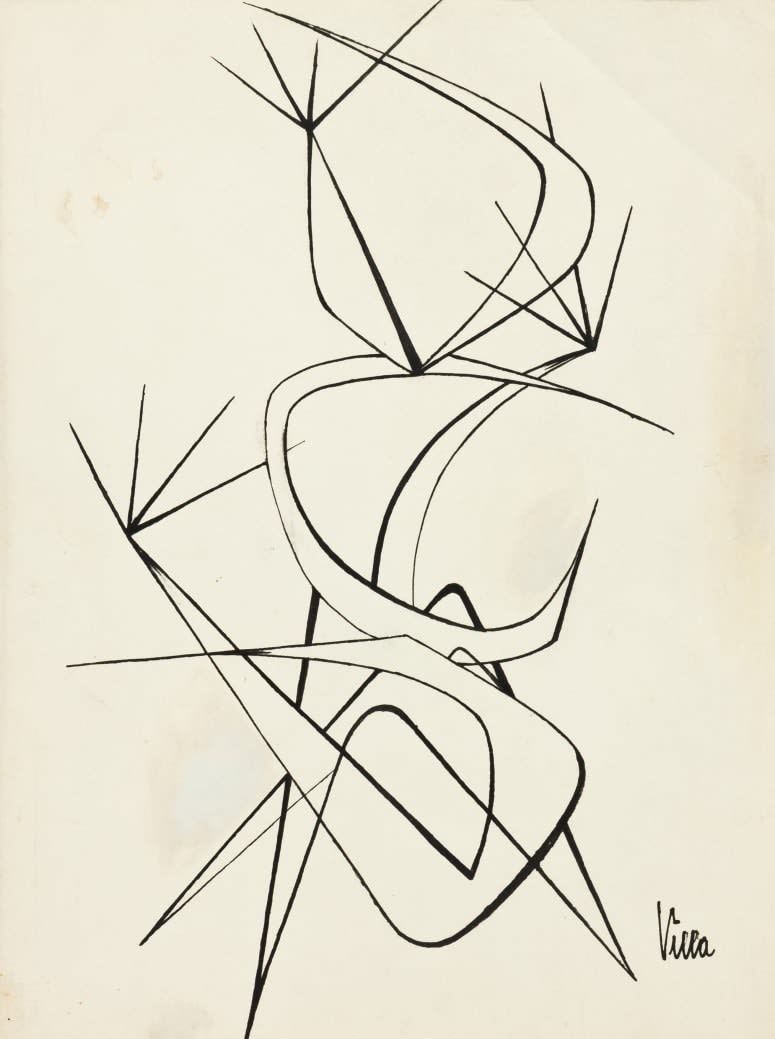
(Fig 6) This untitled sketch is in the Estate Collection of Erik Laubscher and Claude Bouscharain.

(fig 7) Shown here is a work by Leo Théron. The title ‘Listening to Debussy’ plays with the relationship between artists and music notably in their studio practice. Debussy is credited as the first composer whose music focused on mood, colour and atmosphere, a stark departure from previous traditional forms of classical music. Laubscher’s children recall the family home being filled with music, especially over the weekend when Erik would devote the time he had to painting.
Construction (1959), painted verso to Young Family, is firmly abstract with deliberate shapes and planes of colour interwoven across the canvas. Erik was one of the artist’s chosen to represent South Africa at the 5th Bienal de São Paulo in 1959 (fig 8), having previously exhibited there in 1957. Comparing his work from the 4th Bienal de São Paulo (1957) with that from 1959 reveals a clear direction in which his work was developing. The 1957 works feature pieces from his Harbour and Euphorbia series while 1959 included works titled Composition and Construction (fig 9). While both of these large abstract paintings feature a marriage between landscape and substantial abstract forms, Laubscher’s time on the road as a paint salesman was providing him with new views of the land through which he travelled.
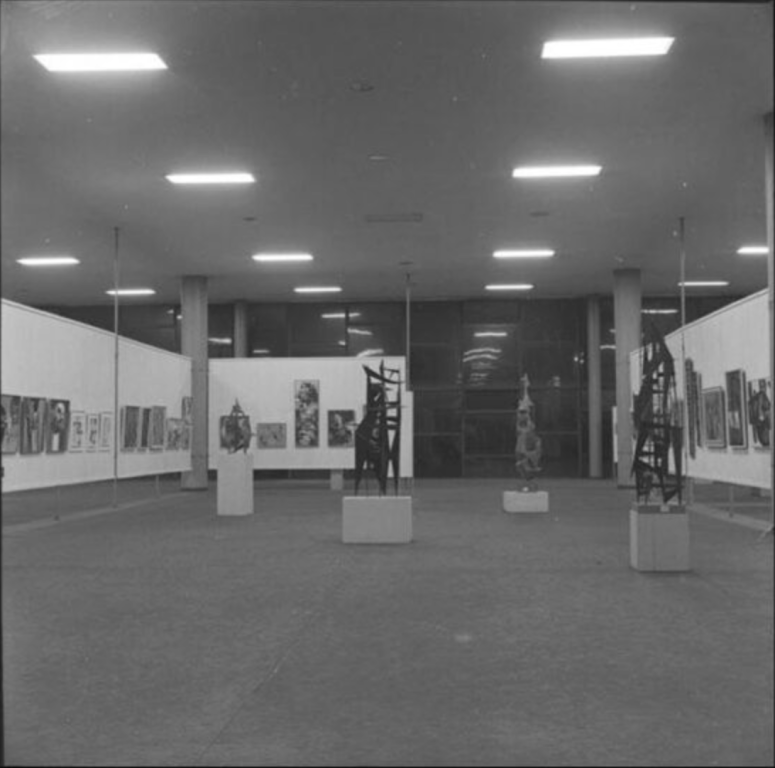
(fig 8) In this archival photograph from the 5th Bienal de São Paulo, Laubscher’s art can be seen on the
right hand edge of the image.
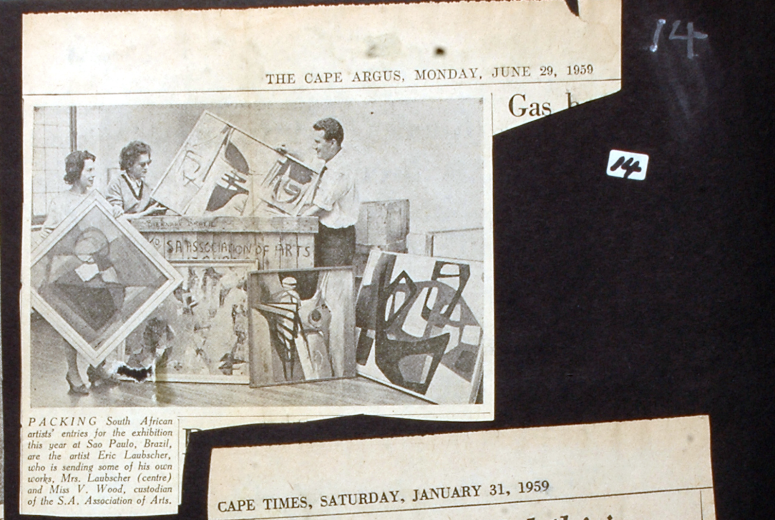
(fig 9) Claude Bouscharain, Erik Laubscher and a South African Association of Arts custodian packing the selected artworks for the 5th Bienal de São Paulo of 1959.
The moniker ‘angry young man of the art world’ had already been applied to him when he publicly boycotted a 1956 touring exhibition organised by the South African government. Laubscher went on record stating that the expectation of requiring artists to pay for transport and entry fees in order to be considered, and then to separate from their work for a year while it travelled, was
untenable to most artists in his circle. Contemporaries such as Albert Newall supported his stance. Critics remained divided when in 1958 he withdrew his work from the list of chosen artworks for the Venice Biennale. His decision to withdraw was based on selectors dismissing large canvases for significantly smaller works to avoid competition with Irma Stern, the featured artist of the
presentation. He said that the selectors should have been transparent with the selection criteria before submissions were made. Construction (1959) was likely exhibited with Gallery 101 in Laubscher’s 1961 exhibition with the gallery. This was the first time he exhibited in Johannesburg.
Despite inclusion in the Venice Biennale, Bienal Sao Paulo, touring exhibitions as a member of International Art Club, inclusion in major exhibitions throughout South Africa, Laubscher’s international profile has remained unfairly under recognised. The Cultural boycotts levied against South Africa resulted in artist’s working during that period remaining rooted in a South African art history. Laubscher once remarked in his 80s that he regretted his decision not to produce art that positioned him in a visual frontline against the Apartheid government and its policies. Not that his work from the 1960s and 1970s lacks references to these. He created a series of works in the 1960s that referenced the forced removals and later demolition of District Six. His hard-edge paintings (made after a three month 1966 visit to America) include allusion to issues that were topic of the many conversations entered into by the Sestigers. The living room at 6 Cheviot Place in Green Point became a meeting space for like minded writers, artists and their contemporaries. These gatherings were regularly punctuated by inspections by the South African security police. But it is this authors hope, that with South Africa addressing its place within the Global South, and the inclusion of modernist works by South African artists at prominent international art fairs that this changes in time.
Text researched and compiled by Phillippa Duncan, independent researcher and Erik Laubscher Heritage Trustee managing the collection and archive of Erik Laubscher and Claude Bouscharain.
Hans Fransen (2009) Erik Laubscher: A Life in Art, Stellenbosch: SMAC Art Gallery.
Mari Lecanides-Arnott and S Christian. (2023) Bruce Murray Arnott, Into the Megatext, sculptor, scholar, designer, curator, educator, Cape Town: Print Matters Heritage.
Erik Laubscher. The artist’s own unpublished press clipping books (Vol I 1946-1979).
More from The International Sale