Richard Hamilton
Bronze by Gold
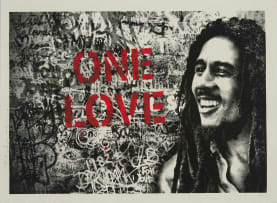
About the SessionSpanning 4 centuries of global art history, The International Sale, presents 127 exceptional lots by artists from 27 countries across five continents. The auction highlights masterworks ranging from 17th century European paintings to post-2000 editions by contemporary artist's such as Mr Brainwash (lot 51), Jim Dine (lots 83-86), Isaac Julien (lot 108), Jeff Koons (45), and Lucas Samaras (lot 107 and 110). The sale is anchored by important pieces from Georg Baselitz, Erik Laubscher, Shirin Neshat, and a newly repatriated 1935 portrait by Irma Stern.
The auction's diversity is driven by rare museum-quality highlights, led by Irma Stern's Two Women (lot 31), which returns to South Africa after decades in a Berlin private collection. It is joined by Erik Laubscher's rare recto-verso painting Young Family / Construction (lot 48), an Iranian-American artist Shirin Neshat photographic portrait linked to her award-winning Turbulent installation (lot 66), and a uniquely hand-coloured linocut by German master Georg Baselitz titled Das Pferd, Im Wald und auf der Heide Series (The Horse, in the Forest and on the Heath Series) (lot 72).
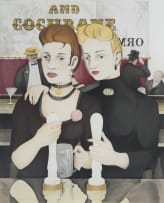
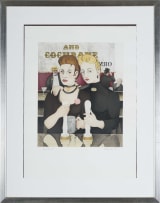
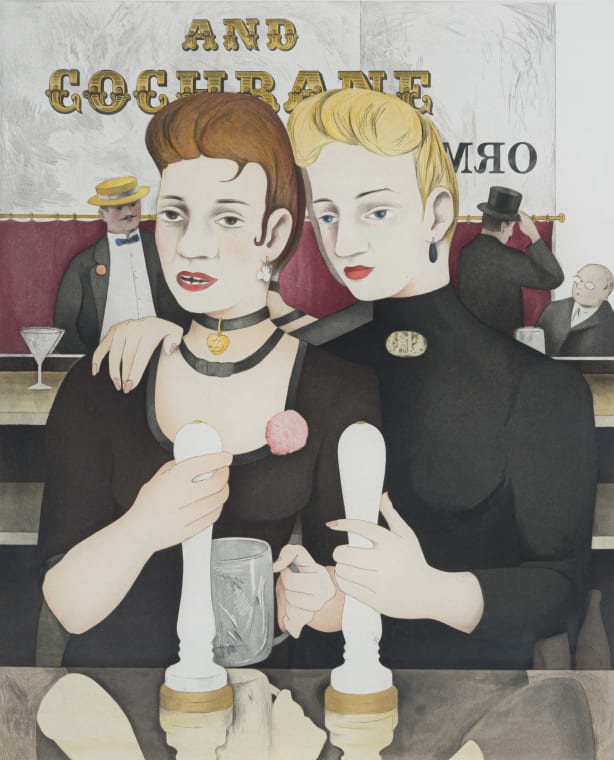
LOT 46
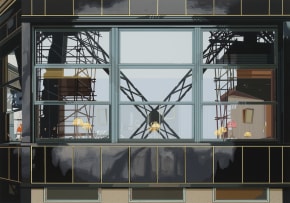
Richard Hamilton
Bronze by Gold
About this Item
signed, numbered 50/120, inscribed with the title in pencil and embossed with the Waddington Graphics chopmark in the margin
Notes
Published by Waddington Graphics, London.
Richard Hamilton, born in London in 1922, was one of the most influential British artists of the twentieth century and a pioneering figure in the development of Pop Art.
Hamilton studied at the Royal Academy Schools from 1938 to 1940 before training in engineering draughtsmanship and working as a jig and tool designer. He returned to the Royal Academy Schools in 1946 but was expelled for “not profiting from the instruction being given in the painting school.” He later studied at the Slade School of Fine Art from 1948 to 1951.
His early work was influenced by D’Arcy Wentworth Thompson’s On Growth and Form (1913), which explored the mathematical structures underlying natural forms. Hamilton developed these ideas through exhibitions including Growth and Form at the Institute of Contemporary Arts in London in 1951 and Man, Machine and Motion in 1955.
As a member of the Independent Group during the 1950s, Hamilton helped establish the intellectual foundations of British Pop Art. He challenged the distinction between fine art and popular culture, drawing inspiration from advertising, consumer products, photography, technology and mass media.
Throughout his career, Hamilton worked across painting, collage, printmaking, photography and digital media. His constant experimentation with new technologies and popular imagery had a lasting influence on contemporary art, making him a key figure in the transformation of twentieth-century visual culture.
More from The International Sale