Erté
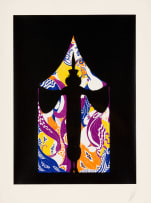
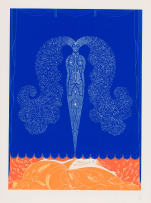
Le Rideau de l'Hiver (The Curtain of Winter)
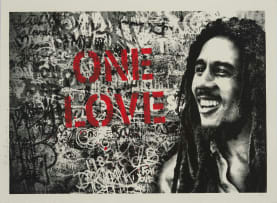
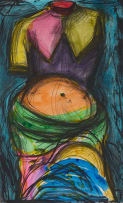
About the SessionSpanning 4 centuries of global art history, The International Sale, presents 127 exceptional lots by artists from 27 countries across five continents. The auction highlights masterworks ranging from 17th century European paintings to post-2000 editions by contemporary artist's such as Mr Brainwash (lot 51), Jim Dine (lots 83-86), Isaac Julien (lot 108), Jeff Koons (45), and Lucas Samaras (lot 107 and 110). The sale is anchored by important pieces from Georg Baselitz, Erik Laubscher, Shirin Neshat, and a newly repatriated 1935 portrait by Irma Stern.
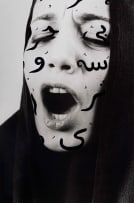
The auction's diversity is driven by rare museum-quality highlights, led by Irma Stern's Two Women (lot 31), which returns to South Africa after decades in a Berlin private collection. It is joined by Erik Laubscher's rare recto-verso painting Young Family / Construction (lot 48), an Iranian-American artist Shirin Neshat photographic portrait linked to her award-winning Turbulent installation (lot 66), and a uniquely hand-coloured linocut by German master Georg Baselitz titled Das Pferd, Im Wald und auf der Heide Series (The Horse, in the Forest and on the Heath Series) (lot 72).
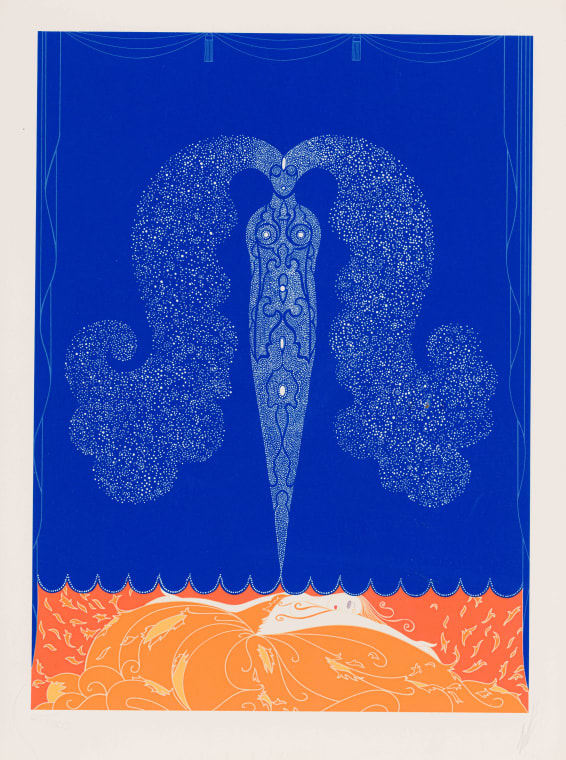
LOT 42
Erté
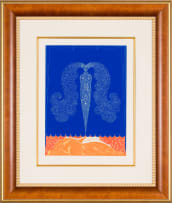
Le Rideau de l'Hiver (The Curtain of Winter)
About this Item
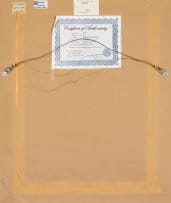
signed, numbered 257/300 in pencil and embossed with the Circle Fine Art Corp. chopmark in the margin; inscribed with the title in pencil on the reverse of the sheet; inscribed twice with the artist's name, the title and medium on Fine Art Wholesalers labels adhered to the reverse; inscribed with the artist's name, the title, medium, edition number and numbered 48657 on a Fine Art Wholesalers certificate of authenticity adhered to the reverse; inscribed with the artist's name, the title, medium and edition number on a Fine Art Wholesalers certificate of authenticity adhered to the backing board
Exhibited
Hôtel Jean Charpentier, Paris, Erté - Romain de Tirtoff - Exposition de ses Oeuvres, 29 May to 10 June 1929, another example exhibited.
Literature
Erté Georges Barbier and Maurice Feuillet (1929) Erté - Romain de Tirtoff - Exposition de ses oeuvres. Hôtel Jean Charpentier à Paris, 29 Mai - 10 Juin 1929, exhibition catalogue, Vanves: Cappe, another example illustrated in colour, unpaginated.
Notes
Romain de Tirtoff, known by the pseudonym Erté, was a Russian-born French artist and designer who made significant contributions to fashion, theatre, and art in the early 20th century. He was born in St Petersburg in 1892, the only son of an admiral in the Imperial Fleet, and was raised amidst Russia's social elite.
In 1912, at the age of nineteen, Erté left St Petersburg for Paris with the aim of becoming an artist. He found work later that year as a draughtsman at the fashion house Caroline. At the end of his first month there, the owners informed him he had no talent and should abandon his ambitions. In response, Erté sent his sketches and designs to Paul Poiret, then the most prominent figure in fashion, who offered him a position immediately.
Erté maintained various creative partnerships, illustrating for Harper's Bazaar and Vogue. From 1915, he requested that his original drawings be returned to him after use in printing; where this was not possible, he would order copies for his own collection. By his own estimate, he produced more than 17,000 works over the course of his career.
At the age of 75, Erté was encouraged to begin a new phase in his career, recreating the designs of his youth in bronze and serigraphy.
More from The International Sale