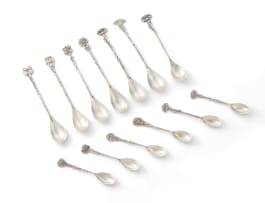
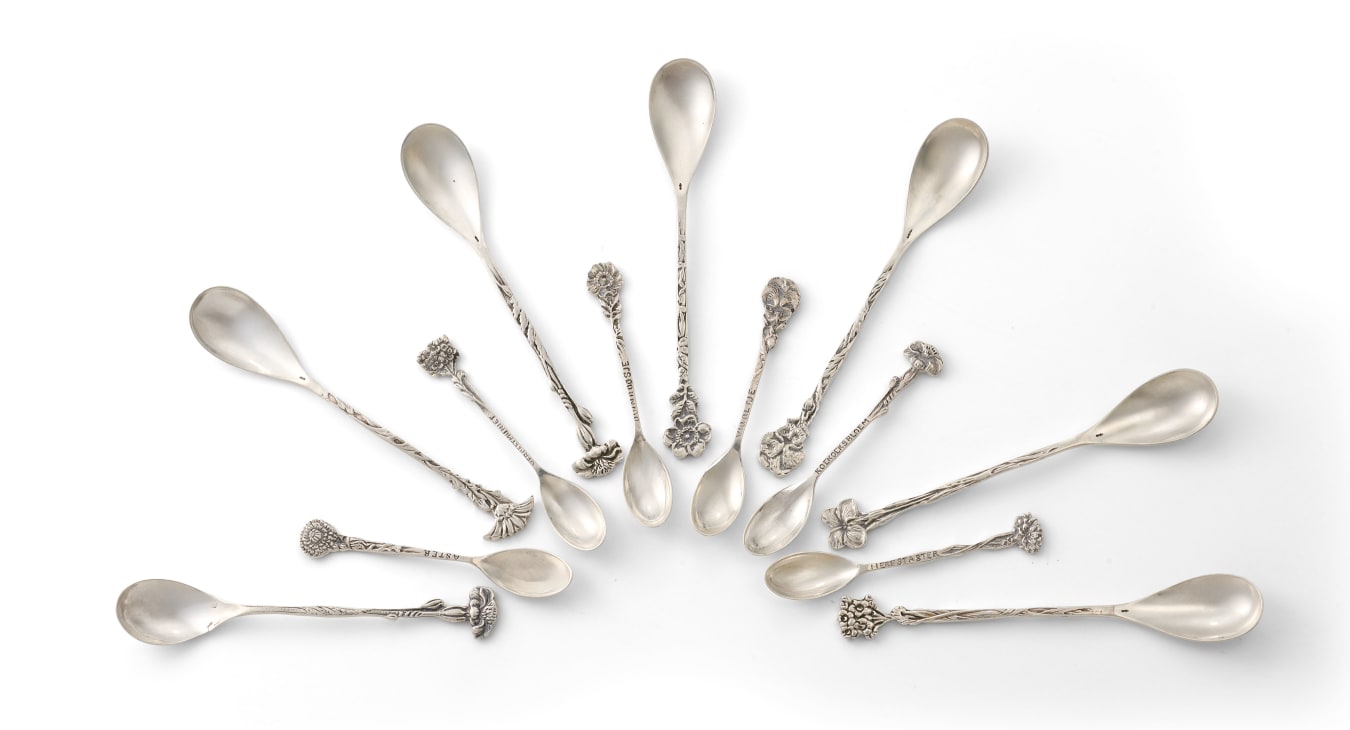
An assembled set of Dutch silver advocaatlepels, various makers, late 20th century

Session 1
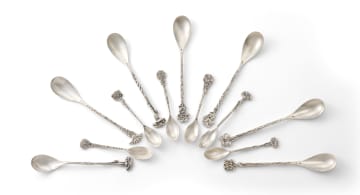
  • An assembled set of Dutch silver advocaatlepels, various makers, late 20th century
  • An assembled set of Dutch silver advocaatlepels, various makers, late 20th century
  • An assembled set of Dutch silver advocaatlepels, various makers, late 20th century
  • An assembled set of Dutch silver advocaatlepels, various makers, late 20th century
  • An assembled set of Dutch silver advocaatlepels, various makers, late 20th century

LOT 147

An assembled set of Dutch silver advocaatlepels, various makers, late 20th century

Lot Estimate Change Currency
ZAR 2 000 - 3 000
Location
Cape Town
Delivery
Additional delivery charges apply
Shipping
Condition Report
May include additional detailed images
Need more information?
Make an Offer
The item was unsold and may still be available

About this Item

An assembled set of Dutch silver advocaatlepels, various makers, late 20th century
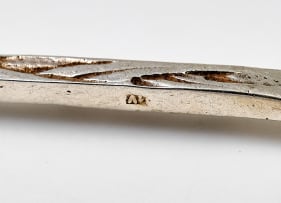
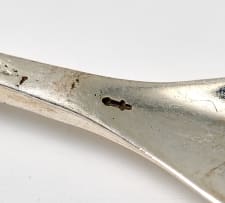
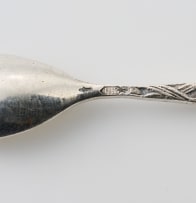
each with a floral terminal, comprising six smaller spoons, the stems engraved with Dutch flower names, struck with the maker's mark for Gebr. Niekerk, Schoonhoven, six larger spoons, maker's mark worn, and a seventh larger spoon, maker's mark worn, 115g all in
(13)
length of large spoons: 12cm; length of small spoons: 8cm

Notes

Advocaat is a thick, custard-like Dutch liqueur made from egg yolks, sugar and brandy, its rich consistency setting it apart from drinks taken neat from a glass and calling for a spoon instead. The name's origin is debated: one theory traces it to abacate, a Brazilian avocado drink that Dutch colonists adapted using egg yolks once avocados were unavailable at home, retaining the name despite the change in ingredients, while another derives it from the Dutch word for lawyer, with the idea that it served as a smooth lubricant for the throat before a court appearance. Commercial production began in 1828, when J.G. Cooymans established a distillery in 's-Hertogenbosch, and the drink remains strongly associated with Christmas in the Netherlands to this day. Advocaat spoons, small enough to scoop the thick liqueur from its glass, developed alongside the drink from around 1800.

More from Forms in Silver
A pair of Dutch silver 'longdrinklepels', P. van Oostrom & Zn., Schoonhoven, 20th century
ZAR 800 - 1 000
Two Victorian Fiddle pattern spoons, William Eaton, London, 1839
ZAR 1 500 - 2 000
A silver box, stamped with a Dutch tax mark for foreign-made silver, of unascertained standard between .250 and .833, likely 20th century
ZAR 3 000 - 4 000
Three Dutch silver souvenir spoons, 20th century
ZAR 1 500 - 2 000
A Dutch silver sugar sifter, maker's mark B.V, .833 standard, 20th century
ZAR 800 - 1 000
Six sterling silver and enamel souvenir teaspoons
ZAR 1 500 - 2 000