Georg Baselitz
Das Pferd, Im Wald und auf der Heide Series (The Horse, in the Forest and on the Heath Series)
About the SessionSpanning 4 centuries of global art history, The International Sale, presents 127 exceptional lots by artists from 27 countries across five continents. The auction highlights masterworks ranging from 17th century European paintings to post-2000 editions by contemporary artist's such as Mr Brainwash (lot 51), Jim Dine (lots 83-86), Isaac Julien (lot 108), Jeff Koons (45), and Lucas Samaras (lot 107 and 110). The sale is anchored by important pieces from Georg Baselitz, Erik Laubscher, Shirin Neshat, and a newly repatriated 1935 portrait by Irma Stern.
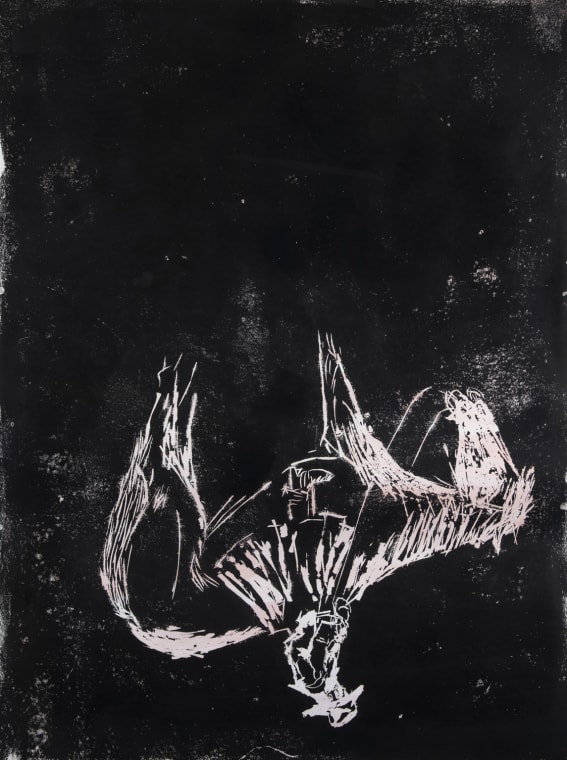
The auction's diversity is driven by rare museum-quality highlights, led by Irma Stern's Two Women (lot 31), which returns to South Africa after decades in a Berlin private collection. It is joined by Erik Laubscher's rare recto-verso painting Young Family / Construction (lot 48), an Iranian-American artist Shirin Neshat photographic portrait linked to her award-winning Turbulent installation (lot 66), and a uniquely hand-coloured linocut by German master Georg Baselitz titled Das Pferd, Im Wald und auf der Heide Series (The Horse, in the Forest and on the Heath Series) (lot 72).
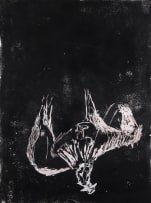
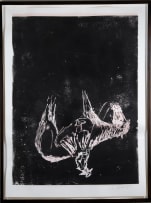
LOT 72
Georg Baselitz
Das Pferd, Im Wald und auf der Heide Series (The Horse, in the Forest and on the Heath Series)
About this Item
signed, dated 06 and numbered 2 in pencil in the margin
Notes
Published by the Paragon Press, London.
The series consists of six large-scale hand-coloured linocuts. Each image was produced in an edition of only six, and every example was individually hand-coloured by Georg Baselitz.
The present lot belongs to the series Im Wald und auf der Heide (In the Woods and on the Heath), six hand-coloured linocuts produced in collaboration with Paragon Press, London. The series takes its title from the opening line of a Romantic Jagdlied (hunting song) by Wilhelm Bornemann (1766–1851), which later became widely known as a German folk song. The works continue Baselitz’s recurring image of the ‘lonesome cowboy’, depicting figures and horses with a distinctly melancholic atmosphere.
Charles Booth-Clibborn, founder of Paragon Press, had long admired Baselitz’s printmaking. Following a studio visit in 2005, he expressed an interest in developing a collaborative project with the artist. During this visit, Baselitz showed Booth-Clibborn a group of large linocuts he had been working on and proposed that they form the basis of a publication with Paragon Press.
The exceptional scale of the linoleum blocks required an unusual production process. Printing was undertaken jointly by Niels Borch Jensen and Mette Ulstrup of the Værksted for Kobbertryk in Copenhagen and Baselitz at Baselitz studio. The works were printed onto sheets of paper that the artist had previously coated with thin layers of oil paint, ensuring that every impression possessed subtle variations and an individual character. Each linocut was then hand-rubbed on the studio floor, with a plastic squeegee used to apply the precise pressure required to transfer the image.1
Printmaker, painter, and sculptor Georg Baselitz, born in 1938 in Deutschbaselitz, Germany, was one of the most influential German artists of the post-war period and known as a leader of the Neo-expressionist movement. Born Hans-Georg Kern, he adopted the name Baselitz in 1961, taking it from his birthplace. He studied at the Hochschule für Bildende Künste in East Berlin before moving to West Berlin in 1957, where he continued his studies at the Hochschule für Bildende Künste.
Baselitz emerged as an artist in the early 1960s with a deliberately confrontational approach to painting, challenging the dominant abstraction of the period through raw, expressive figuration. His early work was marked by provocative imagery and an interest in the psychological and physical dimensions of the human figure. Alongside painting, Baselitz developed an important printmaking practice, working extensively in woodcut, linocut and etching.
In 1969, Baselitz began painting figures upside down, a radical compositional strategy that became his signature. By separating subject from conventional orientation, he encouraged viewers to focus on gesture, texture and the materiality of paint rather than narrative or representation. His practice subsequently expanded to include sculpture, drawing and monumental printmaking, while recurring subjects have included the figure, landscape, birds and personal and cultural memory.
Baselitz represented Germany at the Venice Biennale in 1980 and has since been the subject of major international exhibitions and retrospectives. His works are held in leading public collections worldwide, including the Museum of Modern Art, New York; Tate, London; Centre Pompidou, Paris; and the Museum Ludwig, Cologne. The artist passed away in April of this year, at the age of 88.
1. No author (2005) Paragon Press, Im Wald und auf der Heide (In the Woods and on the Heath), online, accessed 25 September 2026.
Provenance
Phillips, London, 30 June 2008, lot 391.
Private Collection.
More from The International Sale