Pablo Picasso
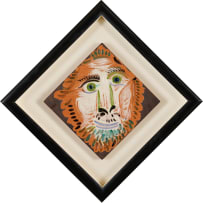
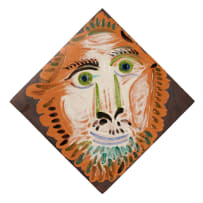
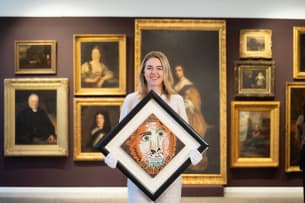
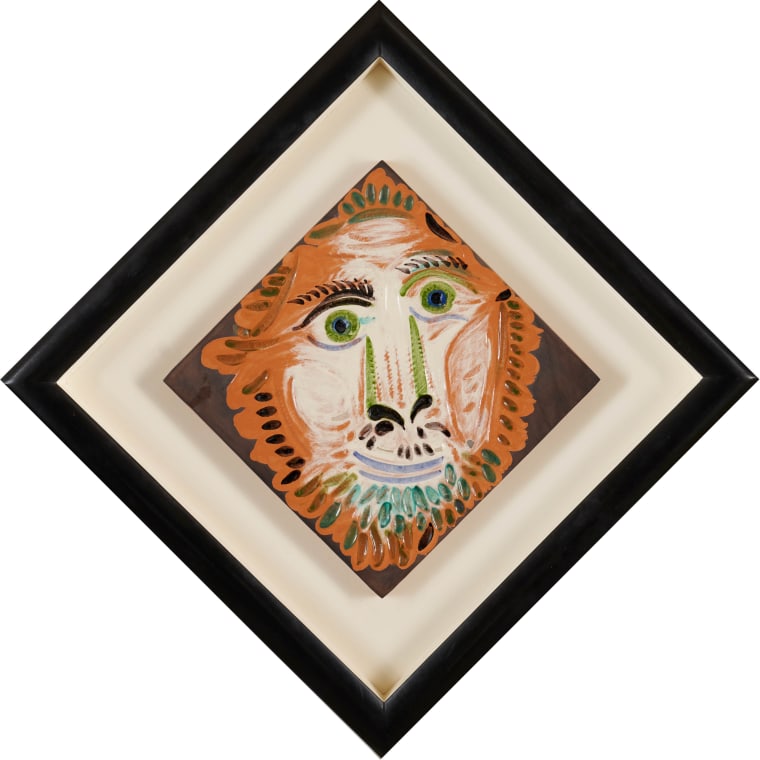
Tête de Lion (Lion's Head) (Alain Ramie 575)
About the SessionSpanning 4 centuries of global art history, The International Sale, presents 127 exceptional lots by artists from 27 countries across five continents. The auction highlights masterworks ranging from 17th century European paintings to post-2000 editions by contemporary artist's such as Mr Brainwash (lot 51), Jim Dine (lots 83-86), Isaac Julien (lot 108), Jeff Koons (45), and Lucas Samaras (lot 107 and 110). The sale is anchored by important pieces from Georg Baselitz, Erik Laubscher, Shirin Neshat, and a newly repatriated 1935 portrait by Irma Stern.
The auction's diversity is driven by rare museum-quality highlights, led by Irma Stern's Two Women (lot 31), which returns to South Africa after decades in a Berlin private collection. It is joined by Erik Laubscher's rare recto-verso painting Young Family / Construction (lot 48), an Iranian-American artist Shirin Neshat photographic portrait linked to her award-winning Turbulent installation (lot 66), and a uniquely hand-coloured linocut by German master Georg Baselitz titled Das Pferd, Im Wald und auf der Heide Series (The Horse, in the Forest and on the Heath Series) (lot 72).
LOT 29
Pablo Picasso
Tête de Lion (Lion's Head) (Alain Ramie 575)
About this Item
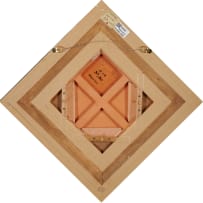
numbered 37/50, inscribed with the workshop numbering, 'Madoura' and bears the Madoura Plein Feu and Empreinte Originale de Picasso stamps on the reverse
Provenance
The Patricia Fine Art Collection.
Notes
Pablo Picasso, born in Málaga, Spain in 1881, spent his early years surrounded by art. His father, a painter and art professor, recognised Picasso’s talent at a young age and nurtured his creative development. By the time he was a teenager, Picasso had moved to Barcelona, where he became immersed in the city’s avant-garde scene. Picasso briefly attended The Royal Academy of San Fernando in Madrid, but he disliked the structured teaching and withdrew from formal instruction. In 1904, Picasso relocated to Paris, then the heart of the art world, and quickly became a leading figure in modern European art.
Picasso’s career was defined by his prolific production and constant reinvention, from the melancholic Blue and Rose periods to the revolutionary invention of Cubism with Georges Braque, a movement that shattered traditional perspectives on form and space. His work, whether painting, sculpture, printmaking or ceramics, explored themes of war, love, and politics, with the famous anti-war painting Guernica (1937) standing as one of his most iconic and powerful statements. He was also known for costume and theatre set design.
Picasso is probably the most important and celebrated artist of the 20th century, and his impact and influence on art remains unparalleled. He continued working until his death in 1973 at the age of 91, leaving behind a legacy that forever changed the course of modern art.
Artworks by Picasso can be found in most public art collections throughout Europe and in leading art collections worldwide.
Literature
Alain Ramie (1988) Picasso: Catalogue of the Edited Ceramic Works 1947-1971, Vallauris: Madoura, cat. no. 575, another example from the edition illustrated.
More from The International Sale