Wolf Kibel
Young Boy


LOT 142
Wolf Kibel
Young Boy
Incl. Buyer's Premium & VAT
About this Item
Notes
Painted during the brief but extraordinarily productive decade between Kibel's arrival in Cape Town in 1929 and his premature death in 1938, Young Boy embodies the artist's singular contribution to the development of South African modernism. Kibel belonged to a generation of Jewish émigré artists who transformed local painting in the 1930s, synthesising the expressive distortions of European modernism into an intensely personal visual language characterised by emotional introspection and painterly immediacy. His art, as Esmé Berman observed, is distinguished by its "exaggerated colour contrasts and expressionistic distortions", qualities that are powerfully evident in this compelling portrait study.
The young sitter emerges from an indeterminate ground of smoky greys and muted violets, his elongated features modelled through a dense accumulation of ochres, burnt oranges and deep shadows. Kibel's brushwork is restless and tactile, oscillating between description and dissolution. Rather than pursuing naturalistic likeness, the artist constructs a psychological presence through fractured planes of colour and deliberately unstable contours. The figure's downcast gaze and inward posture evoke an acute sense of solitude, transforming what might otherwise be a conventional portrait into an exploration of emotional interiority.
Portraiture formed a significant and recurring aspect of Kibel's oeuvre, yet his studies of children remain among his most affecting achievements (fig 1, 2 and 3). They reveal the influence of European Expressionism, particularly the work of Chaïm Soutine (1893-1943), whose portraits of anonymous youths similarly privileged psychological intensity over social identity. Unlike Soutine, however, Kibel strips away almost all narrative reference. The sitter is presented neither as an individual of social standing nor as a participant in any recognisable world. Instead, the child becomes a vehicle through which Kibel explores states of contemplation, vulnerability and emotional fragility. The boundaries between figure and space begin to dissolve, as the body seems to recede into the pictorial surface itself, suggesting a consciousness turned inward and detached from the external world.
Recent scholarship has identified within Kibel's art a persistent atmosphere of melancholy and introspection, qualities that distinguish his work from the more outward looking modernism of his contemporary and friend, Lippy Lipshitz. Where Lipshitz conceived of the body as a site of vitality and physical affirmation, Kibel understood it as a repository of inner experience, a means through which the complexities of memory, solitude and psychological reflection could be articulated. In his portraits, the human figure becomes less an assertion of physical presence than an embodiment of consciousness itself, poised between material existence and emotional withdrawal.
The material surface of Young Boy is central to its expressive force. Thick passages of paint, areas of abrasion and the visible texture of the unstretched canvas lend the work an unfinished vitality, emphasising the artist's engagement with the act of painting itself. Equally important is the way in which Kibel draws the viewer into the emotional world of the sitter. The unstable contours and shifting planes of colour create a sense of intimacy and identification, enveloping the spectator within the psychological atmosphere of the work rather than merely presenting an image for detached observation.
The major 2025 retrospective Palm Studios: Wolf Kibel and Lippy Lipshitz at the South African Jewish Museum, alongside a growing body of scholarship, has restored Kibel to a central position within South African art history, underscoring the singularity of his contribution to twentieth century modernism and reaffirming the enduring relevance of his psychologically charged vision. In this respect, Young Boy transcends mere representation, standing instead as a poignant meditation on childhood, memory and the fragile emotional condition that lies at the heart of Kibel's art.
Jay van den Berg, Associate Curator of the South African Jewish Museum.
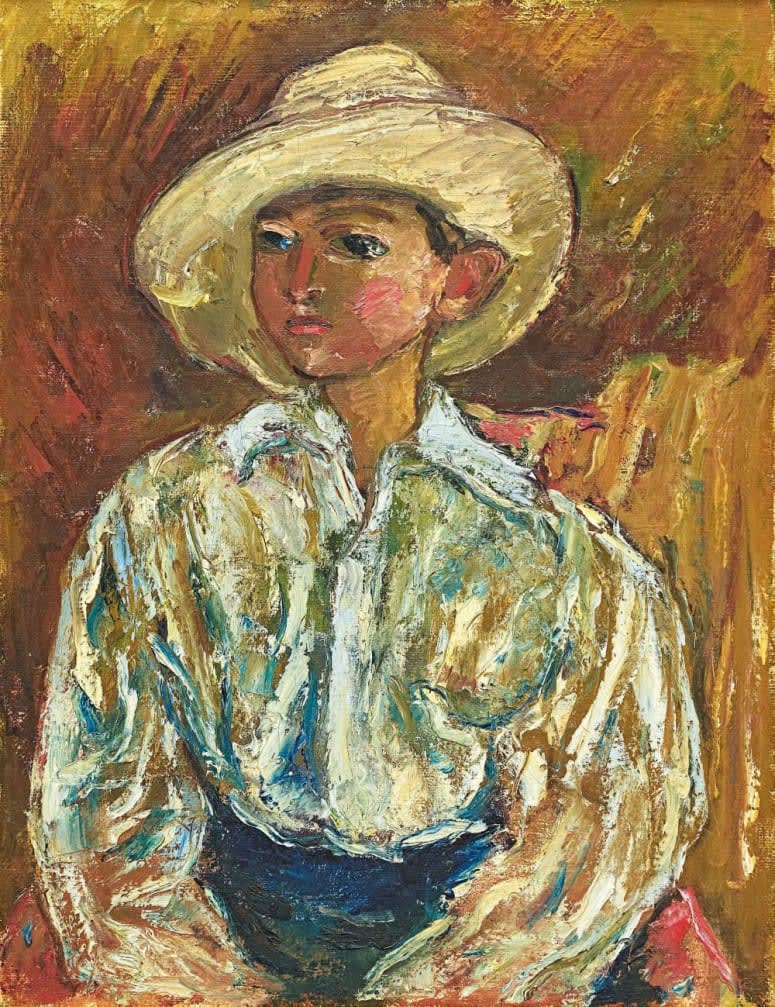
(fig 1) Portrait of the Artist's Son Joseph with a Hat, Strauss & Co, Cape Town, 16 March 2015, lot 561, Sold R 2 955 680 (USD 186 209), with the title Portrait of the Artist's Son.
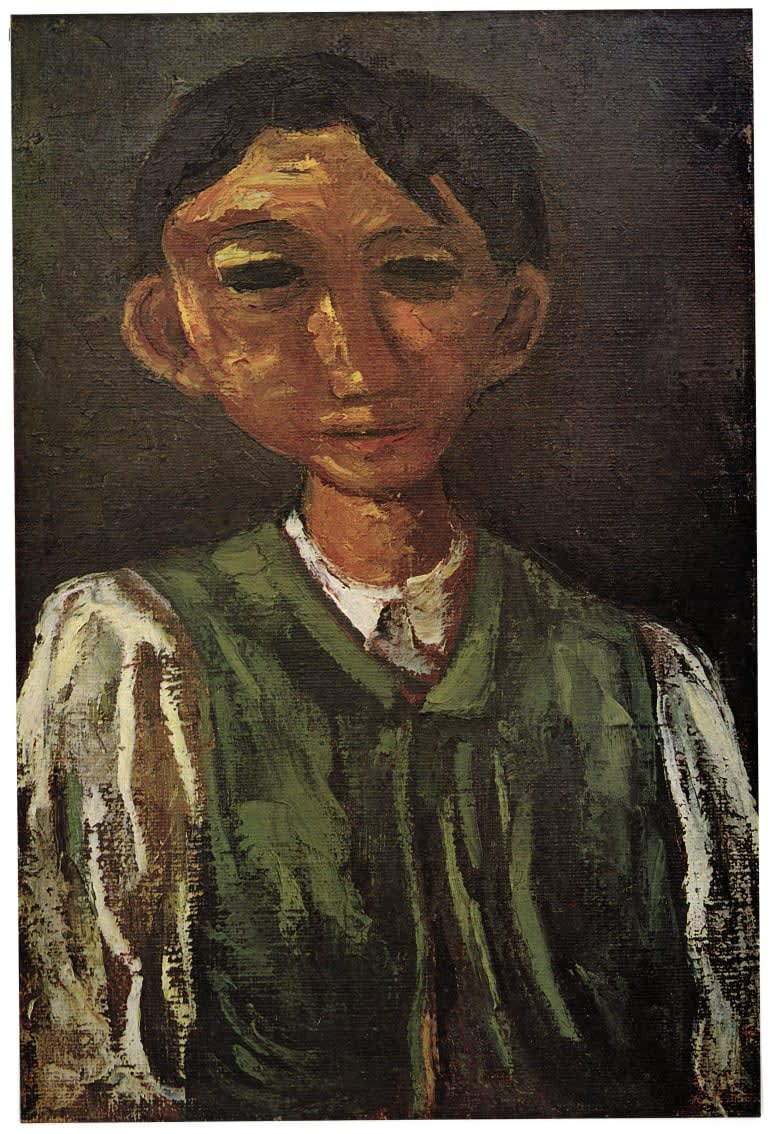
(fig 2) Boy with Green Waistcoat, Illustrated in Freda Kibel and Neville Dubow (1968) Wolf Kibel, Cape Town: Human and Rousseau, page 27, plate VII.
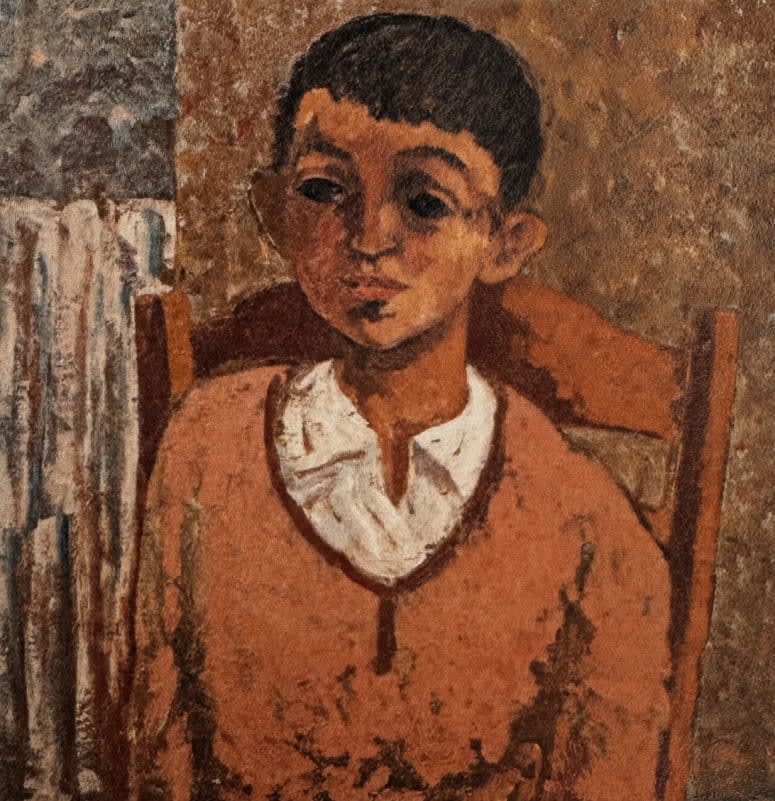
(fig 3) Boy with Pink Jersey (1935) Rupert Art Foundation, Stellenbosch, illustrated in Jay van den Berg (curator) (2025) Wolf Kibel and Lippy Lipshitz, Palm Studios, exhibition catalogue, Cape Town: Hoberman and South African Jewish Museum, page 103, plate 11.
More from Evening Sale