Athi-Patra Ruga
The Intervention on the Anglo-Boer Monument by FWWOA (Future White Women of Azania)
About the SessionFraming a Nation: The Garth Walker Photography Collection and Other Properties presents a selection of photographs from the personal archive of acclaimed graphic designer and photographer Garth Walker. Born in Pretoria, he trained at Technikon Natal in the 1970s, where he met artist Stephen Inggs, a life-long friend. Walker emerged as a pivotal figure in South African graphic design and visual culture in the 1990s through his design firm Orange Juice Design. In 1995 he launched the influential print magazine i-jusi as a platform to showcase new graphic design, typography and illustration. Later issues were sometimes exclusively devoted to photography.
Prominent artists featured in i-jusi included Roger Ballen, Conrad Botes, David Goldblatt and Anton Kannemeyer. It has been exhibited in over 25 countries and is held in the collections of the Museum of Modern Art, New York, Victoria and Albert Museum, London, and Bibliotèque Nationale d'France, Paris. Beyond the magazine, Walker is best known for the unique, custom typeface he produced for the Constitutional Court of South Africa in 2004. Inspired by street typography and prison graffiti, his typography is featured on the court’s building façade.
A longstanding collector, notably of Zulu headrests and nineteenth-century KwaZulu-Natal photography, Walker began acquiring contemporary South African photography in the early 2000s. His choices were instinctual and guided by his interest in vernacular design and the country’s rich documentary photography tradition. He acquired early works by Pieter Hugo, Zanele Muholi and Guy Tillim, before their international rise to prominence. His collection includes personal documentary work by the award-winning photojournalists Jodi Bieber and Greg Marinovich, as well as an important photo from 1965 by David Goldblatt taken at Hartebeespoort Dam north of Johannesburg. The influence of American documentary registers in his holdings of Stephen Shore and Rosalind Fox Solomon.
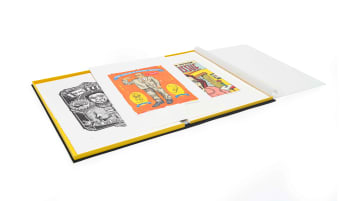
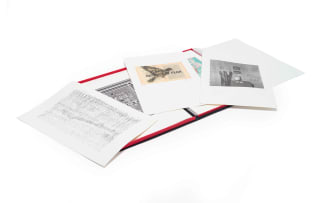
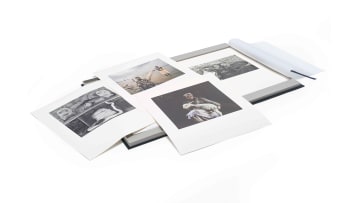
A highlight of this auction is the inclusion of i-jusi Portfolios #1, #2 and #3, produced to sustain the magazine’s independent publication and featuring seminal works by South African artists. Portfolio #3, with a photographic focus curated by Pieter Hugo, underscores the collaborative impulse shaping this material. The collection offers a rare opportunity to acquire works from a defining moment in the evolution of post-apartheid visual culture.
LOT 25
Athi-Patra Ruga
The Intervention on the Anglo-Boer Monument by FWWOA (Future White Women of Azania)
About this Item
signed, dated '15 and numbered 26/100 in pencil in the margin
Notes
Image Courtesy of Ruth Simbao and Athi-Patra Ruga.
Photographer: Ruth Simbao.
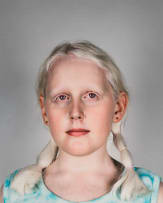
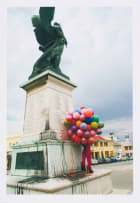
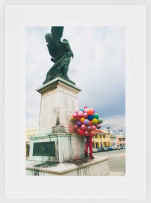
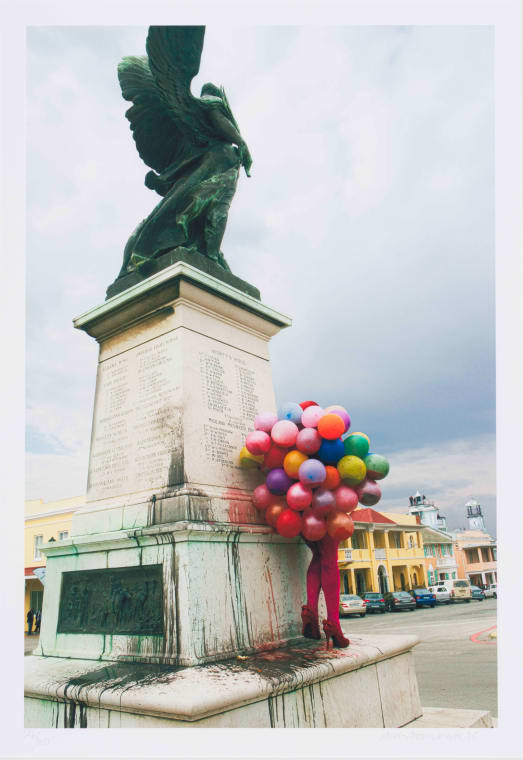
The present lot is a still taken from Athi-Patra Ruga's 2012 performance piece, Performance Obscura, performed in collaboration with Mikhael Subotzky and commissioned for the exhibition Making Way as part of the National Arts Festival in Makhanda, South Africa. In this piece, Ruga was dressed up as the recurring character the Future White Woman of Azania (FWWOA).
In this site-situational performance, Ruga confronted the gaze of the 19th-century camera obscura, subverting its historical function as a tool of surveillance.1 A paying audience in the Observatory Museum tower expected a privileged view of the artist on the streets below; instead, they received a rehearsed speech about Grahamstown arranged for the common tourist. Meanwhile, the Future White Woman of Azania paraded through the downtown streets in her weighty attire of paint-filled balloons, staring back at the tower through a pair of binoculars, unaware that the so-called advantaged audience was already rendered blind.2
The performance then moved to the Winged Angel of Peace, a bronze sculpture by Stanley Nicholson Babb depicting a winged figure bending over a dying soldier, erected as a memorial to the men of Albany who fell in the Anglo-Boer War. Against this monument, FWWOA began popping her paint-filled balloons, staining the colonial stonework with streams of colour, gesture the artist calls "counter-penetration": coming in as a way of reflecting stories of belonging and movement and not belonging.3
The act carried a real physical toll. Ruga endured pain from the long walk in high heels and the weighted balloons pulling at his throat and limbs, while also enduring the exposure of his body in drag, rendering him vulnerable as he walked the streets. As he has reflected: "not only is it physically painful but I'm weighed down by identity. As the balloons pop, I'm deflating all of these constructed ideas and revealing the true person.4
1. Strauss & Co (2024) Strauss & Co, Documentation from Athi-Patra Ruga's performance of 'The Future White Woman of Azania' in Grahamstown South Africa, 2012, Performa Obscura, online, accessed 21 April 2026.
2. Ruth Simbao (no date) Rhodes University, MAKING WAY performance: PERFORMANCE OBSCURA (2012) Performed by Athi-Patra Ruga and conceptualised with Mikhael Subotzky Curated by Ruth Simbao, online, accessed 21 April 2026.
3. Catherine Annie Hollingsworth (no date) The Miami Rail, ATHI-PATRA RUGA with Catherine Annie Hollingsworth, online, accessed 21 April 2026.
4. No author (no date) Nataal, Athi-Patra Ruga: Nataal Gallery Talks, online, accessed 21 April 2026.
The Patricia Fine Art Collection, curated by the former Mayor of Cape Town, stands as a testament to a lifetime of discerning patronage and civic devotion. Patricia Fine (née Sulcas Kreiner), who famously welcomed Nelson Mandela to the City Hall balcony in 1994, assembled a collection that mirrors the vibrant, transformative spirit of South Africa’s transition. Featuring significant works by modern and contemporary South African artists, the collection highlights Fine’s deep connection to the Cape’s cultural landscape and her role as an arts benefactor.
Provenance
The Patricia Fine Art Collection.
More from Framing a New Nation