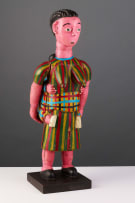
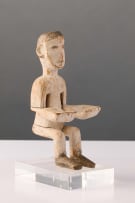
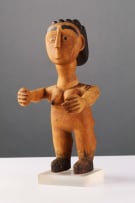
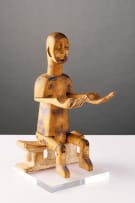
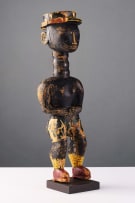
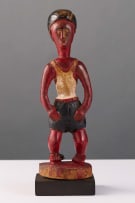
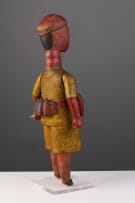
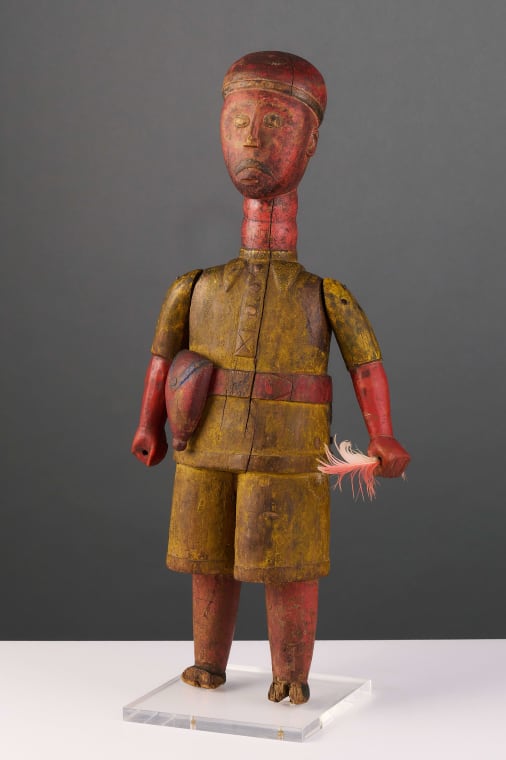
Ewe colon figure, Togo, mid 20th century
African Art and Artefacts
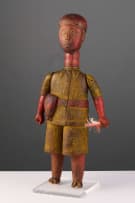
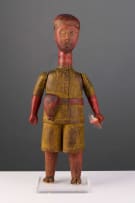
LOT 35
Ewe colon figure, Togo, mid 20th century
Incl. Buyer's Premium & VAT
About this Item
Notes
The term “colon art” (from the French statues colon, meaning “colonist statues”) refers to a distinctive genre of West African wooden figurative sculpture that emerged during the colonial era. Carved primarily in Côte d’Ivoire, Ghana, and neighbouring regions, these works embody a creative fusion between traditional African aesthetics and the imagery of European modernity.
Sometimes described as transitional or hybrid art, colon figures preserve the formal balance, stylisation, and composure typical of indigenous sculpture while incorporating new symbols of foreign power and prestige—pith helmets, military or bureaucratic uniforms, tailored suits, shoes, watches, bicycles, and smoking pipes.
In the later colonial period, African sculptors and their patrons were confronted with sweeping changes: the imposition of colonial governance, mission education, mechanisation, world wars, and shifting economies. Within this context, artists adopted the familiar visual grammar of their own traditions but took on new subject matter, reflecting adaptation, negotiation, ambivalence, and at times quiet critique of the colonial order.
Some scholars interpret colon figures as subtle satire—commentaries on the pretensions or absurdities of colonial authority—while others view them as African reinterpretations of newly visible social types: soldiers, civil servants, clerks, and traders. In either case, these sculptures register the encounter between African self-definition and European dominance, preserving in carved form the complexities of admiration, irony, and resilience that marked the colonial experience.
More from The Starcke Collection of African Art