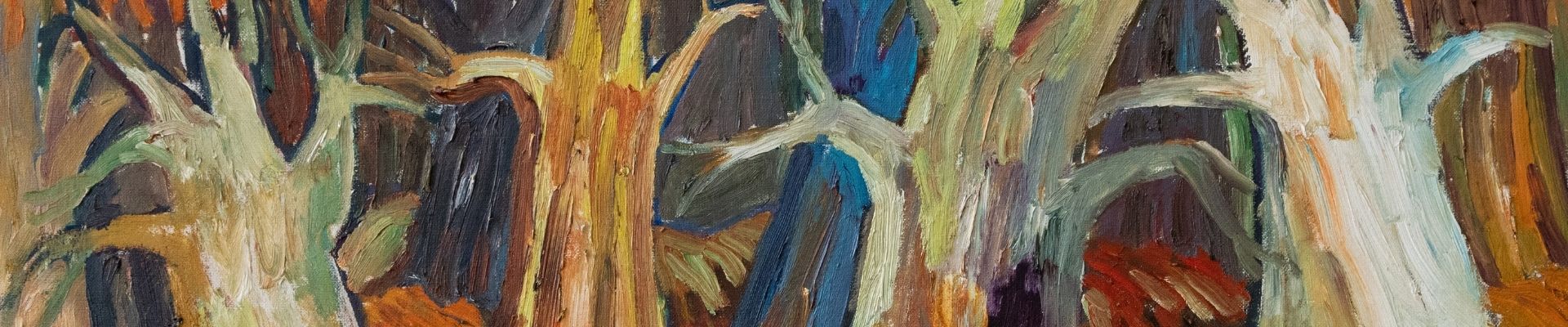
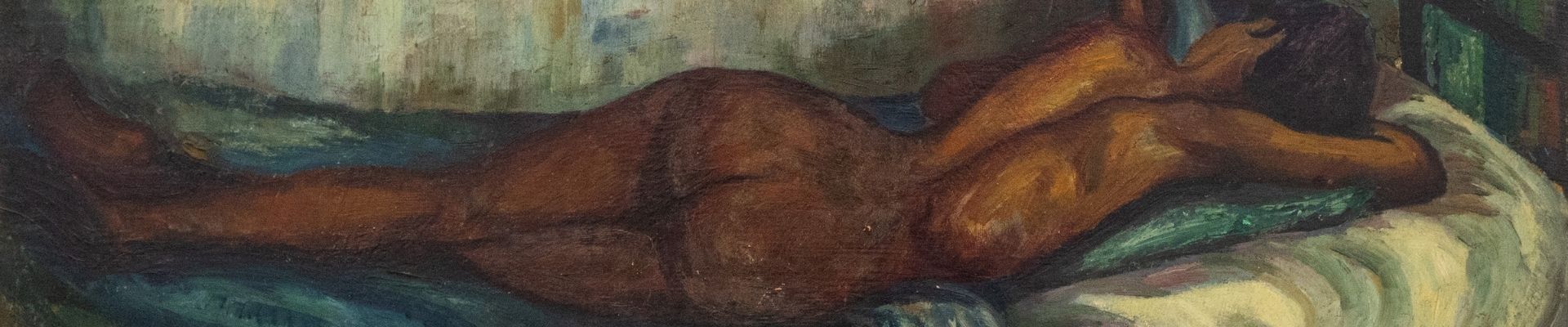
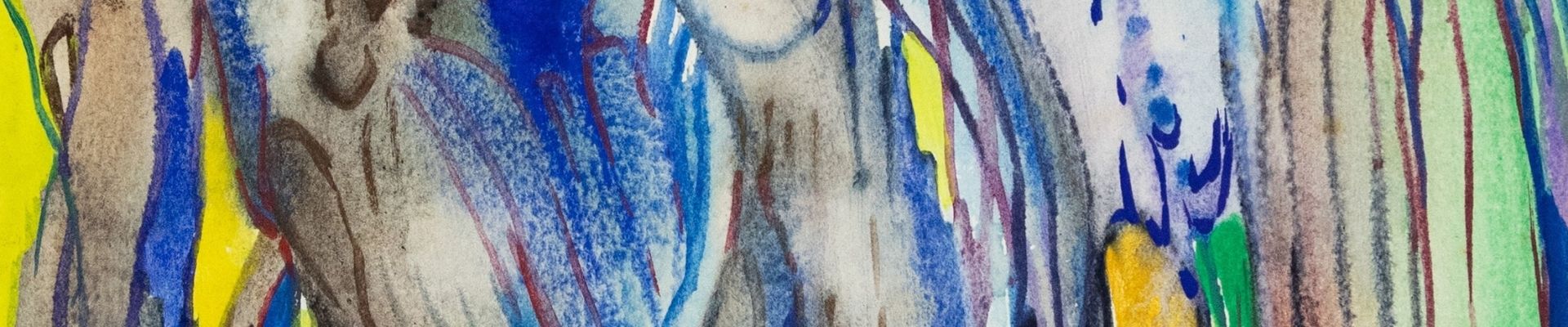
The trajectory of the visual arts in Uganda reflects the richness of the country’s cultural traditions and how they have been reinterpreted within a contemporary sociopolitical context. Prior to the institutionalisation of formal art education, diverse Ugandan communities developed visual practices associated with basketry, weaving, ceramics, wood carving, and the production of ritual and utilitarian objects, demonstrating the central role of artistic creation in social life and the transmission of cultural knowledge. These traditions provided important points of reference for the subsequent development of a modern artistic language rooted in local experience.
A defining moment in the history of Ugandan visual arts came with the establishment of the Makerere School of Art in 1937 by Margaret Trowell. Although initially shaped by colonial pedagogical models and European academic traditions, the institution played a fundamental role in educating artists who sought to articulate distinct visual perspectives by combining African references with the languages of international Modernism. Ugandan Modernism can therefore be understood as a creative process of negotiation between tradition and innovation, through which artists actively redefined the country’s cultural and identity narratives.
Among the most influential historical figures are the Kenyan-born Gregory Maloba (1922-2007), a pioneer of modern Ugandan sculpture, and Jak Katarikawe (1938-2018), renowned for his narrative compositions inspired by everyday life and the African cultural imagination. Over the past few decades, contemporary visual arts in Uganda have been characterised by interdisciplinary experimentation and critical engagement with social, political, and environmental issues. Through painting, sculpture, installation, photography, performance, and new media, artists address themes of postcolonial identity, rapid urbanisation, social inequality, environmental sustainability, historical memory, and community resilience. Contemporary artists such as Acaye Kerunen, Leilah Babirye, and Sanaa Gateja have gained international recognition through practices that explore memory, gender, displacement, sustainability, and community knowledge.
Independent institutions such as 32° East | Ugandan Arts Trust have played a decisive role in strengthening Uganda’s artistic ecosystem by offering artist residencies, training programmes, and opportunities for international exchange. The KLA ART Festival, held in Kampala, has become an important platform for the presentation of experimental practices and for fostering dialogue between local and international artists. At the same time, Afriart Gallery and the Margaret Trowell School of Industrial and Fine Art continue to contribute to the education, visibility, and professionalisation of the country’s artistic production.
Strauss & Co welcomes consignments of rare, secondary market works from the 1960s to 1990s, as well as contemporary pieces by artists from Uganda. Collectors interested in consigning works from Uganda and beyond are encouraged to contact us.
Top 10 Ugandan Artists