Lalique
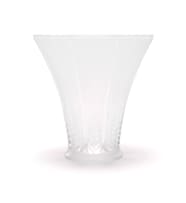
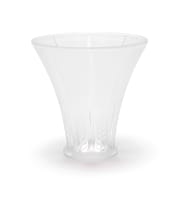
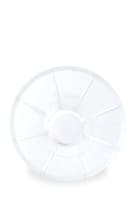
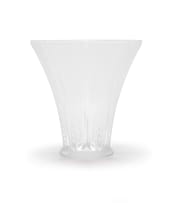
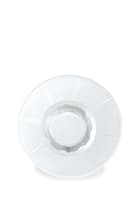
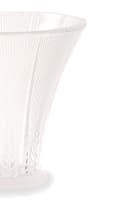
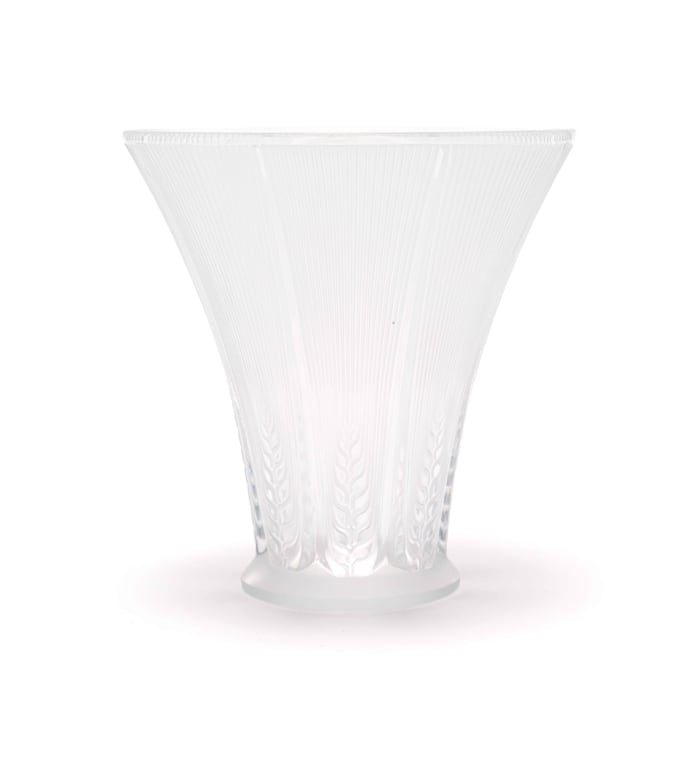
Lalique 'Epis' clear and frosted glass vase, No. 12-211, designed 1931, post 1945
About the SessionDr. Vera Dubin was born in Dvinsk, Latvia, in 1925. When she was a year old, her family emigrated to South Africa, first settling in Paarl and later in Cape Town. From an early age, her independence of spirit and determination were clear. At seven, she wrote boldly to South African artist Hugo Naudé, seeking to buy one of his paintings with money she had raised from her classmates to “brighten” their classroom — an early sign of the tenacity that would define her life.
Vera qualified as a doctor in 1948, one of only two women in her graduating class at the University of Cape Town. She went on to specialize in dermatology, working in government hospitals and private practice. Coming from a deeply artistic family, she pursued many passions beyond medicine. She was an award-winning gardener and brought the same artistry to beadmaking and decoupage.
With her husband, Abe, a clothing entrepreneur, she travelled widely and became an avid collector of pre-1945 Lalique glass, as well as South African and European paintings, sculpture, silver, and ceramics. Over her lifetime, she assembled an exceptional collection distinguished by its depth, discernment, and quality.
For many years, Vera led the Friends of the Durban Art Gallery, ultimately serving as its honorary life president. In her later years, she became known as the doyenne of classical music in Durban. In 1982, she founded the Friends of Music and for decades brought world-renowned musicians to perform in the city. She nurtured emerging local talent and created a pre-concert program that gave young musicians a public platform. In recognition of her contributions to music, she was honored with the Paul Harris Fellowship Award from Rotary International.
Dr. Vera Dubin died on August 24, 2025, at the age of 100 — a milestone she had always vowed to reach.
LOT 10
Lalique
Lalique 'Epis' clear and frosted glass vase, No. 12-211, designed 1931, post 1945
Incl. Buyer's Premium & VAT
About this Item
stencil-etched 'LALIQUE CRISTAL FRANCE'
Notes
'Epis' means ears of wheat.
The original pre-war model 1077 was reissued after 1951 in crystal, and the signature is consistent with this later model.
René Lalique revolutionised glassmaking by embracing press moulding, which allowed for the creation of intricate, detailed designs in large quantities. The process involved forcing molten glass into a metal mould using a mechanical plunger to press the glass into the mould's shape.
Literature
Félix Marcilhac, René Lalique 1860-1945 Mâitre-verrier, Analyse et Catalogue Raisonné de L'Œuvre de Verre, Paris, 1994, page 455
Provenance
The Vera Dubin Collection.
More from 100 Years: Lalique, Silver and Art from the collection of Vera Dubin