Rashid Diab
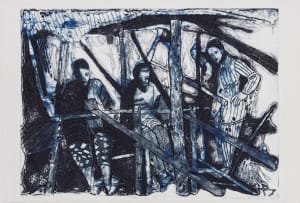
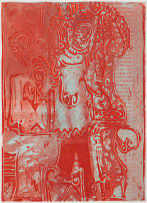
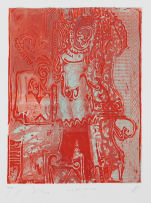
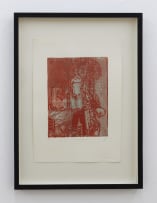
La Boda del Mar (The Wedding of the Sea)
About the SessionNAIROBI – Following their successful collaboration in 2025, Strauss & Co, Africa’s leading auction house, and Danda Jaroljmek, Director of Art Auction East Africa, will present Art Auction East Africa | Strauss & Co, a 67-lot sale bringing together modern and contemporary art from East Africa and the wider continent. The live-virtual sale will be held at Circle Art Gallery in Nairobi on Wednesday, 28 October, 2026, 7pm EAT. The catalogue spans a diversity of East African countries, including Kenya, Tanzania, Ethiopia, Sudan and Uganda, alongside works by artists from Angola, the Democratic Republic of Congo, Mozambique and Nigeria. Works on paper, photography and sculpture complements the strong painting consignment. “The selection invites collectors to discover East Africa’s diverse modernist histories, particularly those beyond the Anglophone world,” says Susie Goodman. “In recent years, there has been a resurgence of interest in East African modernists, with artists associated with the Khartoum School shown in museums and fairs globally. Our work as an auction house rooted in Africa is ensuring this rediscovery is not temporary. We are delighted to partner with Danda Jaroljmek in cultivating a sustainable secondary market for East African modernists active during the era of decolonisation and independence.” A preview exhibition will be held at Circle Art Gallery, Victoria Square, Riara Road, Nairobi, during the two weeks preceding the auction on Wednesday, 28 October 2026.
LOT 38
Rashid Diab
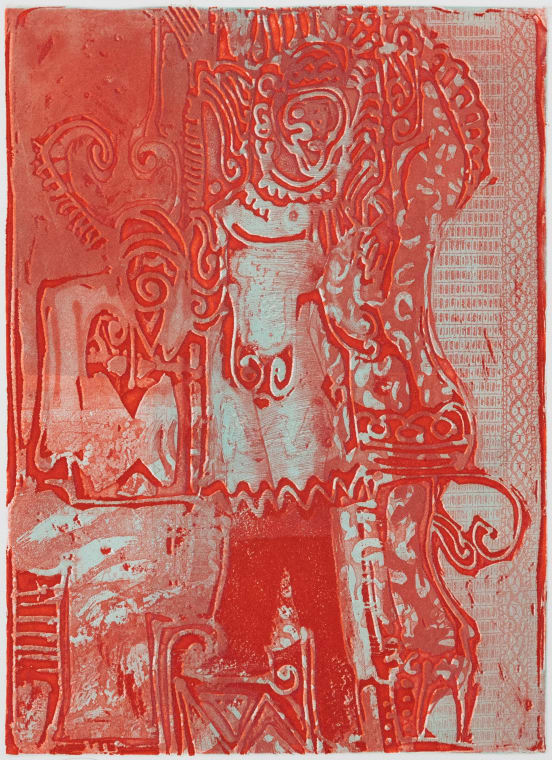
La Boda del Mar (The Wedding of the Sea)
Incl. Buyer's Premium & VAT
About this Item
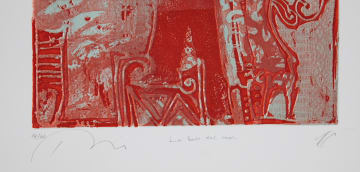
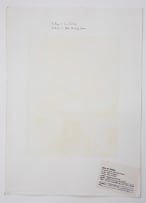
signed twice, numbered 14/60, inscribed with the title in pencil and embossed with the artist's chopmark in the margin; inscribed with the artist's name, the title and medium on a Dara Art Gallery label adhered to the reverse of the sheet
Provenance
The Artist's Collection.
Notes
The present lot is part of a larger series of Rashid Diab’s works called The Old Kingdoms. It combines etching, Aquaforte, and aquatint techniques and depicts a mix of motifs, creating a mythical interaction or ‘wedding’ of figures at sea. These prints by Diab are rare. The artist is better known for his abstract works and landscapes with Sudanese women, which catapulted him to prominence in Spain and the rest of the world.
One of the most influential Sudanese artists of his generation, Rashid Diab’s practice employs a range of painterly techniques to combine imagery of Sudanese heritage with an awareness of international contemporary artistic developments.
After graduating with a BA (Honours) in Painting from the College of Fine and Applied Arts in Khartoum, Diab received a scholarship to the Complutense University of Madrid, where he studied Painting and Etching. In 1991, he completed a PhD on the Philosophy of Sudanese Art in 1991, also at the Complutense University of Madrid, where he spent the next nine years teaching. His vibrant, abstract works and landscapes are forged from rich African and Arab influences. Usually depicting experiences of migrant Sudanese women.
Rashid Diab returned to Khartoum in 1999, making him one of the few painters of Sudanese origin with an established international career to come back home and dedicate his time and success to the people. Diab established the Dara Art Gallery in Khartoum (the first professional gallery of its kind in the city), and in 2003 he created the Rashid Diab Arts Centre, promoting visual arts and cultural awareness in Sudan. For his dedication, Diab was awarded the Order of Civil Merit knighthood by the former King of Spain in 2013.
Diab’s artwork has been exhibited across Europe, the USA, North Africa and the Middle East and can be found in a number of private and public collections, including the Museum of Fine Art in Cairo, the National Library of Madrid and the Royal Museum of Fine Art in Amman.
Biography courtesy of Circle Art Gallery.
Diab’s printmaking era between the 80s and 90s reflected a time of remembering his roots and reconnecting with the different elements of Sudanese culture. He was experiencing feelings of nostalgia as he thought of Sudan. Furthermore, he was acquiring and honing printmaking techniques that the College of Fine Arts in Khartoum could not provide.
Rashid Diab was in Spain as it transitioned to democracy, resulting in a huge explosion of art. Studying in Spain in the 80s therefore meant gaining access to an uninterrupted lineage of graphic genius stretching back to Goya. Spanish academies held rigorous standards for traditional intaglio, woodcut, and lithography techniques. At institutions like the Fábrica de Moneda y Timbre (Royal Mint) and the top Fine Art Faculties, technical precision in heavy-ink viscosity and complex acid-etching met the wild, raw aesthetic of contemporary painting.
More from Art Auction East Africa | Strauss & Co