William Kentridge
Garibaldi

LOT 70
William Kentridge
Garibaldi
Incl. Buyer's Premium & VAT
About this Item
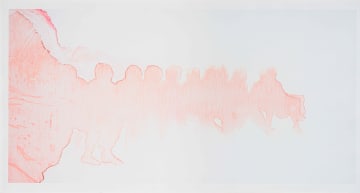
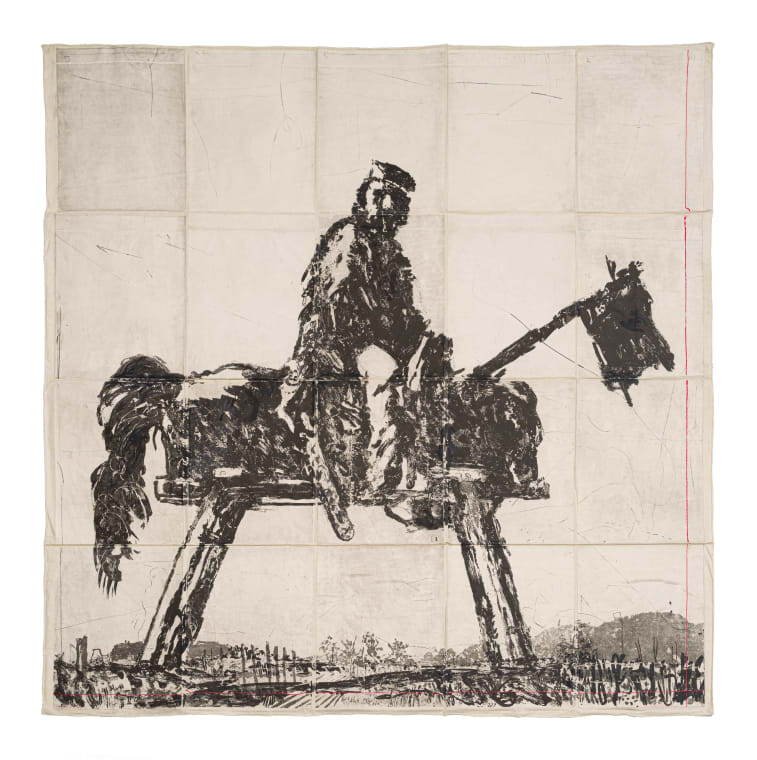
signed, dated and numbered Trial Proof in red conté in the margin; inscribed with the title in the image; from an edition of 10 + 1 artist's proof
Exhibited
FADA Gallery, Johannesburg, Booknesses: Contemporary South African Artist's Books, 24 March to 5 May 2017, another example exhibited.
Annadale Galleries, Sydney, Lulu and Triumph and Laments, 7 March to 21 April 2018, another example exhibited.
Goodman Gallery, Cape Town, That Which We Do Not Remember, 30 November to 13 January 2018, another example exhibited.
Emerson Urban Arts Media Gallery, Boston, William Kentridge: Triumphs and Laments, 2018, another example exhibited.
Provenance
Artist Proof Studio, Johannesburg.
Private Collection.
Notes
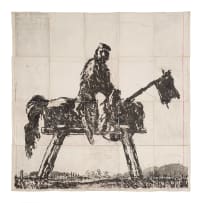
Working across drawing, printmaking, film, theatre and other media, William Kentridge explores the impact of European colonialism and the concerns of post-apartheid South Africa with unparalleled nuance and lyricism. Kentridge's monumental depiction of Garibaldi in 2017 followed his 2016 Triumphs and Laments: A Project for Rome, a 500 meter-long frieze, erased from the patina on the embankment walls lining the ancient capital's urban waterfront along the Tiber.
Giuseppe Garibaldi (1807-1882), the Italian general, patriot and republican who distinguished himself as an international figurehead for national independence and republican ideals, is considered in twentieth-century historiography and popular culture as Italy's greatest national hero. He was admired and praised by many intellectuals and political figures, including Abraham Lincoln, Victor Hugo, Alexandre Dumas, George Sand, Charles Dickens, Friedrich Engels and Che Guevara. Historian A. J. P. Taylor called him "the only wholly admirable figure in modern history".
In the popular telling of his story, he is associated with the red shirts that his volunteers, the 'Garibaldini', wore in lieu of a uniform. Why would the artist depict the great General Garibaldi on a wooden horse? Perhaps to highlight the absurdity of war? And to appeal to children, and to the childlike in all of us, thereby emphasising the humanity of this great hero - a man whose extraordinary leadership skills in war were never at odds with his humanity, nor beyond humour.
More from Portway to Cohen: A Collector’s Legacy and Other Properties