Guy Tillim
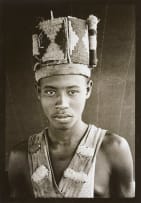
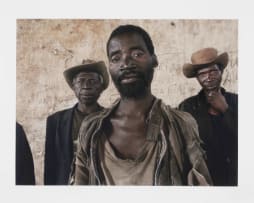
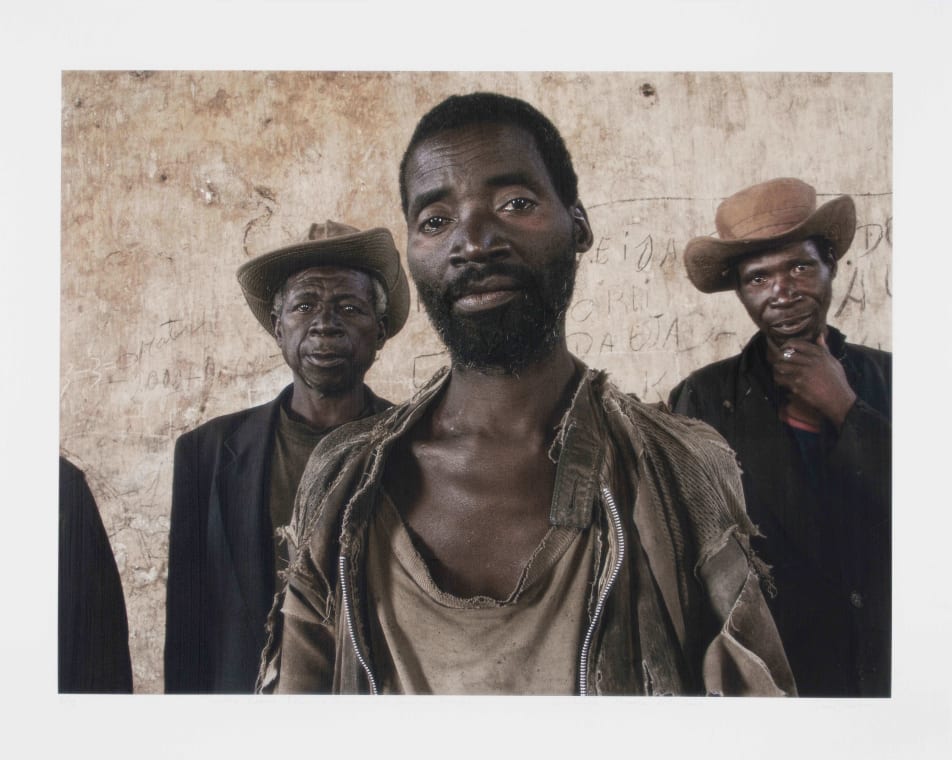
Justino Ngene, Laurino, Bongue and Faucino Hando, Kunhinga Angola
LOT 61
Guy Tillim
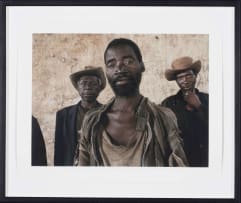
Justino Ngene, Laurino, Bongue and Faucino Hando, Kunhinga Angola
Incl. Buyer's Premium & VAT
About this Item
signed, dated Feb 2002, numbered 6/12 and inscribed with the title in pencil in the margin
Notes
Another example from the edition is currently held in The Walther Collection, Neu-Ulm, Germany.
The present lot, Justino Ngene, Laurino, Bongue and Faucino Hando, Kunhinga Angola, forms part of Guy Tillim’s Kunhinga Portraits series. Taken in February 2002 near the city of Kuito in central Angola, the series documents refugees who, in the months preceding the end of the Angolan Civil War (1975–2002), walked for five days from Monge in the north-eastern province of Lunda Norte to seek refuge in the small town of Kunhinga, where foreign aid agencies were stationed. The refugees came from a region that had provided cover for rebel UNITA forces and were consequently subjected to government retaliation.¹
This series marked a notable departure in Tillim’s career, as he shifted to working in colour after being previously known for his black-and-white reportage, particularly in conflict zones. His approach to portraiture is characterised by a direct, frontal engagement with the subjects’ gaze and presence, emphasising their individuality, resilience, and dignity rather than reducing them to statistics or anonymous victims.²
In each photograph, the subjects are identified by name as a deliberate strategy serving two key functions. In contexts of war, displacement, and humanitarian crisis, individuals are often rendered anonymous, described in numbers or categories such as “refugee” or “civilian.” By naming his sitters, Tillim resists this abstraction and affirms each person’s singularity and presence. Naming also establishes a relationship of acknowledgment, signalling that the subject has been encountered, listened to, and recognised as a person rather than merely observed. This approach shifts the portrait away from documentary extraction toward a more reciprocal and respectful mode of representation.
1. Stevenson (2003) Kunhinga Portraits, Cape Town: Stevenson, unpaginated.
2. Karen Rutter, Guy Tillim; Art South Africa, volume 2.1, Spring 2003.
Literature
Stevenson (2003) Kunhinga Portraits, Cape Town: Stevenson, illustrated in colour, unpaginated.
DaimlerChrysler South Africa (ed) (2004) Guy Tillim, Pretoria: DaimlerChrysler Award for South African Photography, another example from the edition illustrated in black and white on page 89.
Exhibited
Stevenson, Cape Town, Kunhinga Portraits, 18 June to 19 July 2003, another example from the edition exhibited.
Sala Uno, Rome, FotoGrafia, 3 April to 31 May 2004, another example from the edition exhibited.
Provenance
Stevenson, Cape Town.
Property of a Gentleman.
More from Portway to Cohen: A Collector’s Legacy and Other Properties