Walter Oltmann
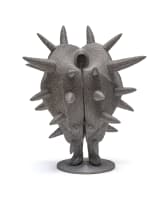
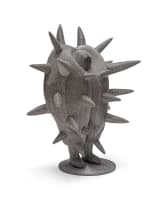
Ferox
About the SessionA strong contemporary thread runs throughout the sale, rooted in long-standing tradition. Selective historic textiles offer a vital counterpoint and illuminate the deep sources that continue to inspire contemporary makers.
About this Item
Notes
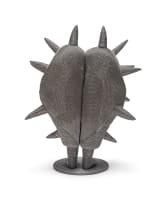
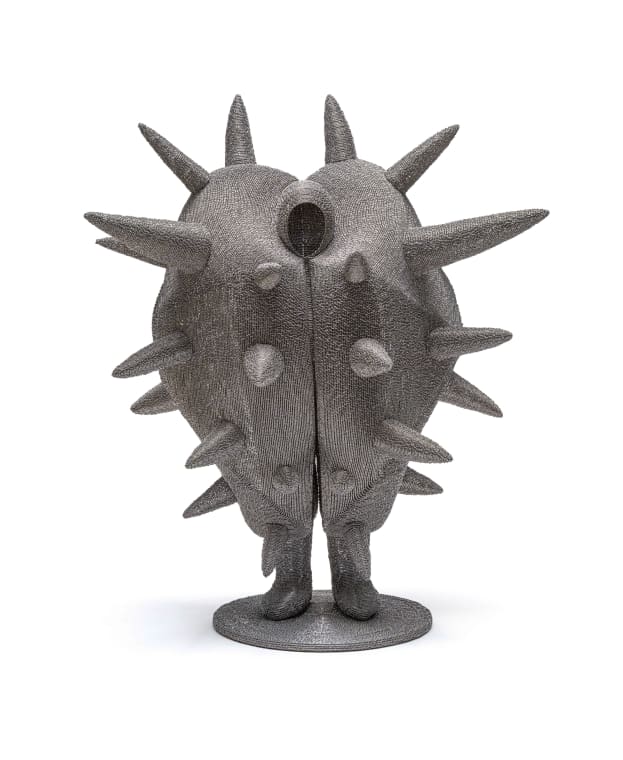
“In my recent wire sculptures, I create armour-like body suits that merge human, insect, and plant life into hybrid forms. I engage playfully with traits that some insects and plants have evolved for protection and survival, channelling these strategies in the creation of my sculptures.
Ferox (e.g. Aloe ferox) is a species name used to describe plants that have sharp thorns and appear fortified and fierce. I employ hand-fabricated processes of weaving and knotting that are lengthy and rigorous, mimicking the slow natural processes of growth and evolution. My sculptures disrupt clear-cut distinctions between humans, plants, and other life forms, suggesting a more interconnected and fluid reality where bodies share attributes across divisions.” - Walter Oltmann.
Handcrafted by entwining wire, Oltmann’s interest in the weaving traditions of Africa and the West is reflected in the highly skilled weaving technique he employs. Oltmann was awarded the Edoardo Villa Extraordinary Award for Sculpture, in 2022, which provided him with the space and resources to produce and exhibit a new body of work. That followed in late 2023 with a year-long show of his work entitled Metamorphosis at the Norval Foundation. Curator Karel Nel comments:
“Oltmann’s sculptures seem to transcend the terrestrial and evoke a cosmic and eternal quality that defies the ephemeral nature of both insect and human existence. Within this intersection, Oltmann’s work contemplates the passage of time, weaving the impermanent into immortality. These entities evoke an almost human resonance yet are also reminiscent of both spiky plants and insects. Their materiality introduces a dialectical tension, as these natural forms are gilded and elevated to a state of monumental grandeur.” - Karel Nel.
Provenance
Goodman Gallery, Cape Town.
More from Woven Legacies: Fibre & Form