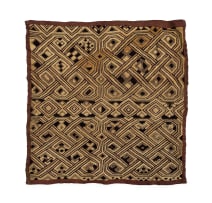
Unrecorded artist, Kuba Peoples
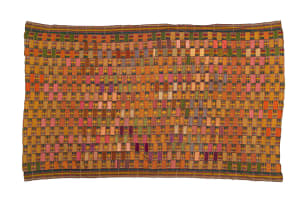
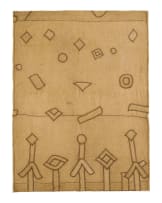
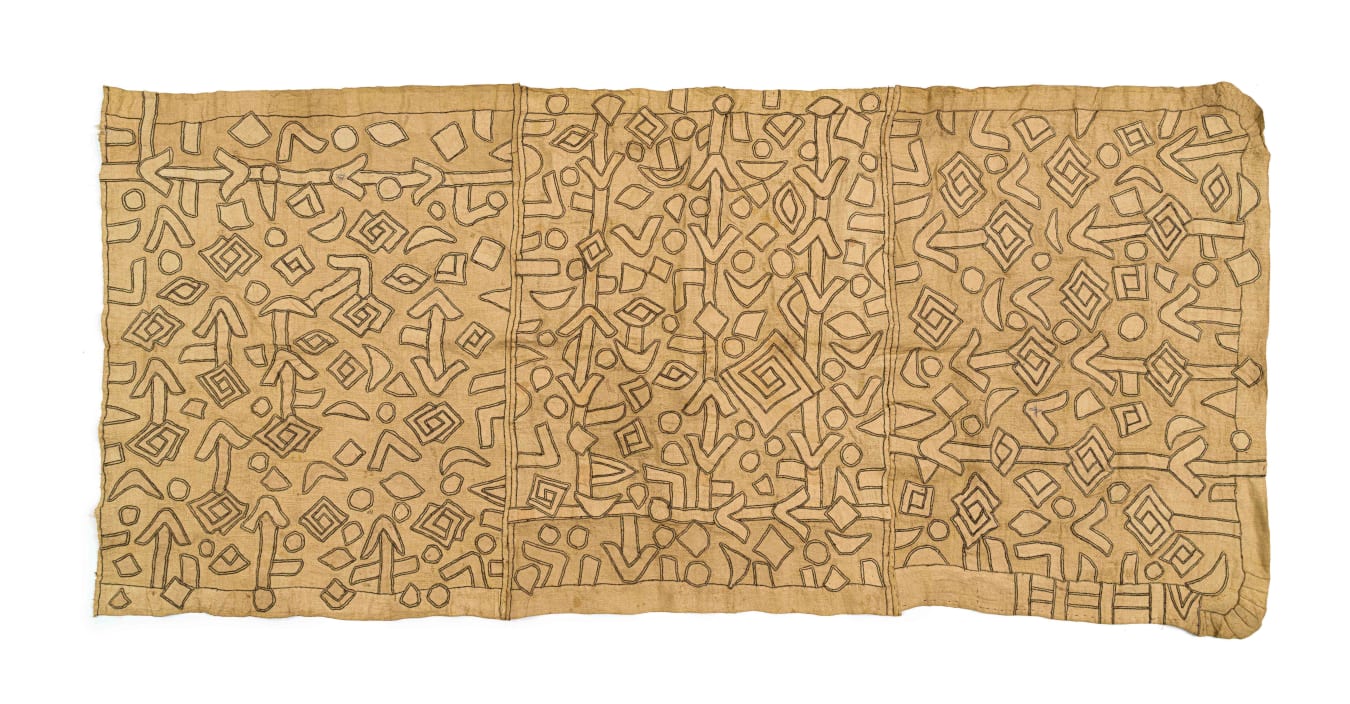
Raffia wrap skirt with geometric patterns and patchwork
About the SessionA strong contemporary thread runs throughout the sale, rooted in long-standing tradition. Selective historic textiles offer a vital counterpoint and illuminate the deep sources that continue to inspire contemporary makers.
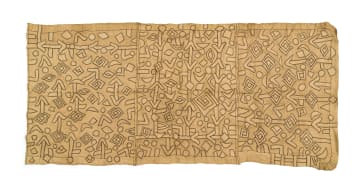
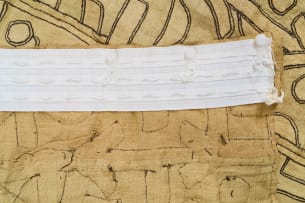
LOT 36
Unrecorded artist, Kuba Peoples
Raffia wrap skirt with geometric patterns and patchwork
Incl. Buyer's Premium & VAT
About this Item
Notes
The two-dimensional designs of Kuba raffia textiles are recognised as one of the great decorative traditions of sub-Saharan Africa.1
Raffia textiles are the principal store of wealth amongst the Kuba, and a family will accumulate cloth, as other societies may accumulate cattle or money. Textile production requires the interdependent contributions of men and women. The cultivation of the raffia palm and the weaving of raffia cloth are exclusively male activities, while the fabrication of the skirts is generally done by women.
Besides being a primary store of wealth, raffia cloths have several functions. They are worn at special events to indicate a person's position in the social hierarchy. They form part of the annual tribute to the Kuba king at the end of the dry season and may form part of a special tax. Cloth also forms part of the bride price, and skirts and cut-pile fabrics are paid over to the family of the bride.
1. Darish, Patricia J. (1989). "Dressing for the Next Life: Raffia Textile Production and Use among the Kuba of Zaire." In Cloth and Human Experience, Annette B. Weiner and Jane Schneider (eds), Washington, D.C.: Smithsonian Institution Press
Provenance
Michael Heuermann Collection.
View all Unrecorded artist, Kuba Peoples lots for sale in this auction
More from Woven Legacies: Fibre & Form