Amy Rusch
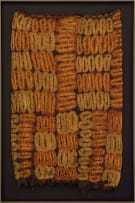
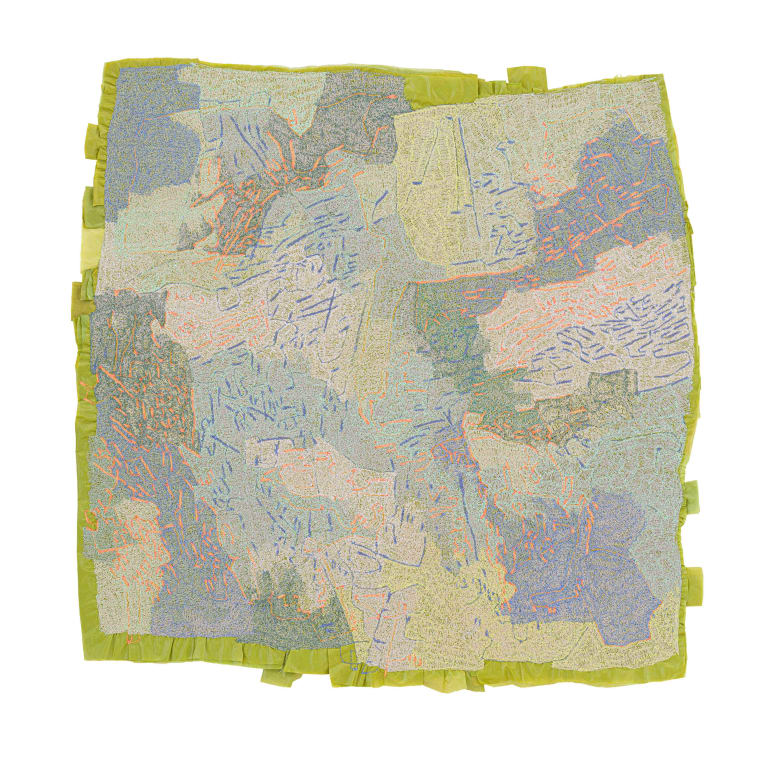
Sedimentary Wayfinding (process 2)
About the SessionA strong contemporary thread runs throughout the sale, rooted in long-standing tradition. Selective historic textiles offer a vital counterpoint and illuminate the deep sources that continue to inspire contemporary makers.
LOT 26
Amy Rusch
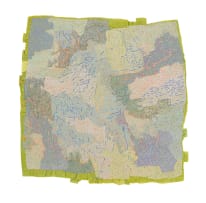
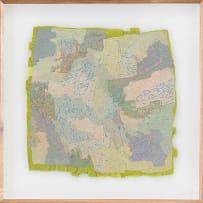
Sedimentary Wayfinding (process 2)
Incl. Buyer's Premium & VAT
About this Item
signed on the back 'Amy Rusch'
Notes
Amy Rusch (b.1990) is an artist working across disciplines and mediums. She’s been exploring a vibrational expression of mark-making, using stitched thread into layers of found plastic bags. The layers of plastic, connected by the motion and soundscape produced by the machine, communicate aural and material aspects of our modern culture. The threads are an attempt to link and comprehend millions of years of layered stratigraphic time. Her current body of work is informed by ocean crossings, archaeological excavations and microscopic studies of the living world. Her practice can be seen as tracings, translations or mappings of sensory lived – body experiences, becoming multisensory coalescences of sound, vibration, line and colour.
“This piece began using the wash-away sediment that remained after cleaning artefacts and excavated material at Klasies river mouth archaeological site in August 2023. This layer of deposit was from 60 000 years ago. I rolled thousands of sedimentary forms between my fingers, over many months…
At that time, it was mostly unclear what they might become. Now, these forms/beads/seeds became the guides for mark-making. The separated sediment comes together once more as they roll and find their place on the plastic surface. With silty sediments, there’s a positive electric charge between the silt platelets that makes them stick together. It’s the positive electric charge that holds those platelets in the silt together.
Stitching into plastic brings something from deep beneath the surface to the front of the mind. What was it like 60 000 years ago? Is it possible to reflect that far back in time to early Homo sapiens? Plastic stands in stark contrast to what one sees in the archaeological deposit - stone, bone, shell, ashy hearths. . . Bringing sediment and plastic together helps me to think through time and also to honour all that has been. The scale of this piece has a direct link back to the 50cm x 50cm square in which I excavated". - Amy Rusch
More from Woven Legacies: Fibre & Form