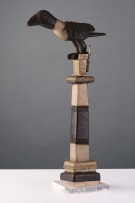
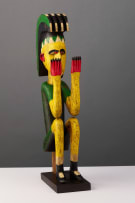
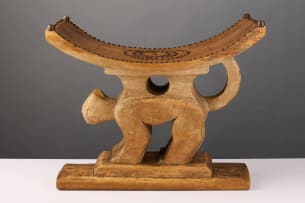
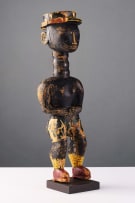
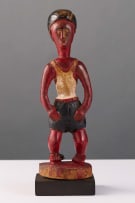
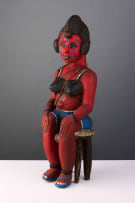
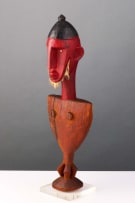
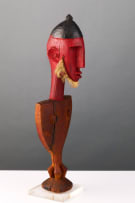
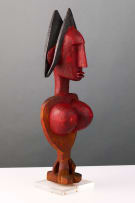
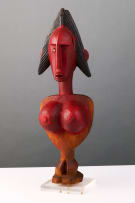
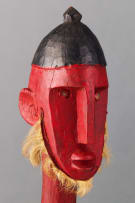
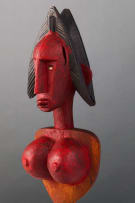
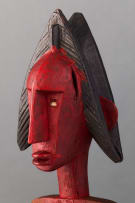
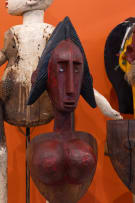
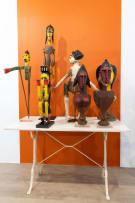
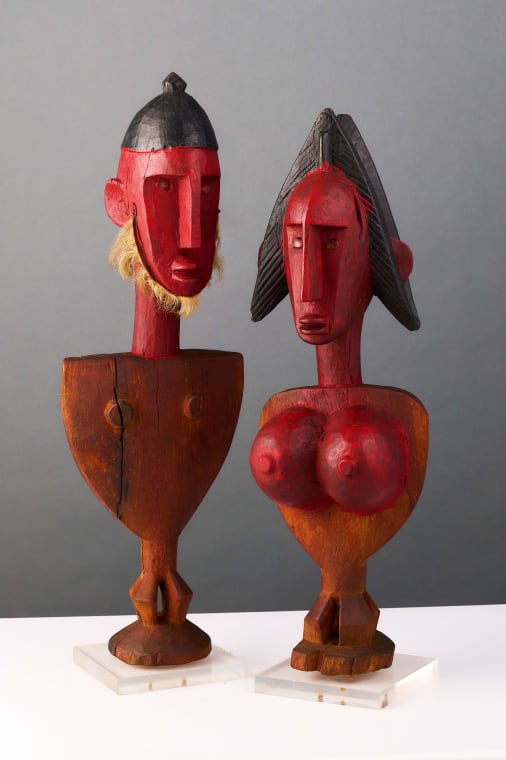
Bambara female and male marionettes, West Africa, mid/late 20th century, two
African Art and Artefacts
LOT 47
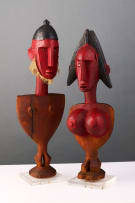
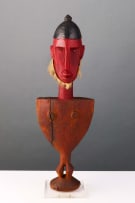
Bambara female and male marionettes, West Africa, mid/late 20th century, two
About this Item
Notes
Among the Bambara (or Bamana) people of Mali, puppetry and masquerade traditions form an integral part of communal and ritual life, blending sculpture, music, dance, and storytelling into complex public performances. The puppet theatre, known as Sogo bò—literally “animal outings”—is one of the most distinctive expressions of this culture. During these events, a wide range of figures are presented, from small, carved wooden rod puppets to large, articulated figures operated above screens. These performances are usually organized by youth associations and serve both didactic and entertainment purposes. Through humorous and symbolic scenes involving animals and human characters, they transmit moral lessons, social values, and collective history while offering social commentary and satire.
Masquerades, on the other hand, are more overtly spiritual and are closely tied to Bambara initiation societies such as Komo, Kono, and Chi Wara. The masks and accompanying costumes represent ancestral spirits, mythic beings, and natural forces that are invoked to maintain harmony, ensure fertility, and protect the community. Masquerade performances combine rhythmic drumming, chanting, and energetic dance, creating a powerful link between the human and spirit worlds.
Together, Bambara puppets and masquerades embody a living art form that merges creativity, ritual, and education, reflecting the community’s values and its deep connection to the spiritual and moral order of life.
More from The Starcke Collection of African Art