Unrecorded Artist
Session One
About the SessionFrom early Cape furniture to mid-century classics and contemporary pieces, this selection of furniture, ceramics, glass and bronzes, traces a journey through more than two hundred years of South African design.
LOT 489
Unrecorded Artist
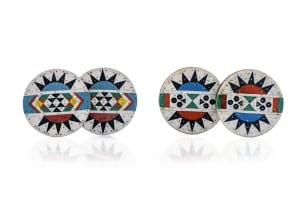
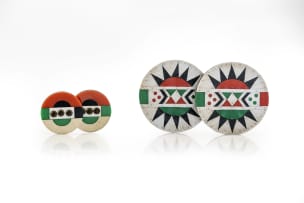
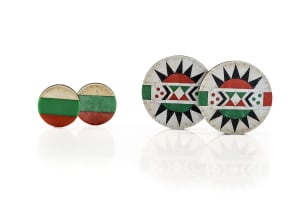
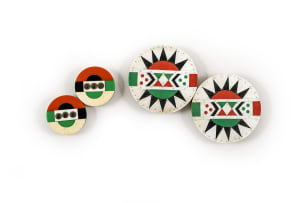
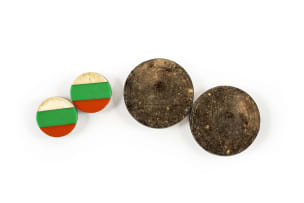
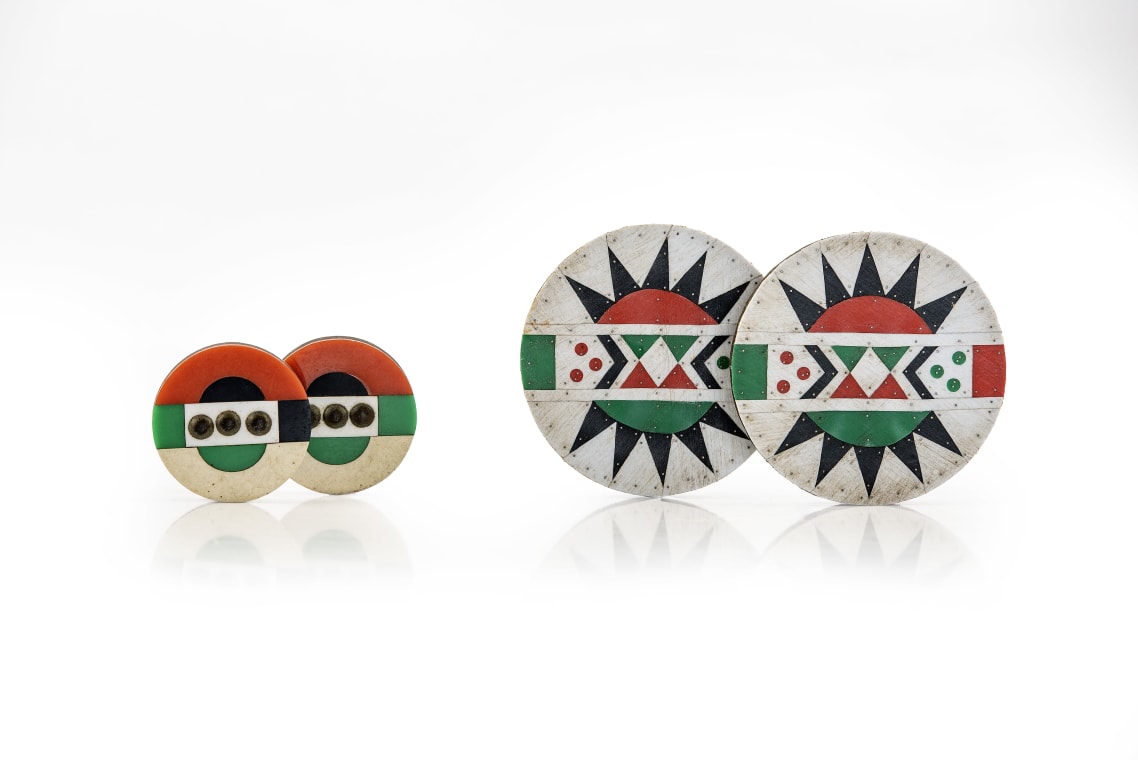
In sizes the smaller pair of isiZulu 'iziqhaza' earplugs double-sided, the larger pair one-sided
About this Item
Notes
Known as iziqhaza, earplugs formed part of an important tradition of ear piercing among isiZulu-speaking communities in southeastern Africa. During the nineteenth century, the piercing of the ears marked a child’s first step from childhood towards adulthood, and became closely associated with Zulu identity during the period of the Zulu kingdom and into the early twentieth century.
Early examples were typically simple in form, made from materials such as ivory, wood, horn or baked clay, and were generally undecorated. By the mid-twentieth century, however, iziqhaza had developed into highly decorative objects of personal adornment, particularly among isiZulu-speaking communities in rural northern KwaZulu-Natal. As new materials became available, makers began incorporating carved decoration, oil-based paint, and later coloured plastic and Perspex.
A distinctive style known as amashaza emerged in the 1950s, using coloured mosaic-like designs cut from vinyl asbestos floor tiles and fixed to wooden plugs with gramophone needles. This style is associated with isiZulu-speaking migrant workers from the Msinga region, who are thought to have brought these earplugs home from Johannesburg as gifts. Their bold geometric patterns and later brightly coloured plastic surfaces reflect both traditional forms of identity and changing twentieth-century materials and tastes.
More from South African Design: Past & Present