Peter Magubane
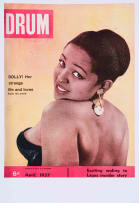
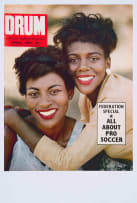
Linda Mhlongo and Ruth Nkonyeni, Drum Magazine Cover, South Africa Edition, April 1961
About the SessionHair Matters: A Selection of Works from the Georgina Jaffee Collection is a tightly focused, thematic auction that initiates a critical dialogue on the profound significance of hair in contemporary artistic practice. Featuring a cohort of accomplished contemporary artists, primarily those working from the African continent or within the global African diaspora, this selection of works is guided by a singular conceptual mandate: every work turns to hair as a powerful nexus, serving as medium, metaphor, or focal point of exploration.
Hair Matters illuminates the diverse interpretations and artistic vocabularies through which hair shapes identity, memory, and meaning across cultures, nations, and histories. Featuring artists such as Léonce Raphaël Agbodjélou (Benin), Ifeoma U. Anyaeji (Nigeria), Sethembile Msezane (South Africa), and Hank Willis Thomas (United States), the auction examines the aesthetics, politics, and sociology of hair, with particular emphasis on African perspectives and the connective threads that link the continent and its global diasporas.
Curatorial Voices: Natasha Becker, Jared Leite, Vida Madighi-Oghu and Sihle Motsa.
LOT 33
Peter Magubane
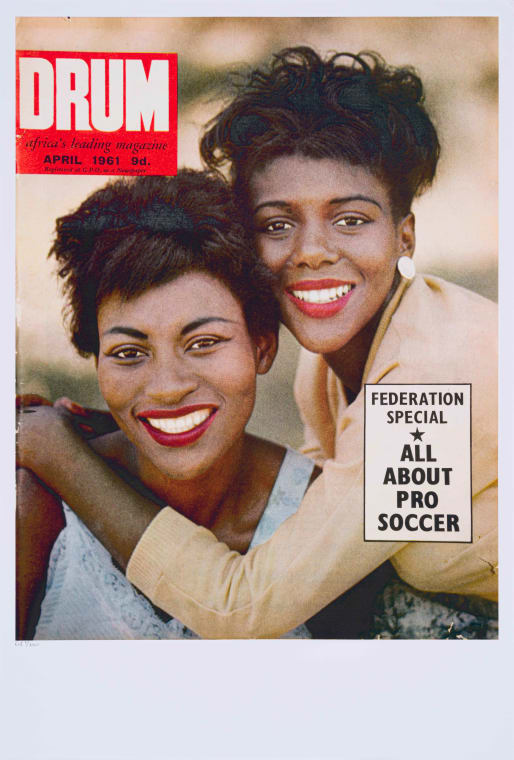
Linda Mhlongo and Ruth Nkonyeni, Drum Magazine Cover, South Africa Edition, April 1961
Incl. Buyer's Premium & VAT
About this Item
numbered 1/250 in pencil and embossed with the Bailey's African History Archive copyright chopmark in the margin
Provenance
Aspire, Online, Aspire X PLP/African Photography Auction, 27 July 2021, lot 85.
The Georgina Jaffee Hair Matters Collection.
Notes
Selected by Curatorial Voice: Jared Leite.
The present lot, photographed by Peter Magubane, features the two singers Linda Mhlongo and Ruth Nkonyeni, who formed part of the chorus of King Kong: An African Jazz, the first all-Black South African musical, which opened on 2 February 1959. The production was made possible through the Union of South African Artists and created new opportunities for Black South Africans working in the arts.
King Kong: An African Jazz is based on the life of Ezekiel Dhlamini, born in 1925 in the Vryheid District of Natal. After leaving home at the age of 14 to work as a gardener, he made his way to Durban and later to Johannesburg in search of better economic prospects. In Johannesburg, he survived by playing cards and dice before finding his way to the sparring rooms of the Bantu Men’s Social Centre, where he became a professional boxer known as 'King Kong' and went on to win several championships. Despite his success, he was a troubled man whose volatile temperament led to his downfall. He was eventually sentenced to prison for the murder of his long-time girlfriend and took his own life at the age of 32, just two weeks into his sentence.1
The musical’s cast comprised around seventy performers, many of whom had no prior theatrical experience. The production faced challenges under Apartheid, including the frequent arrests of cast members for pass law violations, which often required them to be bailed out to return to rehearsals. There were also tensions with local gangsters believed to have connections to the real King Kong, who feared the production might reveal too much about his life and reportedly made threats against members of the cast.2
Two of the performers, Linda Mhlongo and Ruth Nkonyeni, earned a place on the cover of Drum Magazine, a landmark publication for Black South Africans that focused on style, music and urban life. The photograph was taken by Peter Magubane, one of South Africa’s most important photographers, whose work captured both the everyday and extraordinary experiences of Black South Africans under Apartheid.3
Magubane began his career at Drum Magazine in 1954 as a messenger, quickly advancing to the role of photojournalist under the mentorship of Jürgen Schadeberg. Over the course of his career, he documented pivotal moments in South African history, including the Sharpeville Massacre, the Soweto Uprising and the lives of ordinary South Africans navigating the oppressive realities of Apartheid. His images are celebrated for their combination of journalistic clarity and humanistic intimacy, portraying resilience, culture and identity in ways that challenged dominant stereotypes. Magubane’s work not only recorded history but helped shape the visual memory of a nation, bridging the gap between reportage, art and activism.4
1. Unknown author (2022) South African History Online, King Kong the Musical 1959 -1961, online, accessed 13 November 2025.
2. Ibid.
3. Unknown author (no date) African Pictures, BAHA Drum Magazine cover, South Africa edition, April 1961, online, accessed 13 November 2025.
4. Kylie Thomas (2024) The Conversation, Peter Magubane: courageous photographer who chronicled South Africa’s struggle for freedom, online, accessed 13 November 2025.
More from Hair Matters: A Selection of Works from the Georgina Jaffee Collection