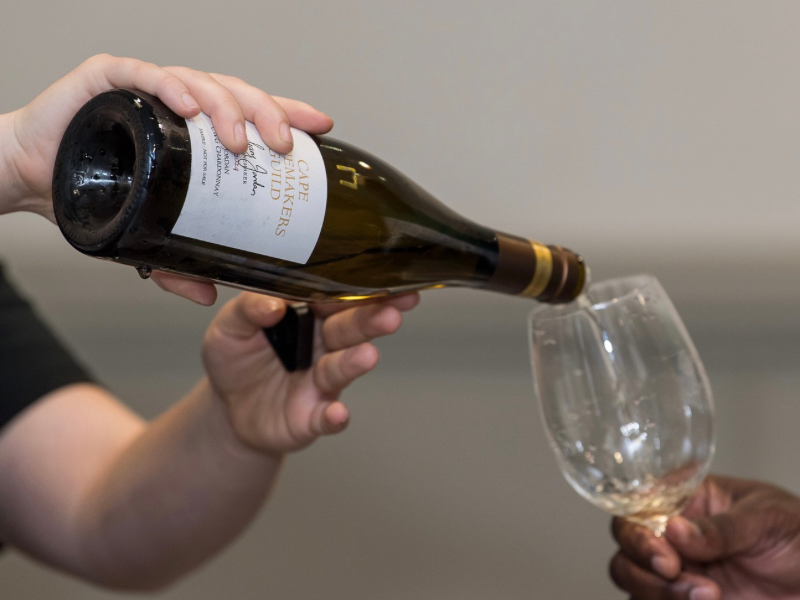
Why would I buy a Cape Winemakers Guild Auction wine?
13 Sep 2026
We invited writer Daléne Fourie to share her perspective on bidding at the annual Cape Winemakers Guild Auction — and to tell us which lots caught her eye.
“Which is more important,” asked Big Panda, “the journey or the destination?”
“The company,” said Tiny Dragon.”James Norbury, Big Panda & Tiny Dragon.One of the biggest buyers of Cape Winemakers Guild Auction wines quoted this at a private tasting of this year’s 58 Auction wines at Grootbos Private Nature Reserve in Gansbaai. It seemed an incongruous thing for a big finance guy to say about a room full of very expensive wine.
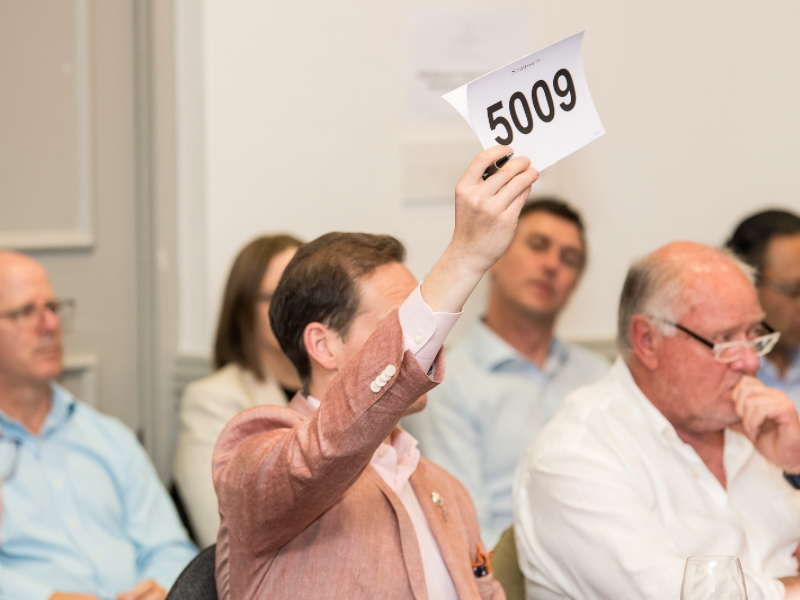
But as the day wore on I came to realise that the wines on offer trade on personality, personalities made larger and more enigmatic by the company they keep. And when asking myself why I would spend between R8000 to R45 000 on a 12 bottle case of South African wines on auction, I realised I wouldn’t. But on a liquid snapshot of South Africa from the perspective of this group of people in 2026? Yes.

Why would I buy one?
The wine, obviously. Made by some of South Africa’s finest winemakers, and quality checked by the collective, the quality of the wine is not in question. But that wasn’t really what was driving the conversation among the people preparing to bid. They were talking about the makers. Who had made what. Where they had made it. What they had been doing for the last 10, 20 or 40 years. What they had tried before. What they were trying now. Where they could snatch a bargain. Which vineyards they trusted. Which wines they thought were going to matter. The more I listened, the more I understood that a Cape Winemakers Guild Auction wine is not an anonymous luxury product. Like a piece of art, its value is bound up in the person who made it, the choices they made and the moment they made it in. Wine’s particular selling point is that its raw material is the place itself.
Who are you buying?
The Cape Winemakers Guild was established in 1982 by eight winemakers and held its first auction in 1985. Today it has 45 active members, and this year’s auction is the Guild’s fifth since formalising its relationship with Strauss & Co. The 58 wines going under the hammer this year are a celebration of their independence and diversity, and include a number of firsts: Adi’s youthful Grenache Blanc, Lukas’s Piekenierskloof Chenin Blanc and Andrea’s newly certified Sémillon Gris, among them. Though the wines are only the proverbial tip of the iceberg.
Take Samantha O’Keefe. When she planted vines in Greyton in the early 2000s as an American in Africa, it wasn’t an established fine-wine region. There was no obvious wine industry there waiting for her. She was effectively betting that this remote, cool-climate place could make serious wine. She was right. Then, in 2019, a fire destroyed much of Lismore, including the cellar, home and large sections of the vineyard. O’Keefe had to decide whether to rebuild. She did. More than two decades after planting, Lismore has helped put Greyton on the fine-wine map. This year, O’Keefe is offering her first Lismore Child of Venus Viognier for the Guild Auction. You aren’t simply buying a bottle of Viognier.
And then there is Pieter “Bubbles” Ferreira. Ferreira has spent more than four decades chasing the perfect South African bubble. He worked at Pierre Jourdan, spent harvests in Champagne, joined Graham Beck in 1990 and helped turn Cap Classique from a fledgling category into one capable of standing alongside the world’s serious traditional-method sparkling wines. His wines have been poured at key moments of South African history, including Nelson Mandela’s 1994 presidential inauguration, and at Barack Obama’s inaugural after-party.
And now, after more than 30 years at Graham Beck, he continues under his own name. He recently told me he was only halfway there. An unusual attitude to have after receiving a Lifetime Achievement Award from the IWC, and Tim Atkin MW’s recent Living Legend Award. It also makes his first own-label Guild Auction wine rather more interesting. You’re not just buying Cap Classique from one of its founding fathers, or the first Cap Classique Auction Wine made entirely from Pinot Noir in a country that previously struggled to produce quality Pinot Noir. You’re buying into the next chapter of a man’s 40-year obsession.
Abrie Beeslaar is different. He spent 23 vintages at Kanonkop, becoming only its third winemaker in 50 years (at the time) and winning the IWSC International Winemaker of the Year title four times. His Paul Sauer 2015 became South Africa’s first 100-point wine from Tim Atkin MW. Yet when Abrie talks about making good wine, he reduces it to two questions: Does it make you hungry? Does it make you thirsty?
There is something appealing about that simplicity after a decade in which wine has become increasingly obsessed with making statements about itself. Abrie’s wines are about mastery, consistency and knowing what you’re doing well enough not to shout about it. His own Beeslaar wines also demonstrate that a winemaker’s reputation can travel with him. The bottle becomes a continuation of the person. And this person is one of SA’s humble greats.
Then there are the obsessives…
Hannes Storm has spent 14 years decoding the Hemel-en-Aarde. Not vaguely. He makes Pinot Noir from all three of the valley’s appellations (and Chardonnay from two), allowing the differences between them to become part of the point. He works with small parcels, variable yields and difficult sites because he is interested in what happens when you keep looking at the same place for long enough. This year, Tim Atkin MW named him Winemaker of the Year. But the award isn’t really the interesting part. The interesting part is that Storm has spent years doing the same thing over and over again, becoming increasingly precise about it. So precise, that the world has finally noticed. That is what you are buying. One of the original pioneers of the Hemel-en-Aarde, and one of the disciples of Pinot Noir on the continent, when all the Burgundians said it couldn’t be done.
Adi Badenhorst is almost the opposite. If Hannes is obsession through precision, Adi is obsession through seemingly haphazard curiosity. The former Swartland revolutionary has spent years building a farm that feels less like a conventional wine estate and more like a piece of South African cultural history, with vines growing through it. There are old vineyards, new plantings, 73 varieties on Jakkalsfontein, family, farm workers, winemakers passing through, international harvest interns, a disco ball, pizza nights and a collection of wines that refuses to behave particularly neatly. He once described himself as a “cerebral dwarf” when it comes to chemistry. He was joking. Probably. But behind the irreverence is one of the most serious wine operations in the country. His Guild Auction wine isn’t interesting because Adi is a famous winemaker. It’s interesting because it interested him. The more time I spend with South African winemakers, the more I realise that wine is a remarkably good way of understanding the country. Not just its wine industry.
And then there are the people changing the rules…
This might be the most compelling reason to buy a Guild wine. Because some of these wines aren’t simply records of what South African wine has achieved. They’re bets on where it is going. Andrea Mullineux’s “The Gris” is a good example. For 14 years, Andrea and Chris Mullineux worked to have Sémillon Gris, a naturally occurring pink-skinned mutation of Sémillon that has been growing in the Cape for centuries, officially recognised. They selected the vines, propagated and cleaned the material, tested it, planted a certified mother block and went through the necessary regulatory process. Nobody invented the grape. They simply proved what it was. And this year, Sémillon Gris has an official identity. Andrea could have left the wine as the slightly mysterious “Gris” it had become known as among collectors. Instead, she spent 14 years making it official. The Guild Auction wine is therefore not just a rare bottle. It is a tiny piece of a South African wine story in progress.

Wine as a portrait of South Africa
The more time I spend with South African winemakers, the more I realise that wine is a remarkably good way of understanding the country. Not just its wine industry. Because the things happening in vineyards are often bigger than the bottle. They are stories about land and belonging. About old systems and new ambitions. About outsiders who arrive and make somewhere their own. About people trying to preserve what is disappearing and others trying to reinvent what has always been there.
They are also stories about climate, agriculture, luxury, identity, history and the particular ways South Africans respond to a difficult place or situation. It is rarely boring. The Guild brings many of those stories together in one place. And that makes the Auction feel less like a selection of expensive wines and more like a snapshot of South African wine at this particular point in time. At Grootbos, artists were making work from the fynbos around us, turning the natural world into something that could be looked at differently. The winemakers in the room were doing something that struck me as not entirely different: taking what the country gives them and interpreting it in their own way. That, perhaps, is what makes these wines interesting to collect. That, and the fact that the whole Guild operates as a vehicle for change in the industry, from the Protege Programme facilitating transformation, to mentoring and benchmarking each other against international standards, and doing the legwork of sharing this uniquely South African spirit with the world.
So why would I buy one?
Perhaps that is the real reason. Not just rarity. Not prestige. Not even the satisfaction of owning something most people can’t buy. You’re buying a moment in South African wine, and the people who are making it. Individually, these winemakers have pushed South African wine into new places, new categories and new ways of thinking. Together, they form a record of where the industry has been and where it might be going. They are making history. And unlike history written in books, this one comes in 12-bottle cases. Which means that if you’re going to bid, you should probably do your homework. But that’s half the fun. Find out who made the wine. Find out what they’ve been doing, what they’ve fought for, what they’ve changed and what they’re trying to do now. Taste their other wines. Work out what makes them tick. Because these are people worth spending some time with.
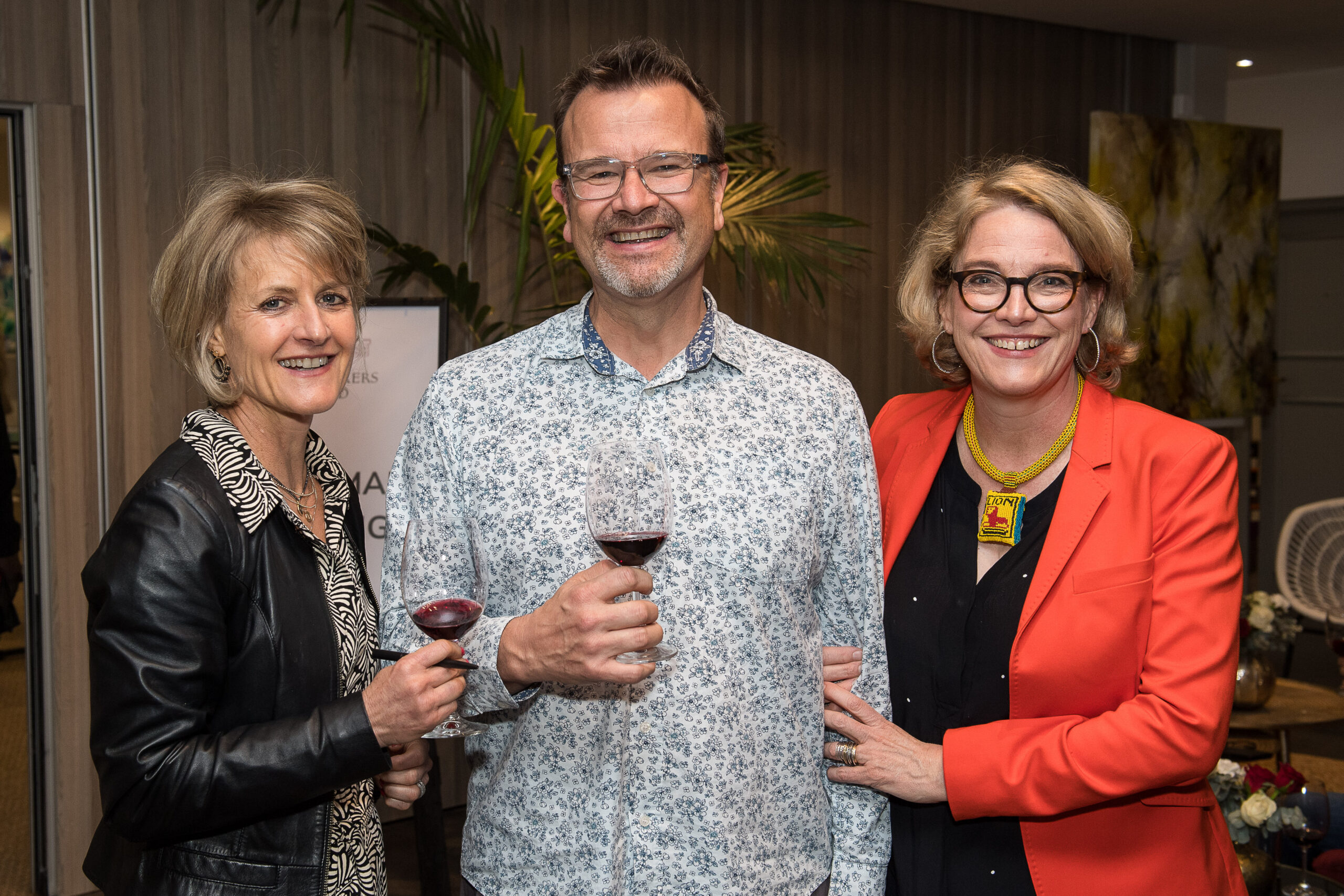
And you can start at the Auction itself.
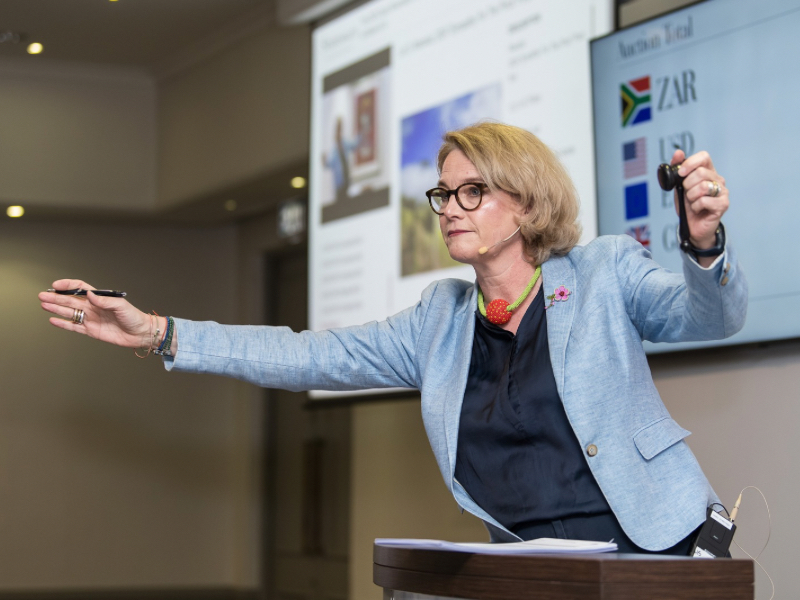
The 2026 Cape Winemakers Guild Auction has a new home in the heart of Woodstock at Strauss & Co, Brickfield Canvas, just minutes from Cape Town’s city centre. Centrally located and easily accessible, it’s never been simpler to join the Auction.
On Friday morning, from 10:00 to 12:00, all 58 Auction wines will be poured by the winemakers themselves in an informal, interactive tasting before the auction session begins. There will also be a self-pour tasting available throughout the Auction, while samples last.
It’s a chance to taste the wines, meet the people who made them, and perhaps start getting to know the personalities behind the bottles to help decide what you want to bid on. I would register to bid. And then I would do my homework, and go meet the people and taste their wines.