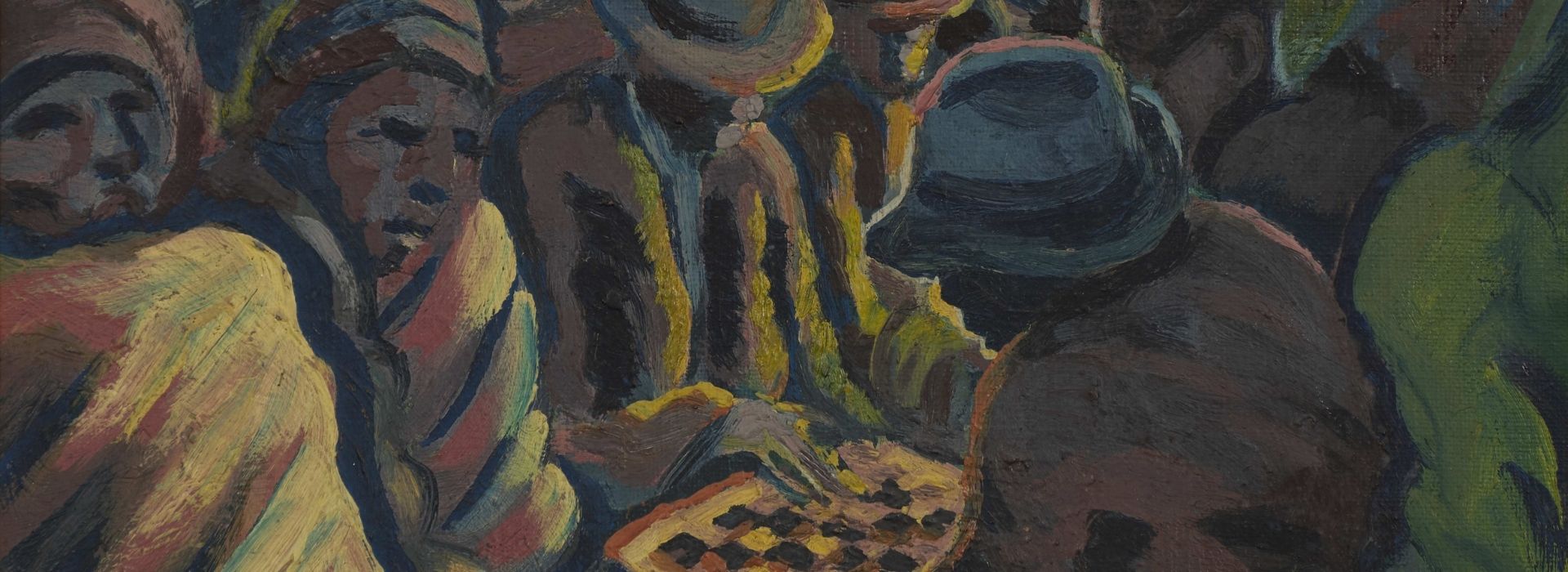
Gerard Sekoto’s Game of Draughts in a Crowd
22 Apr 2026
Recently sold on Strauss & Co’s March Cape Town Flagship Auction, Gerard Sekoto’s Game of Draughts in a Crowd, 1941-2 is an exquisite example of his work from the artists golden period.
The painting appeared in Sekoto’s career survey at the Johannesburg Art Gallery in 1989. The work sold for R2 630 625, far above its estimate R 800 000 – 1 200 000, highlighting Strauss & Co’s reputation for selling important modernist work from the continent. This successful sale comes on the back of Sekoto’s recent significant visibility in Europe. In 2024, curator Adriano Pedrosa included Gerard Sekoto’s earliest known self-portrait in his exhibition Stranieri Ovunque – Foreigners Everywhere at the 60th Venice Biennale and later, the same work was exhibited as the exhibition cover for Paris Noir: Artistic Circulations and Anti-Colonial Resistance, 1950–2000 (19 March – 30 June 2025) at the Centre Pompidou, Paris. A work painted in October 1947, shortly after his arrival in London en route to Paris, where he remained in self-exile away from the Apartheid regime until his death in 1993.
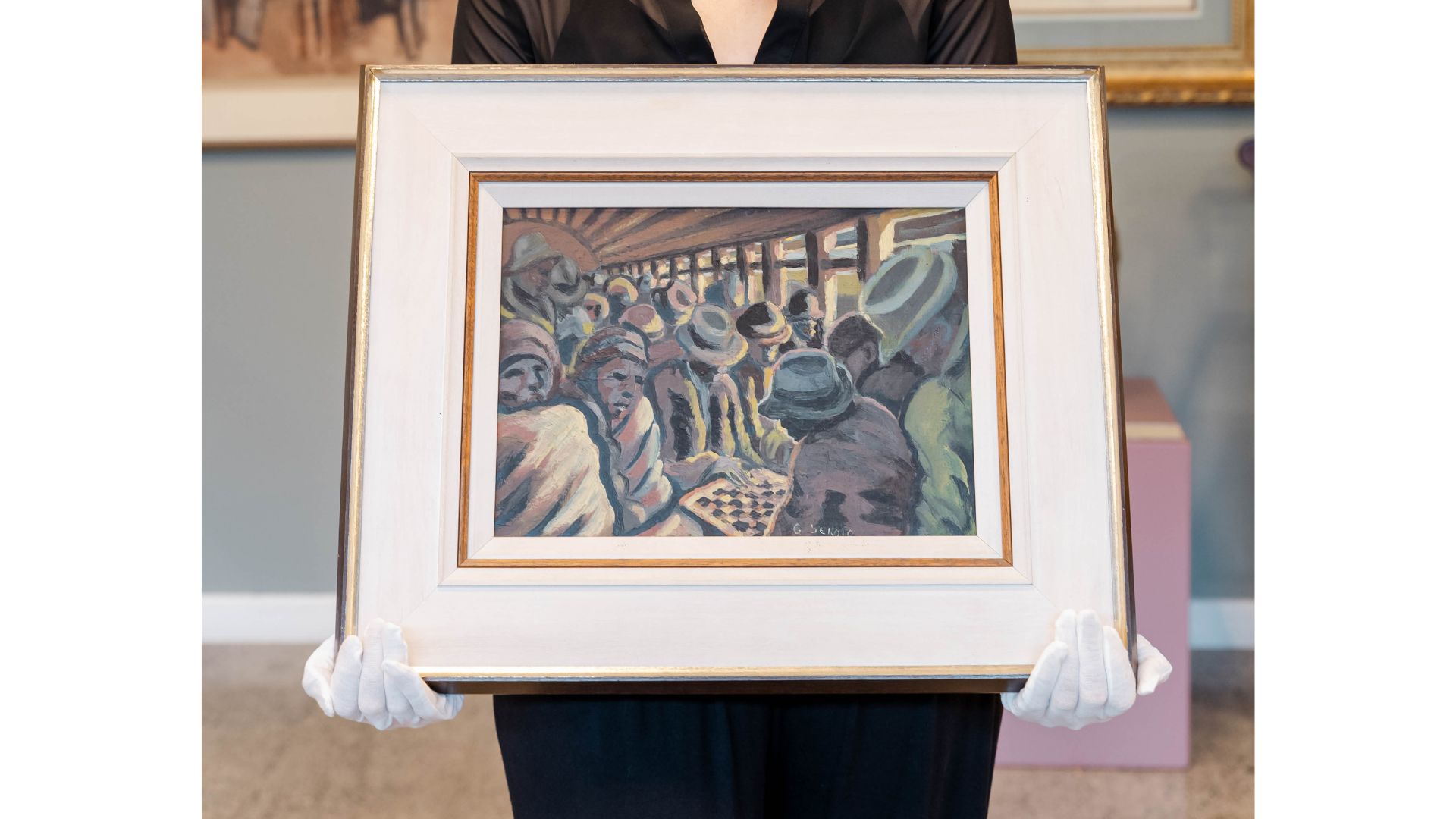
Gerard Sekoto, Game of Draughts in a Crowd (estimate R 800 000 – 1 200 000); Sold
Game of Draughts in a Crowd work hails from an important private collection. The Patricia Fine Art Collection, curated by the former Mayor of Cape Town, stands as a testament to a lifetime of discerning patronage and civic devotion. Patricia Fine (née Sulcas Kreiner), who famously welcomed Nelson Mandela to the City Hall balcony in 1994, assembled a collection that mirrors the vibrant, transformative spirit of South Africa’s transition. Featuring significant works by modern and contemporary South African artists, the collection highlights Fine’s deep connection to the Cape’s cultural landscape and her role as an arts benefactor. It is no surprise that she included an important socio-political work in her personal collection.
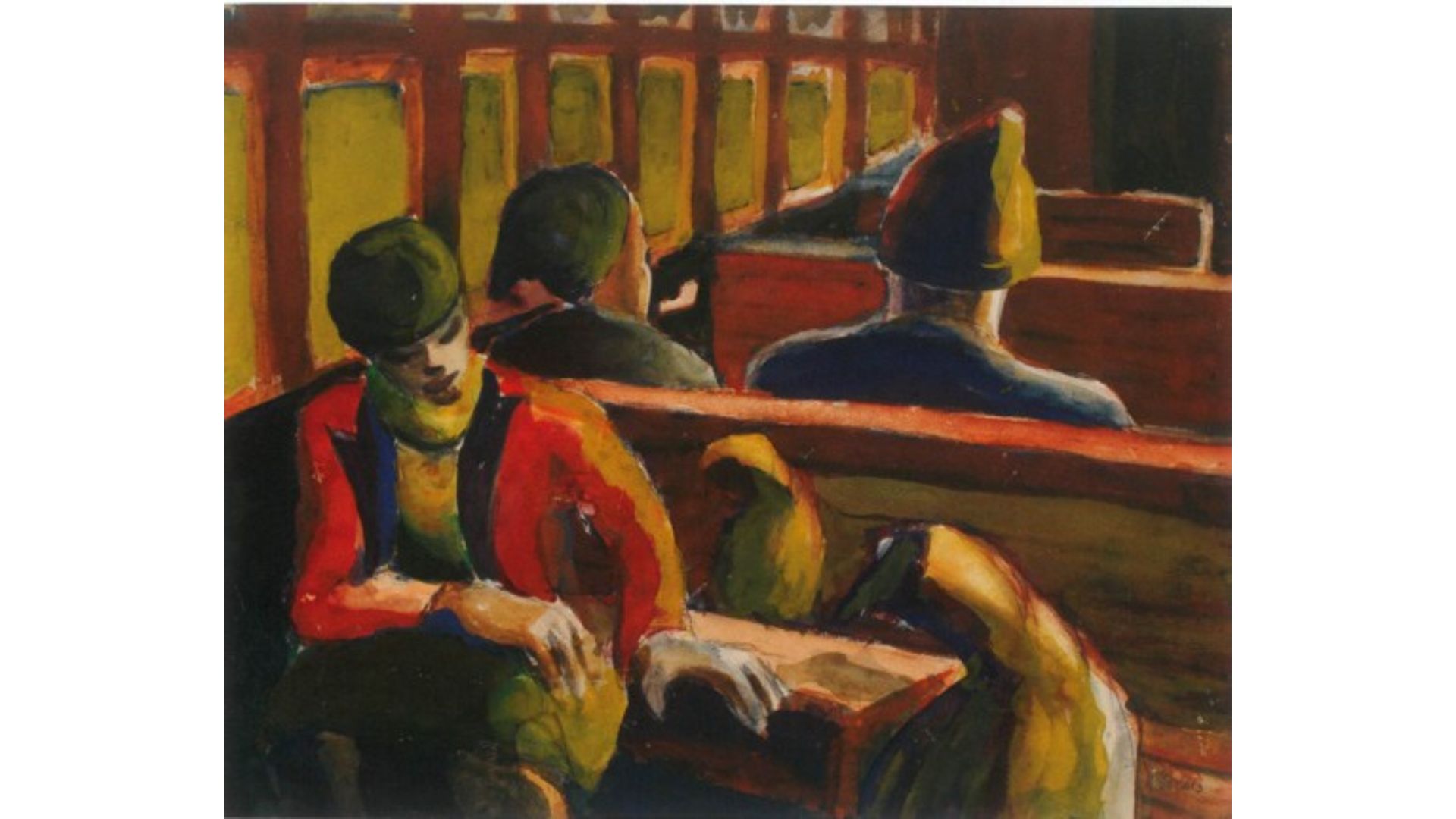
Third Class Carriage, c. 1939-40, illustrated in The Gerard Sekoto Foundation (2013) Song for Sekoto: Gerard Sekoto 1913–2013, exhibition catalogue, Johannesburg: The Gerard Sekoto Foundation, page 35.
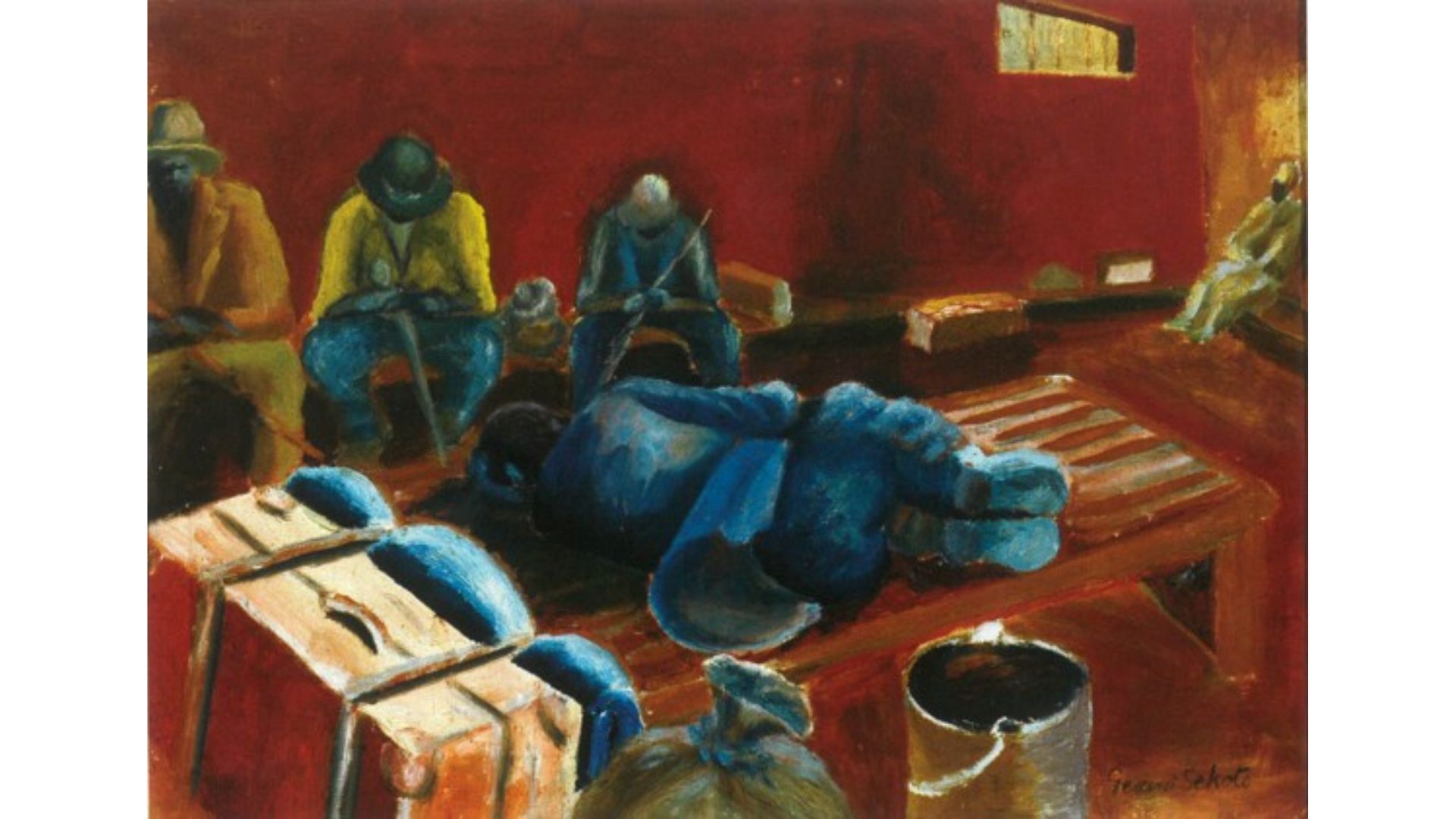
The Waiting Room, c. 1940-1941, illustrated in The Gerard Sekoto Foundation (2013) Song for Sekoto: Gerard Sekoto 1913–2013, exhibition catalogue, Johannesburg: The Gerard Sekoto Foundation, page 34.
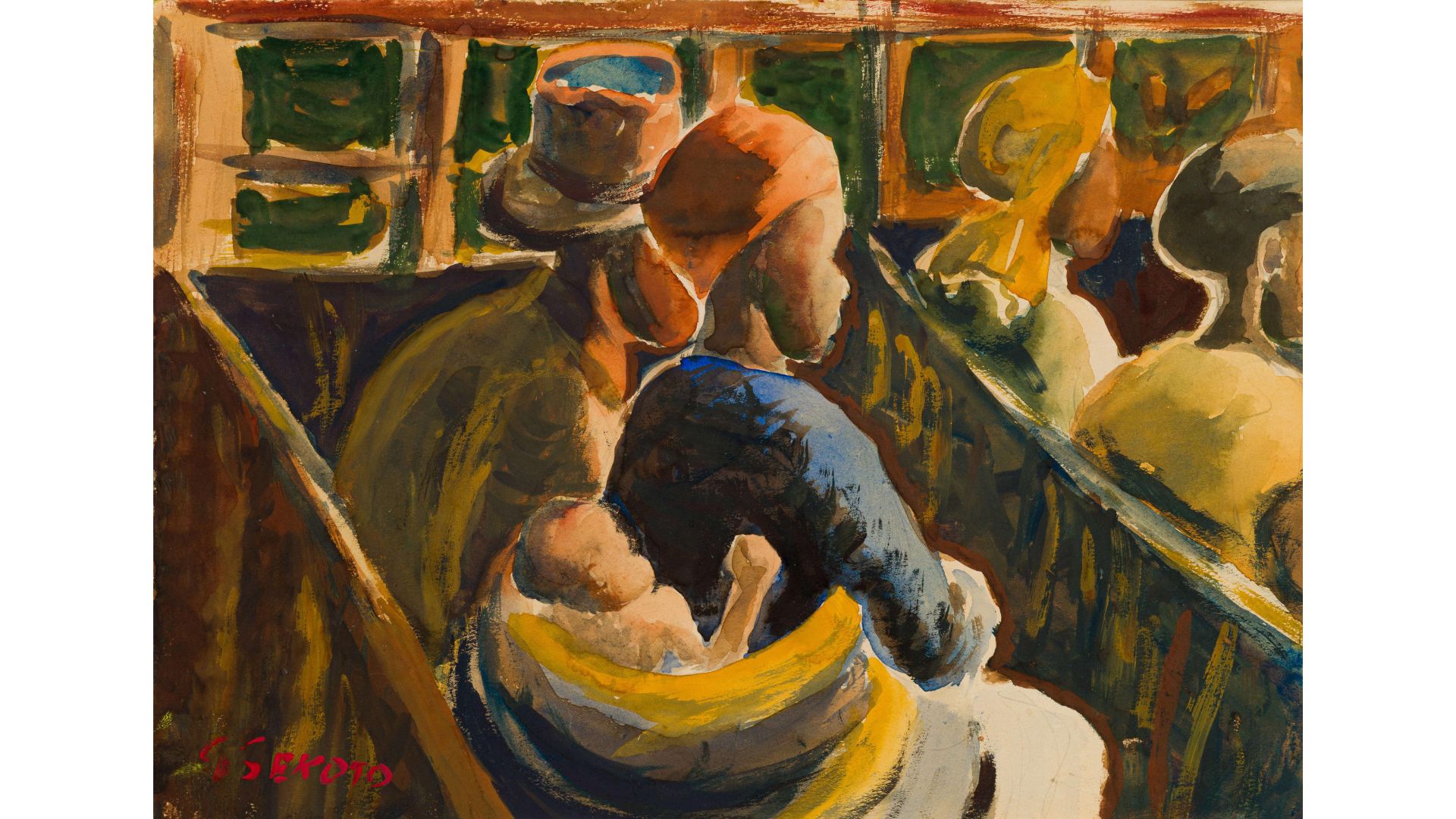
The Waiting Room – Mother with Baby, 1940, Strauss & Co, Johannesburg, 28 July 2020, lot 445, Sold R 341 400 (USD 21 513)
Painted between 1940 and 1941, Game of Draughts in a Crowd was executed during Gerard Sekoto’s Sophiatown period, a time characterised by a rich distillation of experience and expression. Not long after he left his job as a teacher in Pietersburg (Polokwane) and relocated to Johannesburg in 1939 to pursue a career as a full-time artist. During the first five years of his career, with the support of gallerists, collectors, fellow artists and the press, he gained in reputation, despite the significant barriers faced by black artists at the time.
This early work was produced during the artist’s exploration of oil as a medium, in which “thick black lines defined forms whilst paint was applied in clearly distinguishable layers.”1In the artwork he somewhat evolved his method and instead of black lines “sweeps of creamy colour” form the figures.2 A remarkable example of how Sekoto depicted light.
Sekoto’s work is best known for its ability to captivate viewers, setting a scene that tells a story and a visual representation of life for the poor black city dweller in South Africa. This composition encompasses a crowded Orlando compartment interior train, a theme he revisited often seen also in The Waiting Room, Third Class Carriage, and In the Orlando Train. Each work emotionally depicts the long, tedious journeys to and from work, due to the Group Areas Act of apartheid. The quiet resilience of train riders in the face of their living conditions is shown in the activities that fill their time. In The Waiting Room— Mother with Baby, a woman with a baby on her back sits on a row of benches, waiting patiently, while in Going Home, a group of workers carry their bags and parcels, heading home after a day’s work. Draughts would have engaged the participants and provided vicarious entertainment for the surrounding onlookers. The game would have been played socially, and on occasion, no doubt, for small wagers.3
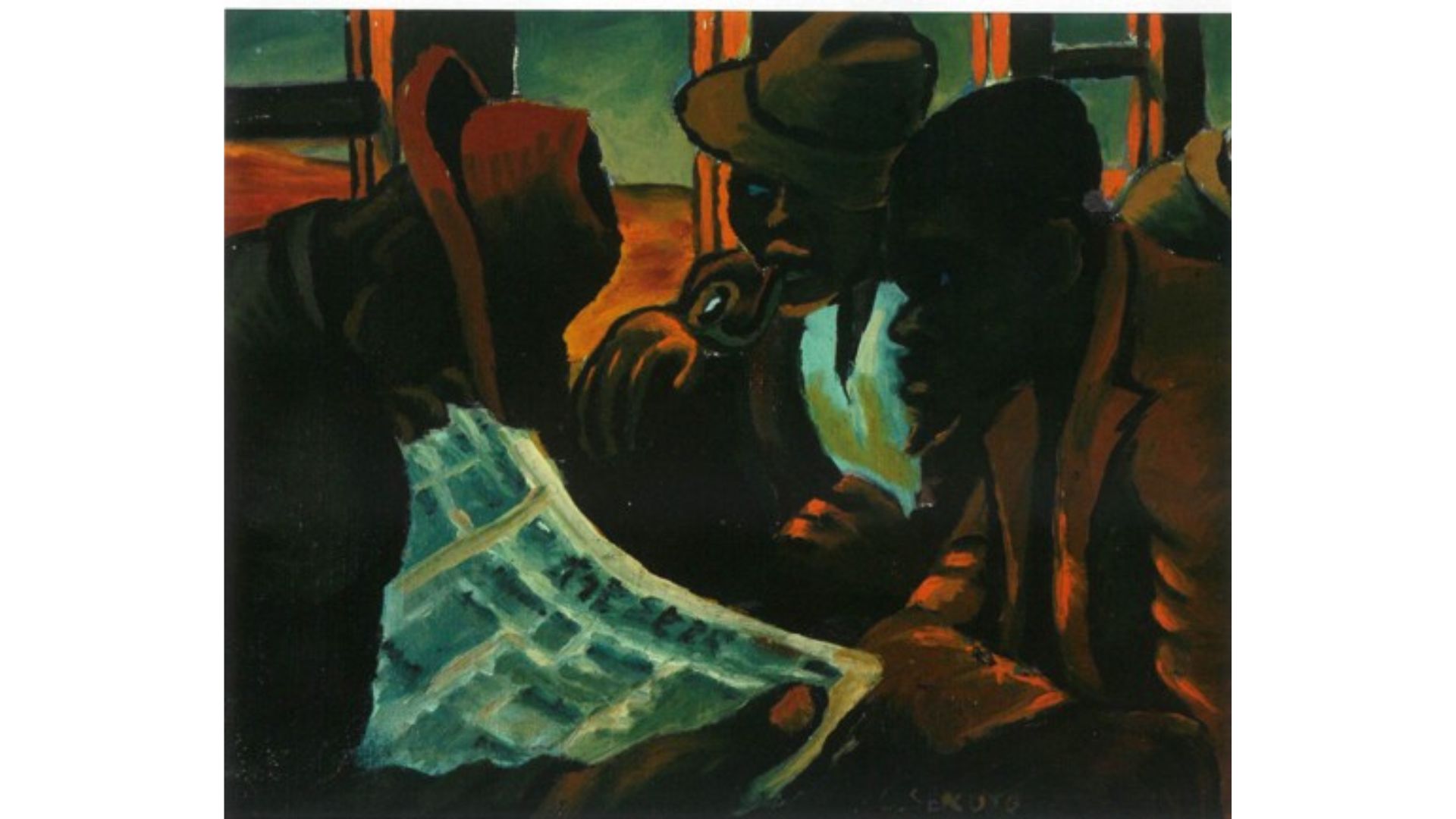
In the Orlando Train, c. 1940-1941, illustrated in The Gerard Sekoto Foundation (2013) Song for Sekoto: Gerard Sekoto 1913–2013, exhibition catalogue, Johannesburg: The Gerard Sekoto Foundation, page 35.
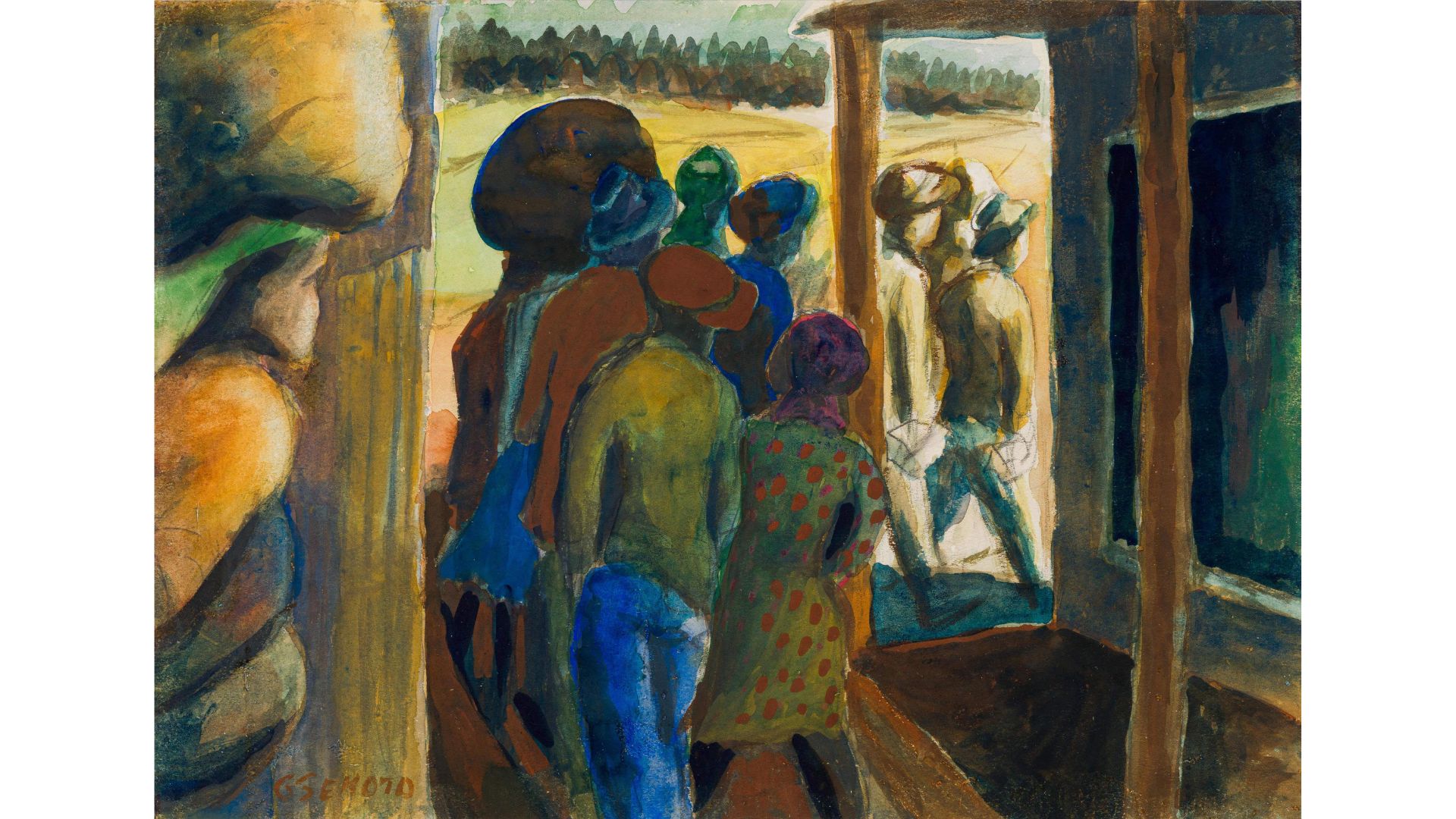
Going Home, 1940, Strauss & Co, Johannesburg, 28 July 2020, lot 446, Sold R 341 400 (USD 21 513).
The artist’s compositional viewpoint allows us to access the game from his vantage point whilst additionally describing the perspective of the coach by way of receding windows and retreating rows of seats. The warmly dressed figures, many clad in blankets, jackets and fedora-style hats, place the work in this period and reinforce this artwork as a document from that time. The artist’s message looks to be one of travellers, united in purpose as a collective group, making the best of a long and cold commute for the sake of employment.
Despite the obvious hardships and social iniquities of this time, Sekoto creates a timeless metaphorical image of dignified resolution and steadfastness.
1. Johannesburg Art Gallery (1989) Gerard Sekoto: Unsevered Ties, exhibition catalogue, Johannesburg: Johannesburg Art Gallery, page 25.
2. Ibid.
3. N Chabani Manganyi (2013) Gerard Sekoto (1913-1993) in The Gerard Sekoto Foundation, ‘Song for Sekoto: Gerard Sekoto 1913-2013’, exhibition catalogue, Johannesburg: The Gerard Sekoto Foundation, page 35.
PROVENANCE
The Patricia Fine Art Collection
EXHIBITED
Johannesburg Art Gallery, Johannesburg, Gerard Sekoto: Unsevered Ties, 11 November 1989 to 10 February 1990, illustrated in the exhibition catalogue on page 25.
NOTES
The Patricia Fine Art Collection, curated by the former Mayor of Cape Town, stands as a testament to a lifetime of discerning patronage and civic devotion. Patricia Fine (née Sulcas Kreiner), who famously welcomed Nelson Mandela to the City Hall balcony in 1994, assembled a collection that mirrors the vibrant, transformative spirit of South Africa’s transition. Featuring significant works by modern and contemporary South African artists, the collection highlights Fine’s deep connection to the Cape’s cultural landscape and her role as an arts benefactor.