Eastern Cape Artists to Add to Your Collection
22 Jun 2026
The Eastern Cape has a long creative history that has honoured the province’s scenic geography and vibrant indigenous communities. Artists have also engaged with how colonialism and apartheid have impacted the people, landscape and politics in the region.
The Grahamstown School of Art was established in 1881, and the Port Elizabeth School of Art (which became the Port Elizabeth Technikon and eventually merged with two other universities to form Nelson Mandela University), established in 1882, is the oldest surviving art school in the country. Both within established institutions like these art schools and more informal settings, tutelage has played a vital role in the development of the longstanding art scene in the Eastern Cape.
For the past four years, Strauss & Co’s Senior Art Specialist, Ian Hunter, has curated focused Eastern Cape sales that celebrate artists shaped by the province and who have gone on to build prolific careers. Our Eastern Cape auctions also allow us to spotlight underappreciated artists and makers from the region, giving collectors the opportunity to invest in artists whose price estimates are still quite accessible.
In view of our current Eastern Cape auction, Eastern Cape Echoes: Storms River to Port Saint Johns (1 June – 25 June), we have highlighted ten artists collectors should consider if they have a special interest in the creatively rich province and the artists it has produced.
Brian Bradshaw
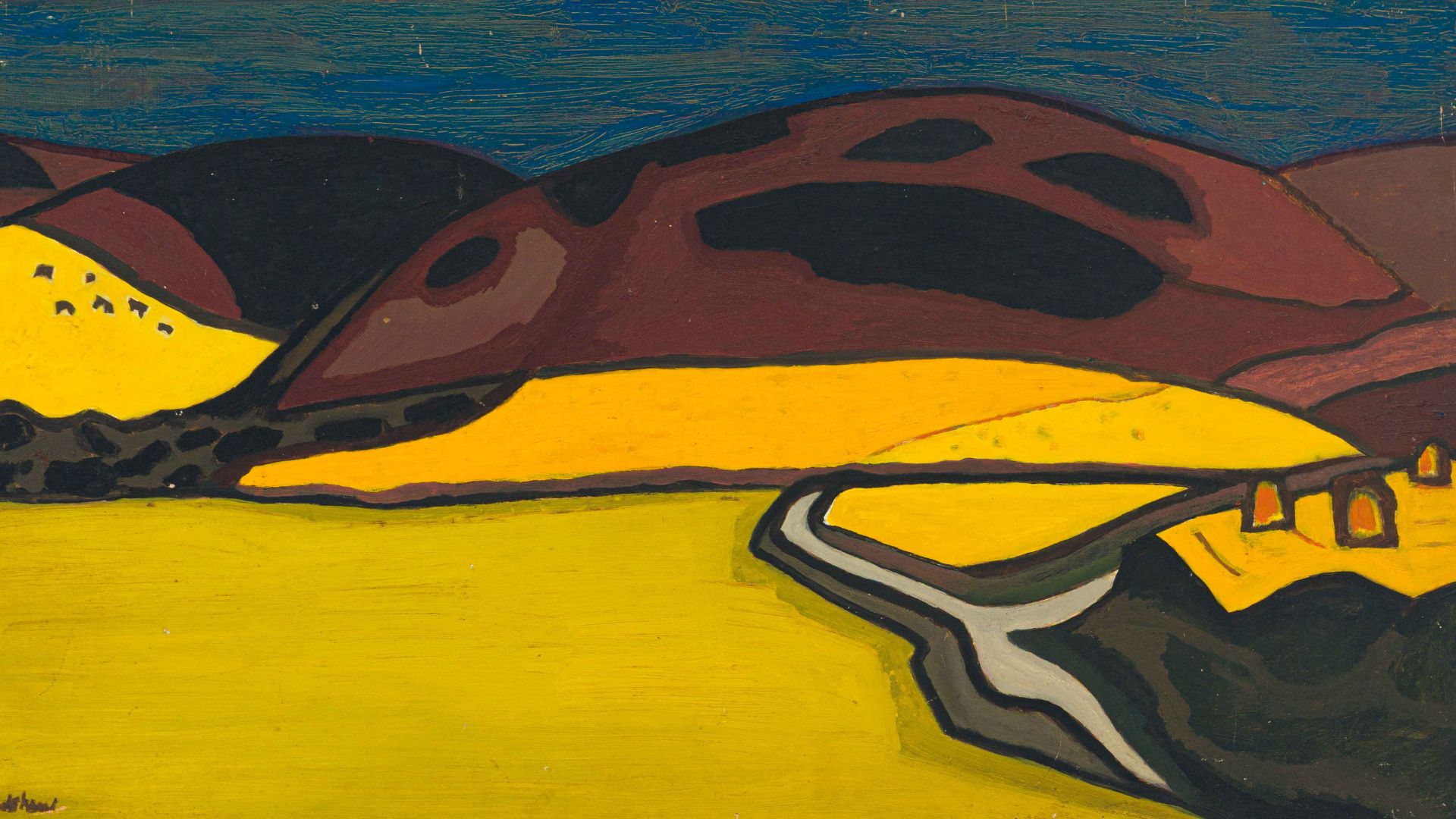
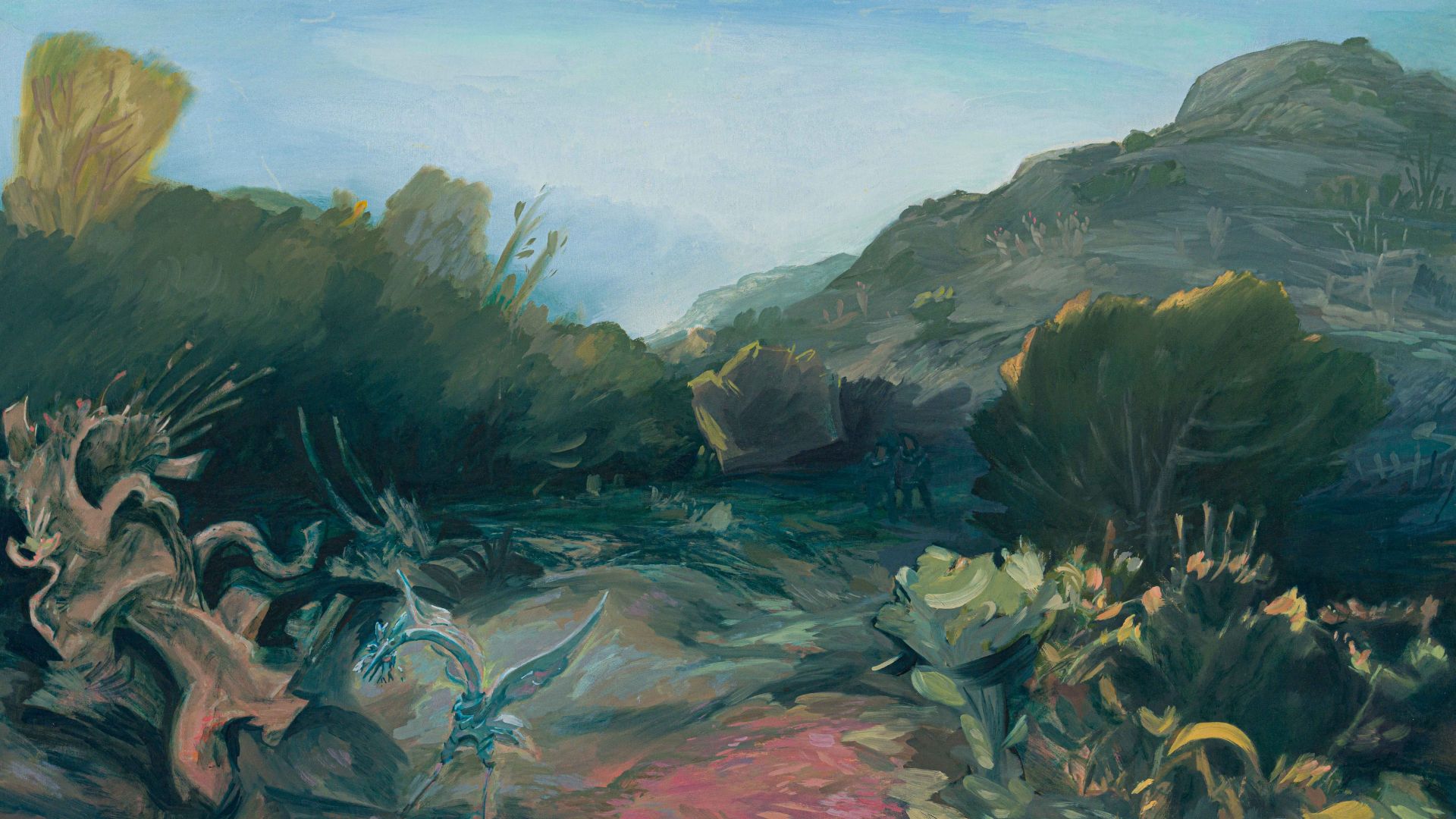
Brian Bradshaw, Corn Backen Land; R20 000 – 30 000 (Lot 634)
Brian Bradshaw (b. Bolton, Lancashire, 1923-2016) was an influential artist and educator in the Eastern Cape. He trained at the Bolton School of Art and Manchester Regional College of Art before being awarded a scholarship to study at the Royal College of Art in London in 1948.
He is known for the thick impasto paint application and commanding forms in his vibrant landscapes. Inspired by the Eastern Cape’s vast and diverse terrain, Bradshaw shifted his approach to landscape painting when he moved to the province to take up the role of the Chair of Fine Arts at Rhodes University in 1960.
Bradshaw quickly drew many young artists into his magnetic orbit, whom he guided with a distinct rigour and passion. His students included the acclaimed South African artists Penny Siopis, Neil Rodger and Hilton Nel. Notably, Brian Bradshaw formed the Grahamstown Group in 1964, which is seen as the first clear emergence of a unified artistic movement in South Africa.
Robert Brooks & Jennifer Lynne Crooks
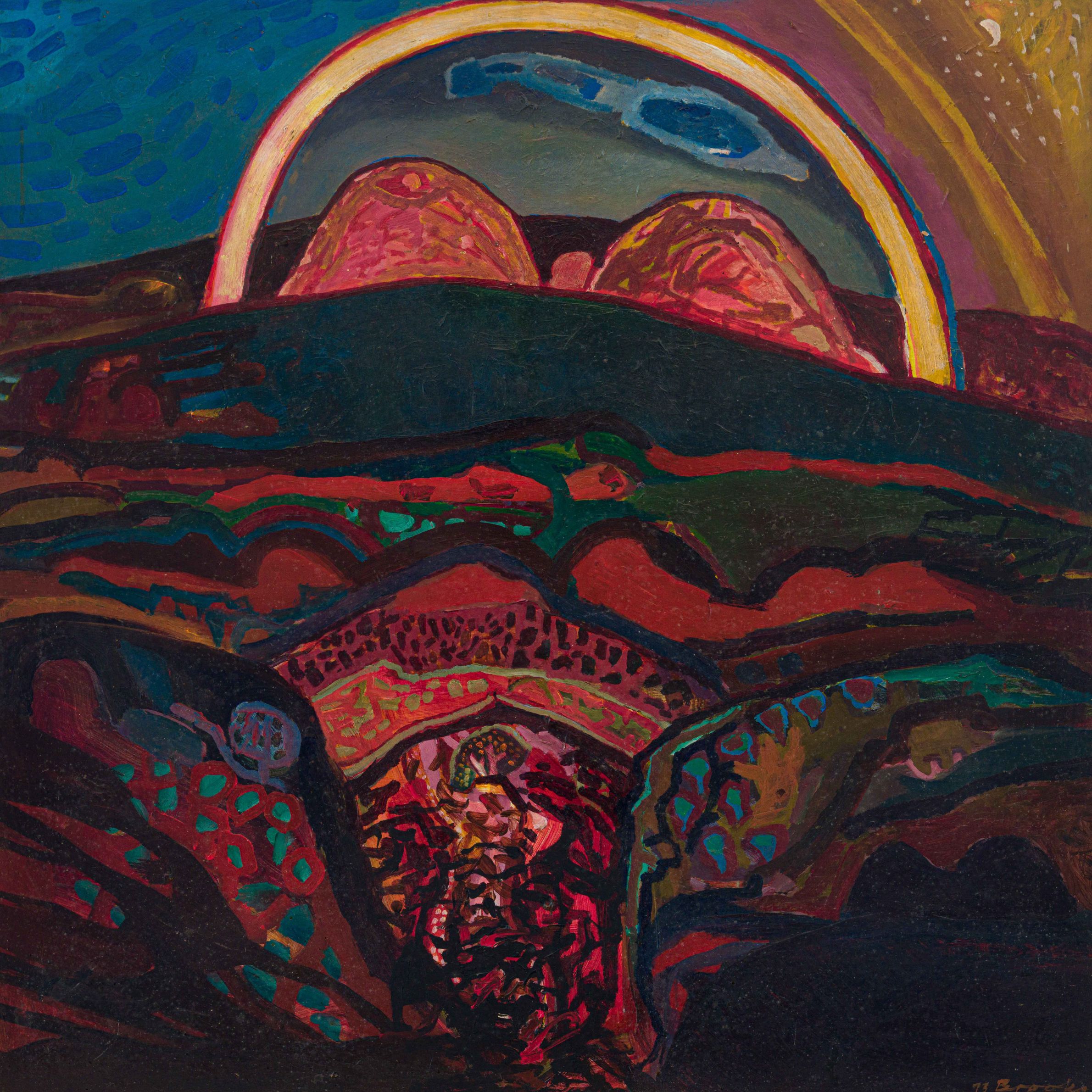
Robert Brooks,
Landscape with Rainbow;
1973, R25 000 – 35 000 (Lot 619)
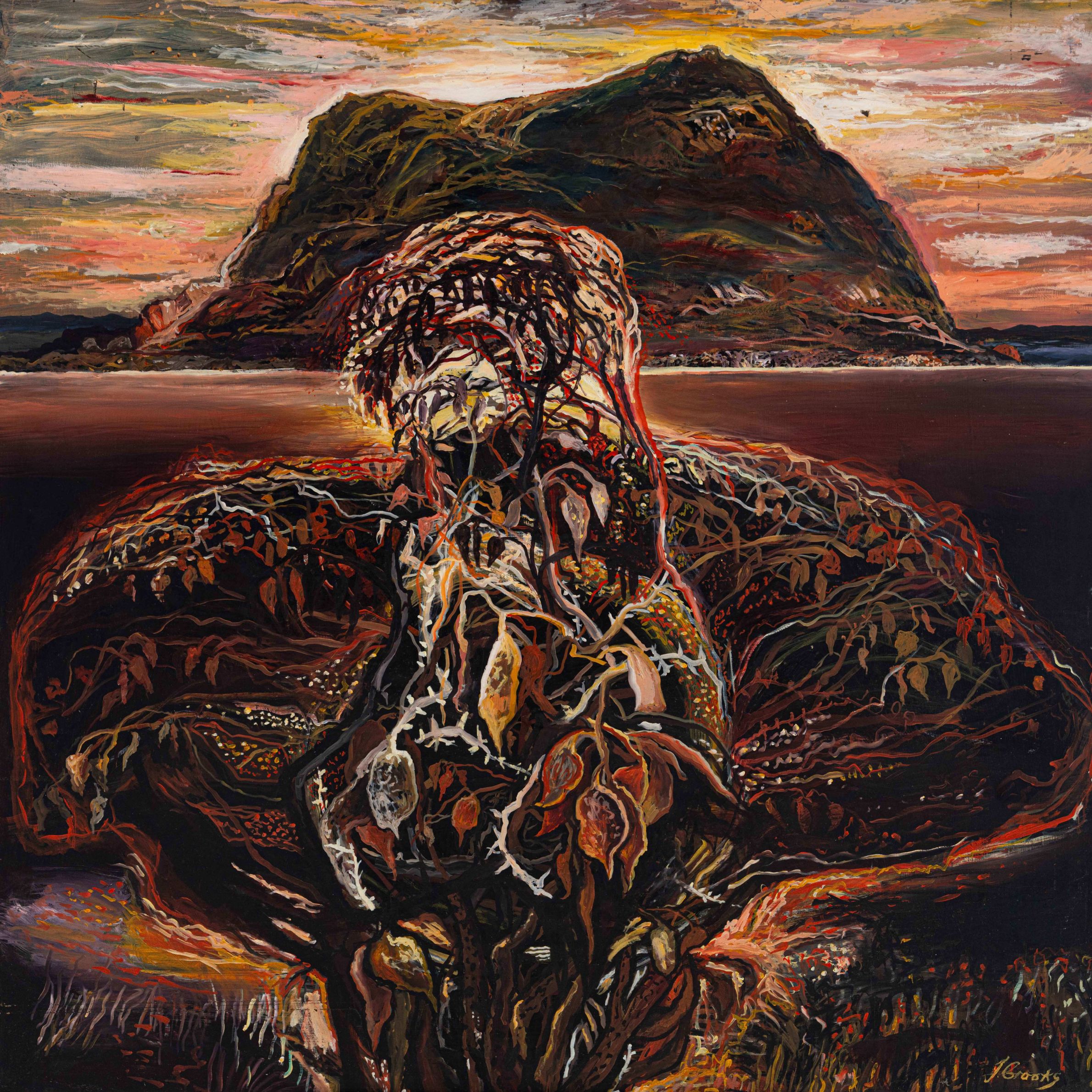
Jennifer Lynne Crooks,
Primal Nature;
R10 000 – 50 000 (Lot 620)
The works of Grahamstown Group members Robert Brooks (b. Springs, 1941-2024) and Jennifer Lynne Crooks (b. Uitenhage, now Kariega, 1943-2023) stand out as particularly striking examples of Brian Bradshaw’s influence on the Group’s style. They both drew inspiration from the Eastern Cape’s landscape and focused on expressing their emotional connection to the land through bold forms, dense colours and expressive lines.
They were among the many students mentored by Brian Bradshaw at Rhodes University in the early 60s who became influential educators themselves. Brooks lectured at Rhodes and was later appointed as the university’s Head of Fine Arts in 1981, following Bradshaw’s retirement. After completing both her bachelor’s and master’s degrees at Rhodes, Crooks taught at the Diocesan School for Girls in Grahamstown and lectured in Fashion Design at Port Elizabeth Technikon until her retirement. The pair were married until Crooks’ passing in 2023.
Fred Page
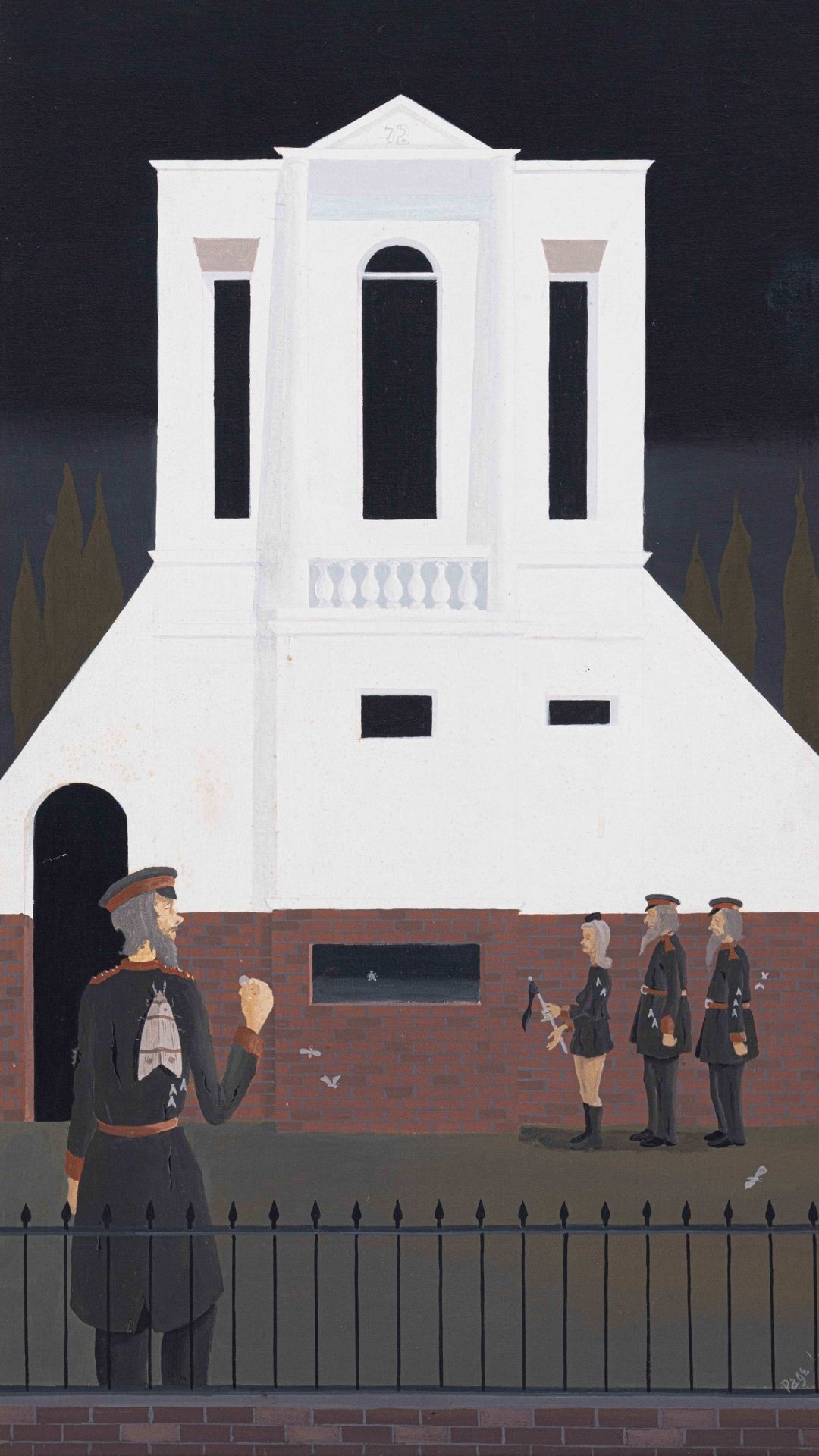
Fred Page,
Untitled (Landscape with Tall Building) ;
1972, R50 000 – 70 000 (Lot 627)
Fred (Frederick Hutchinson) Page (b. Utrecht, KwaZulu-Natal, 1908-1984) settled in Port Elizabeth (now Gqeberha) in 1945. His formative years were shaped by difficulty and upheaval. He was abandoned by his father and lost his mother at the age of ten, which saw him move between family members and orphanages. Page also worked many different jobs, including being a shepherd, barman, gold miner, and soldier, before becoming an artist.
Page is largely regarded as one of South Africa’s most significant surrealist painters. The historic architecture of what was then Port Elizabeth, and haunting figures are prominent in his eerie compositions. The artist worked in a limited colour palette, and with flattening tempera paint and inks, which makes the sombre mood and air of mystery in his work more palpable.
George Milwa Mnyaluza Pemba
George Pemba (b. Port Elizabeth, now Gqeberha, 1912-2001) is one of the country’s most notable Black modernist artists. He received a teaching diploma from the historic institution of Lovedale Training College in 1931 and worked there for several years. During this period, Pemba honed his visual art skills illustrating books published by Lovedale Press.
He is celebrated for the strong sense of composition, emotive use of colour and the narrative quality of his work. Pemba’s paintings commented on the oppressive socio-political conditions in Black communities during apartheid, while also recording tender moments of joy and ease that have always found a way to pierce through troubling times.
Like many artists from the Eastern Cape, Pemba’s practice was impacted by his travels outside of the province. Of note, it was through meeting John Mohl and Gerard Sekoto in Maurice van Essche’s studio in Cape Town that Pemba was encouraged to shift to oil paint and produce more politically sensitive works.
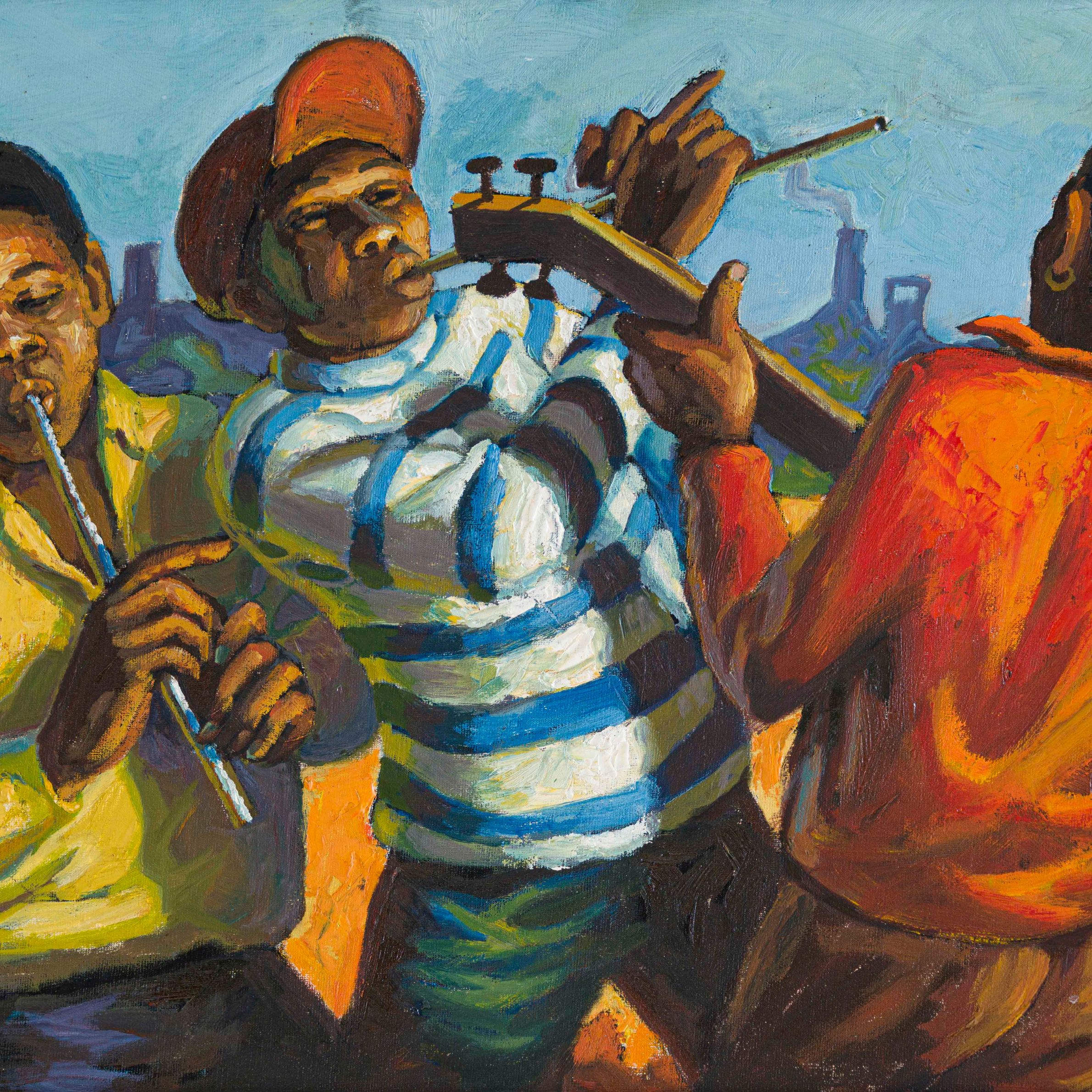
George Milwa Mnyaluza Pemba,
Musiek (Music), 1970;
Sold for R1 016 620 at Strauss & Co (Lot 7, May 26 2026)
Gladys Mgudlandlu
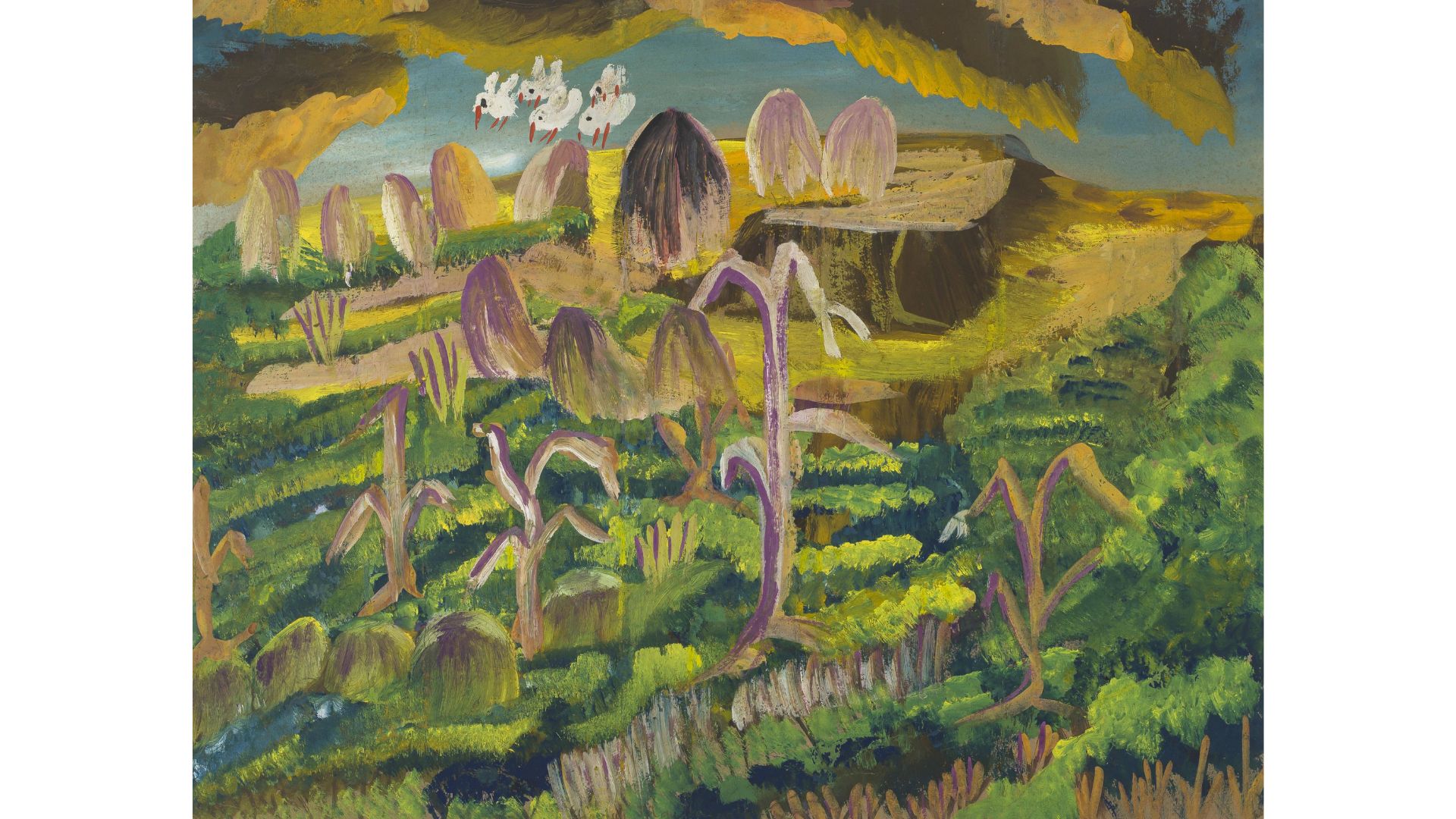
Gladys Mgudlandlu,
Spring in Peddie Forests, Viewed from Peak;
Sold for R170 700 at Strauss & Co (Lot 244, 11 October 2021)
Gladys Mgudlandlu (b. Peddie, Eastern Cape, 1917-1979) forged a groundbreaking art career for herself as a Black woman working during apartheid in South Africa. Her first encounter with painting was through her grandmother, who taught her Fingo and Xhosa painting traditions as a child.
Mgudlandlu’s connection to nature is reflected in the lush landscapes and animal symbolism in her work. Her impressionist style and the unique aerial perspective we typically see in her paintings imbue the scenes with a dreamlike quality.
She taught at Lovedale Training College in the early 1940s before moving to Cape Town, where she focused on developing her art practice. She was mentored by Katrine Harries and Marjorie Wallace, and often visited Maggie Laubser’s exhibitions, whose work made a great impression on her.
Athi-Patra Ruga
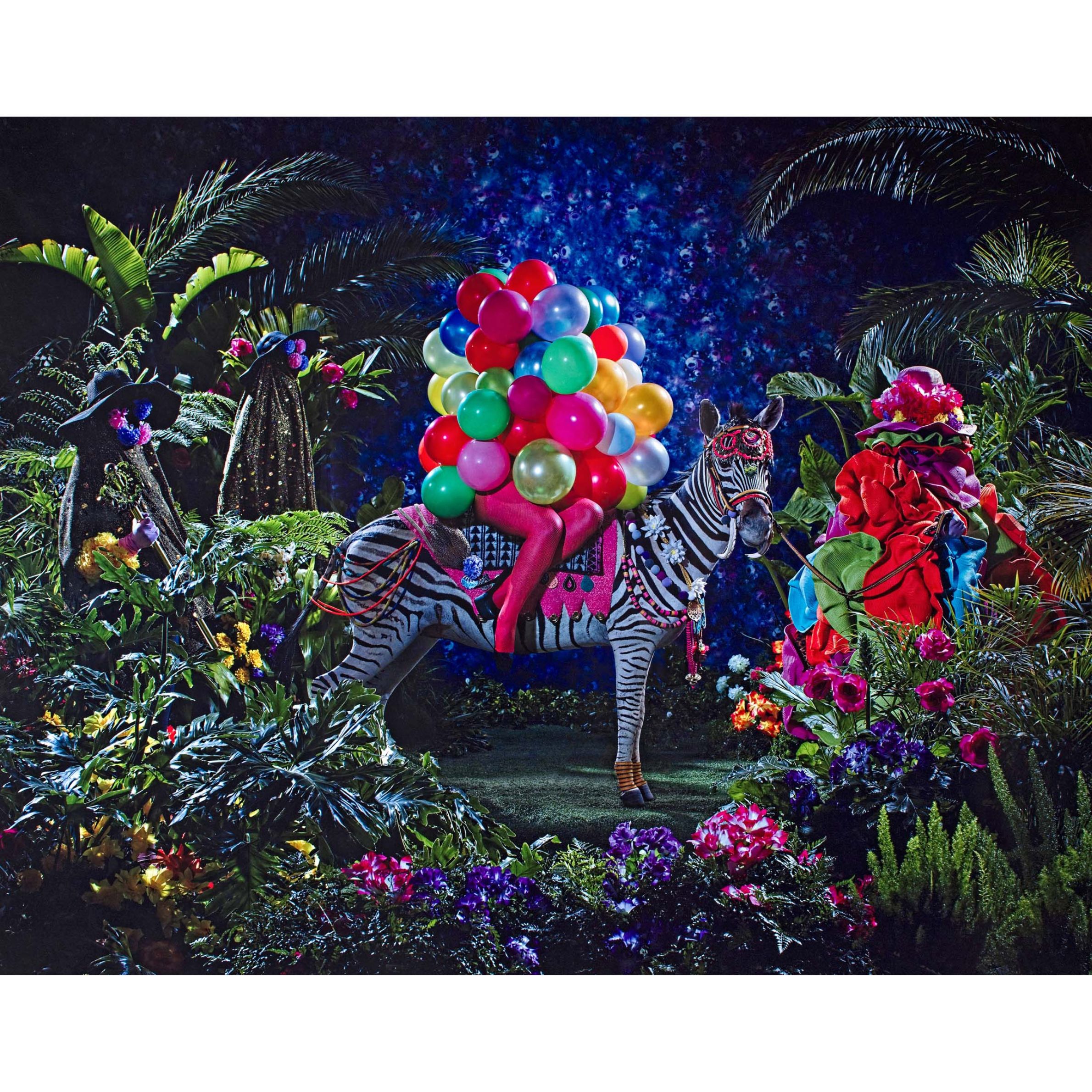
Athi-Patra Ruga
The Night of the Long Knives I, 2013;
Sold R1 707 000 at Strauss & Co (Lot 73, 16 February 2019)
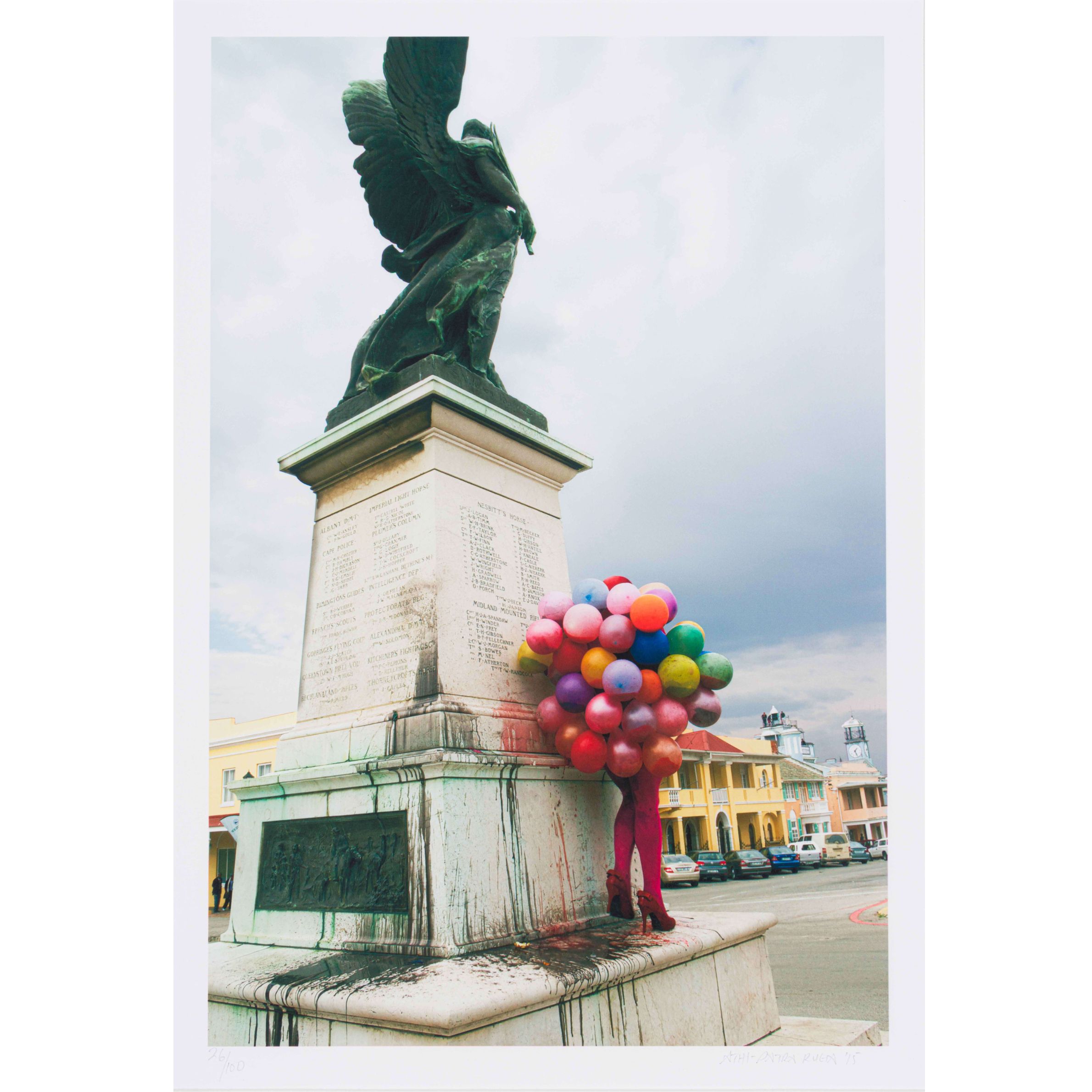
Athi-Patra Ruga,
The Intervention on the Anglo-Boer Monument by FWWOA (Future White Women of Azania;
Sold R12 000 – R18 000 (Lot 25, 12 May 2026)
Athi-Patra Ruga (b. Mthatha, Eastern Cape, 1984) is a leading South African contemporary artist who explores the complexities of identity, belonging and cultural memory in post-1994 South Africa. The focus on these themes is informed by the artist’s upbringing among a generation who were forced to reckon with the legacies of colonialism and the failures of the country’s post-apartheid transformation project.
The use of mythology and hybridity connects Ruga’s varied creative practice, which spans performance, photography, video, printmaking, painting and sculpture. Speaking to black, femme and queer experiences, Athi-Patra Ruga employs drag and camp aesthetics in his performance pieces. He also frequently invokes a fictional Azania in his explorations of worldbuilding and Utopia.
Hylton Nel
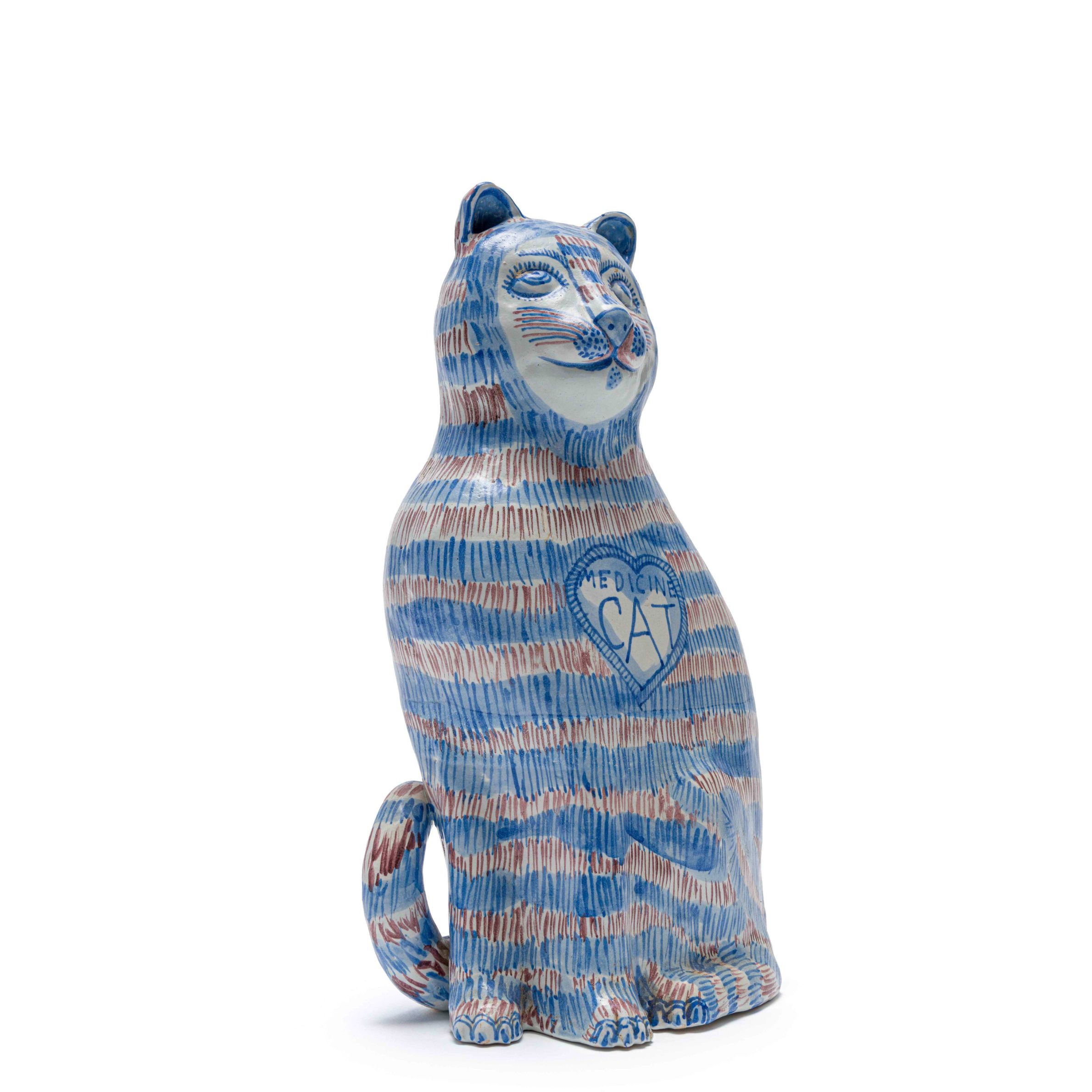
Hylton Nel,
Medicine Cat, 2002;
Sold R281 400 at Strauss & Co (Lot 102, 17 February 2025)
Hylton Nel (b. Zambia, 1941) is a conceptual artist and ceramic artist with a uniquely playful take on decorative plates and ceramic ornaments. In an exciting collaboration with the luxury fashion brand Dior, for their Spring/Summer 2024 Collection, models posed alongside the quirky feline figures that are an iconic motif for the artist.
Nel studied Fine Art under Brian Bradshaw at Rhodes University, where he initially learnt ceramics through evening classes and experiments with his peers. He taught at the Port Elizabeth Technikon for eleven years and at the Michaelis School of Fine Art for several years before deciding to pursue an art career full-time.
At 85, Nel continues to make clay-based works from the small town of Calitzdorp. Nel’s informal mentorship of artists who visited his studio gave rise to the Calitzdorp-based ceramic collective, The School of Nel. Members of the group include Imeldo ‘Melvin’ Wagenaar and Hannes ‘Basie’ Gerhardus, whose works reflect the experimental and eccentric character of their unintentional founder.
Andile Dyalvane
Andile Dyalvane (b. Ngobazana, Eastern Cape, 1978) is a master ceramic artist. From monumental sculptures to delicate vessels, Dyalvane’s work pays homage to his Xhosa heritage and spiritual connection to his ancestors.
Dyalvane’s rural upbringing nurtured a deep connection with the land and farming practices in the artist. This is reflected in the parallels he draws between the sustenance that land cultivation and spirituality provide. His process and presentation of the earthenware he forms are deeply informed by notions of ritual that are key to his cultural and spiritual practices.
In 2005, he co-founded Imiso Ceramics with fellow ceramic artist Zizipho Poswa. The studio and gallery focus on collectable handmade ceramics rooted in African ceramic traditions.
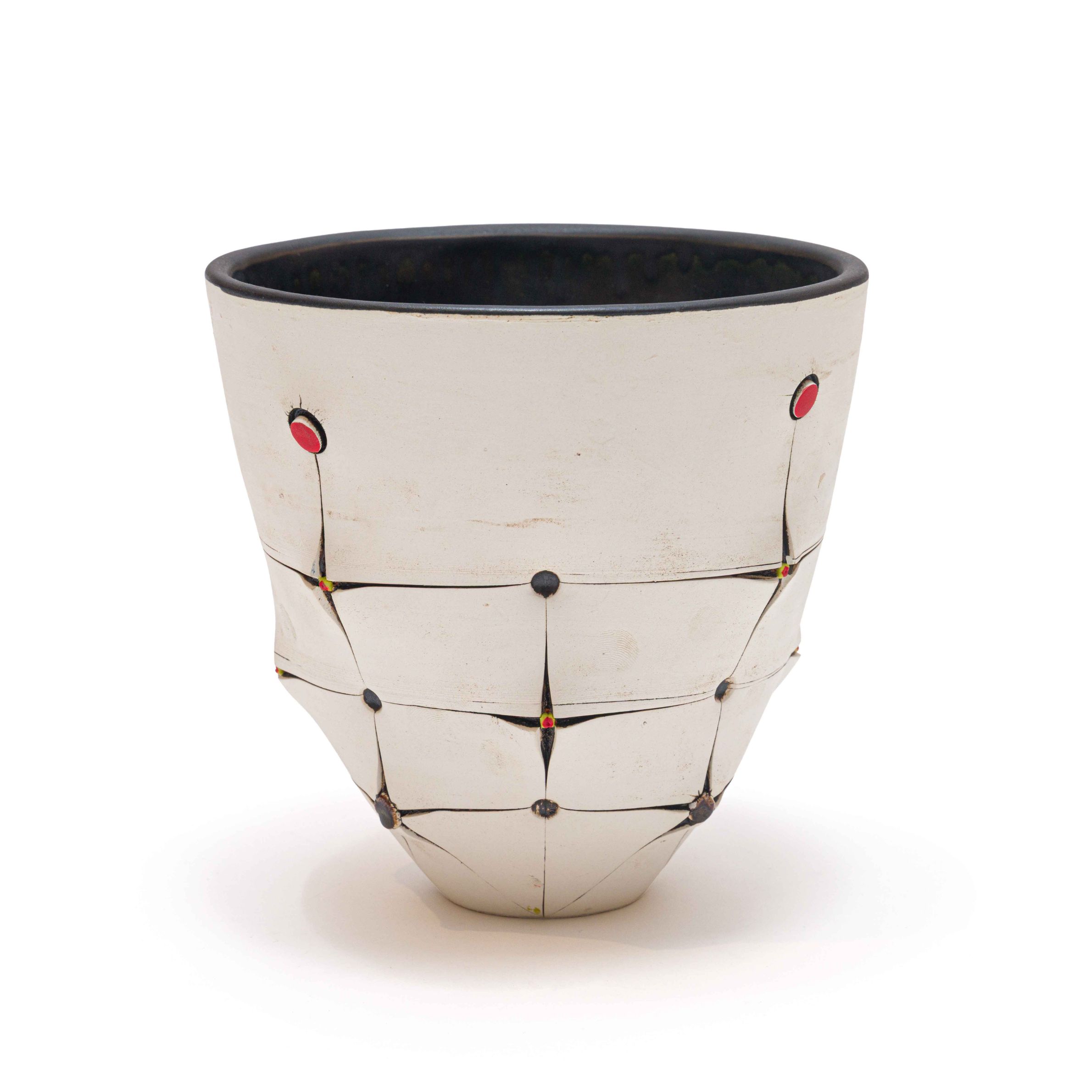
Andile Dyalvane,
White Scarified Pot, 2020;
R12 000 – 16 000 (Lot 696)
Keiskamma Art Project
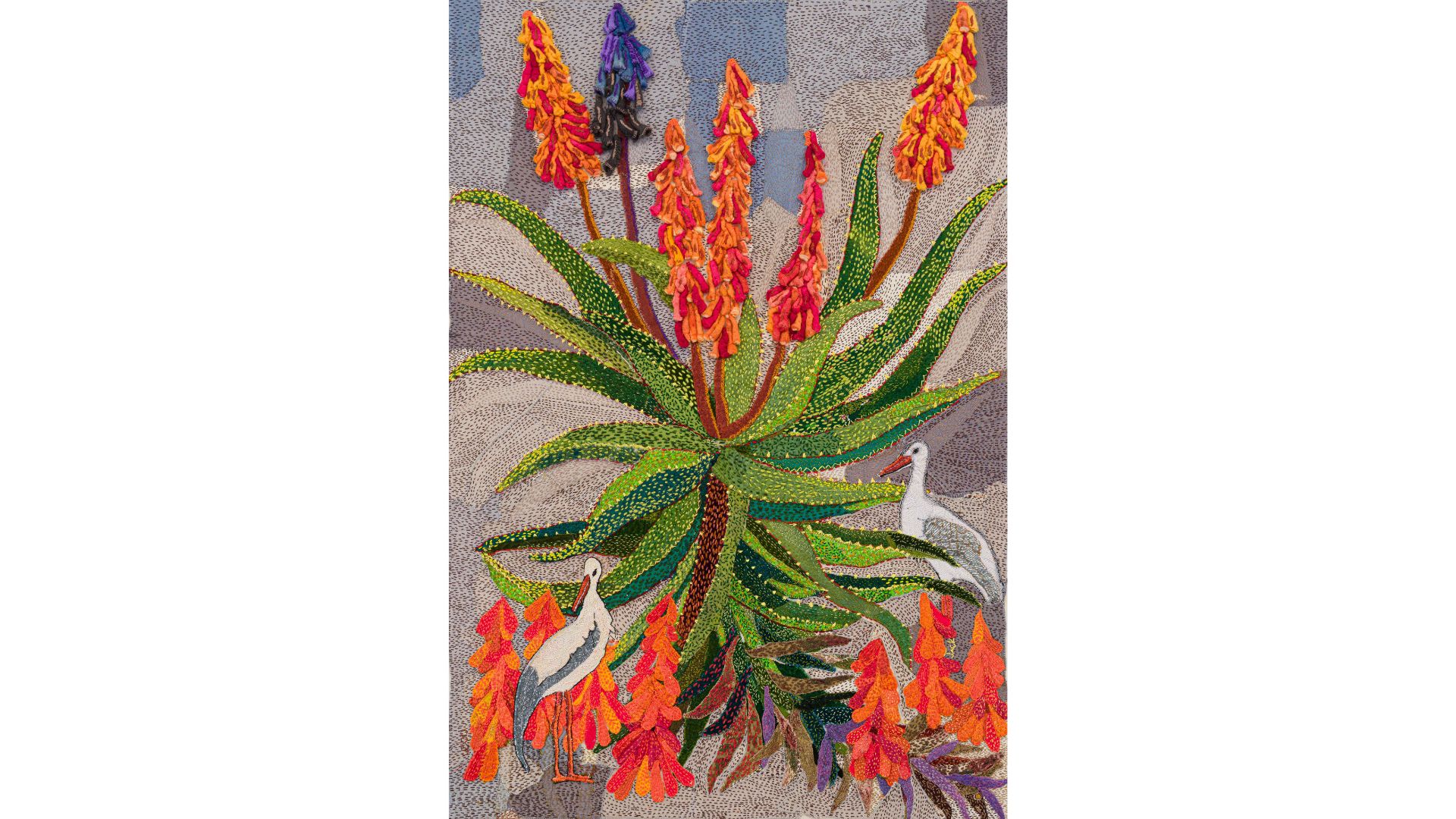
Keiskamma Art Project,
Imvomvo (Flowers of the Aloe Plant);
R40 000 – 60 000 (Lot 652)
The Keiskamma Art Project was established in Hamburg, Eastern Cape, in 2000. Through the production of tapestries, bead and wire work, individuals from the community are able to generate income to support themselves and their families.
Embedded within each bright tapestry crafted by The Keiskamma Art Project is the power of community building and the preservation of cultural memory. Their large-scale textiles celebrate the beauty of the Eastern Cape’s landscape. Alongside representing their surrounding scenery, acclaimed pieces such as the Keiskamma Tapestry have recounted key moments in South Africa and the local community’s history.