Namibia gained independence in 1990, formally ending a long cycle of German colonial rule and South African apartheid. The genocide of the Herero and Nama peoples, perpetrated between 1904 and 1908 by the German Empire, constitutes one of the first genocides of the 20th century and has left an indelible mark on the country’s physical and symbolic landscape. Namibian contemporary art thus emerges as a situated practice committed to memory, symbolic reparation, and the rewriting of history.
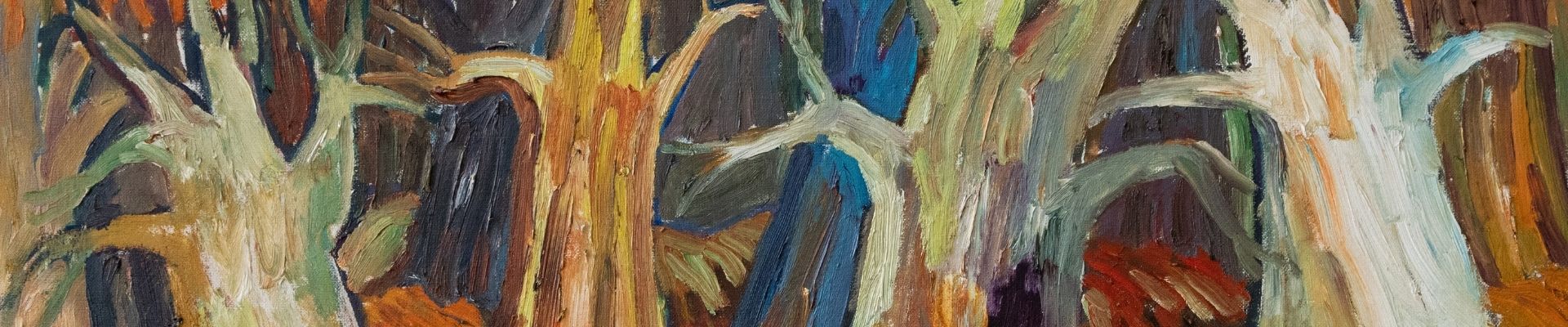
Namibia’s scenic terrain has been a source of inspiration for artists for over 100 years. Dresden-born Adolph Jentsch (1888-1977), who moved to Namibia in 1938, created masterful landscapes imbued with a spiritual calm that are a significant part of the country’s art historical canon. South African artists who were fascinated with Namibia’s sweeping plains and bountiful dunes include the leading landscape artist, Jacob Hendrik Pierneef, alongside the notable Pieter Wenning, Maud Sumner and Keith Alexander.
John Muafengejo (1943-1987) is a celebrated Namibian artist whose career reflects the artistic exchange between South Africa and Namibia. Muafangejo developed his expressive printmaking style while training under the likes of Azaria Mbatha at the Evangelical Lutheran Church (ELC) Art and Craft Centre at Rorke’s Drift in KwaZulu-Natal.
In a contemporary Namibian context, sculpture assumes a central role, operating from an ethic of materiality and reuse. Scrap metal, industrial waste, barbed wire, and utilitarian objects become raw materials for an aesthetic of scarcity that reflects both the legacy of colonial exploitation and the socioeconomic tensions of the present. Exemplifying this approach, Fillipus Sheehama (1974) transforms wire, plastic, and sugar bags into organic and fragile forms, simultaneously evoking both wounding and healing, restraint and resistance. Ismael Shivute (1988), in turn, works with recycled metal and soapstone to create sculptures of intense physical density, establishing a direct dialogue with the processes of urbanisation and the persistent inequalities in Windhoek.
Landscape photography also asserts itself as a fundamental critical field. Far from a romantic reading of the territory, artists such as Nicola Brandt (1983) interrogate the apparent neutrality of the landscape, exposing it as a traumatic archive where natural beauty coexists with traces of concentration camps, routes of extermination, and silenced violence. This critical cartography is deepened by textile and hybrid practices such as those of Tuli Mekondjo (1982), whose work combines embroidery, collage, and organic materials to re-inscribe the narratives of Herero and Nama women. Together, these practices position Namibian contemporary art as an active vehicle for critical inquiry. Rather than merely representing the past, it intervenes in the present, establishing Namibia as a central space in the global debate on historical trauma, sustainability, and social justice.
Artists such as Rudolph Seibeb (1964) shape the presence of Namibian art on the regional and global scene through the necessary work of institutions like The Project Room Namibia. The National Gallery of Art functions as a museological and public structure for the archiving, legacy, and posterity of culture in Namibia. However, the Namibian Art Association presents itself as a hub for modern, contemporary, and emerging art from the country.
Strauss & Co welcomes consignments of rare, secondary market works from the 1960s to 1990s, as well as contemporary pieces by artists from Namibia. Collectors interested in consigning works from Namibia and beyond are encouraged to contact us.
Top 10 Namibian Artists