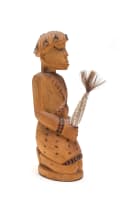
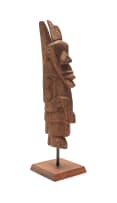
Julius Chauke
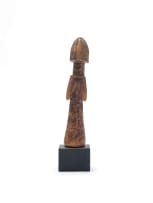
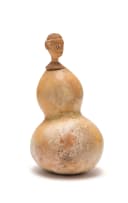
Nhunguvani Stoppers, two
About the SessionPreviously a Fine Arts professor at the University of South Africa, Dr Rayda Becker spent 1988 to 2001 as senior Art Curator at the University of Witswatersrand Art Galleries in Johannesburg. During her time at Wits Art Galleries, she completed her Doctoral Thesis titled Tsonga headrests: the making of an art history category, which was published in 1999. While her specific research area was focused on the headrests made by Tsonga carvers, Rayda developed a real affinity for all things Limpopo, including figurative sculpture, medicine gourds, Nhunguvani, carved stoppers with heads as their tops, and Tsonga beadwork.
She also formed deep friendships with some of the artists from the former Venda and Gazankulu areas, namely Jackson Hlungwani, Julius Chauke, Johannes Maswanganyi, Dr Phuthuma Seoka, Nelson Mukhuba, and Noria Mabasa, among others, and often conducted field trips to their homes for research while at Wits Art Museum.
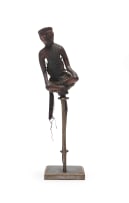
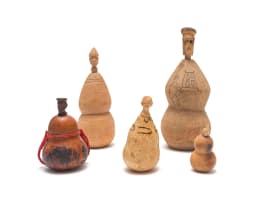
This curated selection of items from Rayda’s collection includes two Angels by Jackson Hlungwani, whom she accompanied to an exhibition at the Watari Museum in Japan in 1995, where the his ‘Altar of God’, originally from his hilltop sanctuary in Mbhokota in Limpopo, was exhibited, later forming part of the Wits Art Museum’s collection. Also included is a group of Nhunguvana by Tsonga artists, and a carved figure of a Sangoma by Johannes Maswanganyi that also doubles as a Nhunguvani.
Dr Rayda Becker was well known for never settling on a single point of view – whether approaching an exhibition or writing about a specific African art-related topic – and for always opting for a position of multivalency, which led her to be known as Rayda ‘Options’ Becker among many friends and academics in her field.
This auction includes works by the South African artists who loved her dearly, including a significant work by Robert Hodgins. This offering reflects Rayda’s never-ending curiosity and her unique interpretation of the world around her.
Strauss & Co is delighted to announce that, in accordance with the wishes of the family, a portion of the proceeds from this auction will be donated to the Dr Rayda Becker Art Scholarship Fund. This contribution will support an emerging artist in the development of their career.
Special thanks to Fiona Rankin-Smith for the written contribution and for curating the sale which will be on view at our Cape Town office.
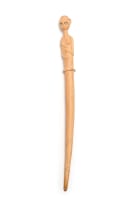
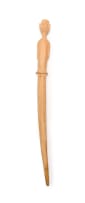
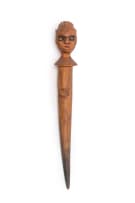
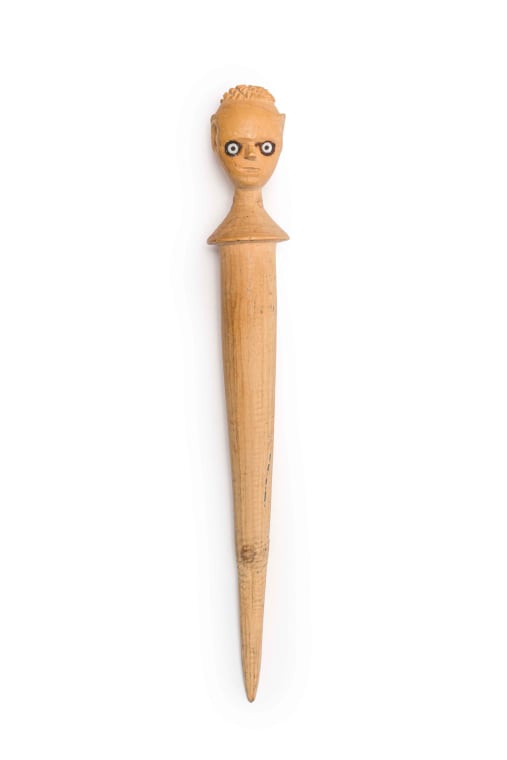
LOT 315
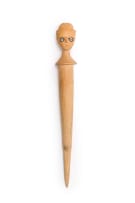
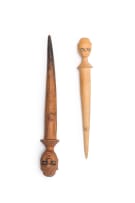
Julius Chauke
Nhunguvani Stoppers, two
Incl. Buyer's Premium & VAT
About this Item
Provenance
Late Estate Dr Rayda Becker.
Notes
Rayda Becker and I began our journeys into the field of African art studies at the same time. In 1970/71, she and I were enrolled in the same History of Art Honours class in the University of the Witwatersrand’s History of Art Department. As Rayda was ten years my senior, I stood somewhat in awe of her much admired and enduring charm and her ability to navigate social contexts. Part of our responsibilities as bursary students was to tutor first-year students, and Rayda was tasked with teaching some rudimentary elements of African art to the Fine Arts students, something of which I was quietly envious.
After completing our Honours degrees, Rayda and I both registered for Master’s degrees in Art History. Rayda chose to work on aspects of European Modernism, while I worked on aspects of African art history. She then took up a post as a lecturer in History of Art at the University of South Africa, where she served for many years before returning to the University of the Witwatersrand in the 1980s as curator of the Gertrude Posel Gallery, which later became the University Art Galleries. During her tenure there, Rayda began research for her PhD on Tsonga headrests, ironically under my supervision, which entailed fieldwork in Mpumalanga and Limpopo Province. This travel brought her into close contact with a number of artists in the region, and she established strong relationships with many of them, including Jackson Hlungwani, Johannes Maswanganyi, Julius Chauke and Phutuma Seoka. She collected many of their works, some of which are on auction here.
By the time Rayda completed her PhD in 1999, most of these artists had become familiar names in the Johannesburg and wider South African art world, and some had achieved international recognition. Rayda accompanied Jackson Hlungwani and his Altar of God to Japan on one memorable trip. Other artists, however, did not enter those circles and continued to work consistently for local patrons, as was the case with Julius Chauke, whose wonderful medicine gourd stoppers have a particular charm but who never ventured beyond this sphere. All of these artists are represented in the collections of Wits Art Museum, Johannesburg Art Gallery and the South African National Gallery, as well as in collections overseas. A number of publications contain essays written by Rayda on these artists and on the historical works that frame them.
After her retirement from Wits and her move to the Cape, Rayda did not continue this line of research, turning her attention instead to aspects of heritage collections. Nevertheless, she has left a legacy of scholarship and collected objects that form an important part of South African art history.
Special thanks for the written contribution to Anitra Nettleton, Professor Emeritus, Wits Art Museum and Wits School of Arts, University of the Witwatersrand.
More from Spirit and Substance