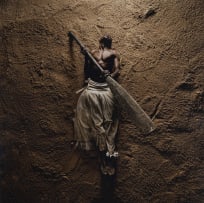
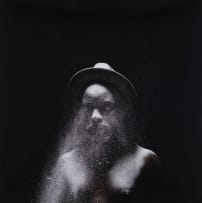
Pieter Hugo
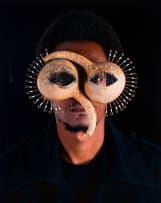
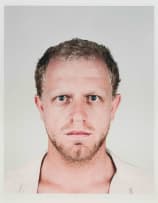
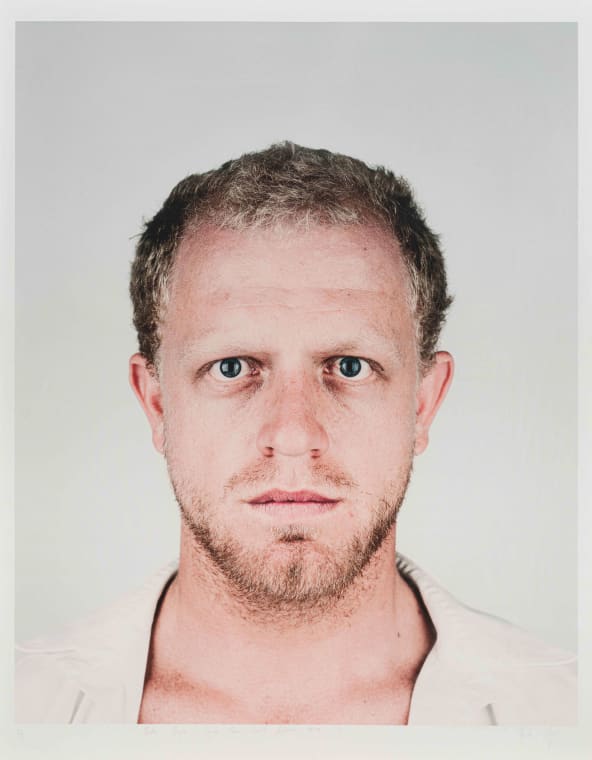
Pieter Hugo, Cape Town, South Africa, 2004, Looking Aside Series
LOT 57
Pieter Hugo
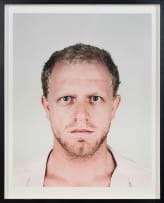
Pieter Hugo, Cape Town, South Africa, 2004, Looking Aside Series
Incl. Buyer's Premium & VAT
About this Item
signed, dated, numbered 1/3 and inscribed with the title in pencil in the margin; inscribed with the artist's name, title, the medium and date on a label adhered to the reverse
Literature
Michael Stevenson (2005) South African Art 1840 - Now, Johannesburg: GAU, illustrated in colour, unpaginated.
Pieter Hugo (2006) Looking Aside, California: Punctum Press, illustrated in colour.
Notes
In 2003, towards the end of a residency at the Italian communication centre Fabrica, Pieter Hugo began a portrait series depicting South Africans with albinism. The work marked a decisive turn towards the stark, frontal studio style that would become a signature of his practice. Using artificial light and frontal address, Hugo’s work drew on the visual language of British art director Terry Jones and the confrontational editorial photography of Oliviero Toscani, best known for his work with Benetton and the magazine project Colors. Transposed to the South African context, where documentary photography was still largely aligned with older, inherited traditions of photojournalism, these references were both conspicuous and provocative.
Hugo was acutely aware of the ethical tensions surrounding colour documentary photography in Africa. Post-colonial critics increasingly questioned the voyeuristic licence historically afforded to white photographers working on the continent. Hugo responded by foregrounding his own visibility and presence within the photographic encounter: “I am six foot tall, I have blond hair and blue eyes – I stick out like a sore thumb … Often I am as intently observed as the people I photograph. I am the novelty factor, not the other way round.”1 Rather than pursue the rhetoric of the candid moment, he embraced a method based on prolonged engagement, mutual observation and deliberate staging.
This self-portrait forms part of that reckoning. Photographed in the same manner as the subjects of his portrait series, it extends Hugo’s scrutiny to himself. While the image does not appear in his debut photobook Looking Aside (2006), the publication includes a portrait of his grandmother, underscoring the degree to which Hugo’s forensic approach encompassed both strangers and intimates. Self-portraiture has remained an intermittent but significant element of his practice, resurfacing in later bodies of work including Kin (2006–13), Nollywood (2009) and There’s a Place in Hell for Me and My Friends (2011–12). In recent years, Hugo has returned to his earlier frontal style in projects such as Solus Vol. I (2022), which presents portraits of non-binary, street-cast models.
1. Sean O’Toole, interview with Pieter Hugo, Cape Town, 4 November 2004
Exhibited
Stevenson, Cape Town, Looking Aside, 2004, another example from the edition exhibited.
Stevenson, Cape Town, South African art 1840 – now, 19 January - 5 February 2005.
Brodie/Stevenson, Johannesburg, Self/Not-Self, 19 Feb to 26 March 2009, another example from the edition exhibited.
Provenance
Property of a Gentleman.
More from Portway to Cohen: A Collector’s Legacy and Other Properties