ONLINE AUCTION | 23 JANUARY – 24 FEBRUARY 2026
Strauss & Co is pleased to introduce Fibre & Form, a refreshed evolution of the Woven Legacies auction, celebrating Africa’s vibrant woven traditions alongside the sculptural beauty of personal objects. This sale highlights the continent’s rich cultural heritage while embracing a renewed appreciation for tactile arts. It also invites a reconsideration of Western notions of individuality that often overlook the communal eco-social foundations from which these works arise.
In recent years, African material culture has been rediscovered for its extraordinary skill, symbolic depth, and aesthetic refinement. What was once undervalued or narrowly categorised is now recognised as a field of genuine conceptual sophistication. A convergence of scholarship, connoisseurship, and market interest has brought new visibility to fibre-based and traditional sculptural practices, fuelling demand for works that embody centuries of accumulated knowledge, technique, and meaning.
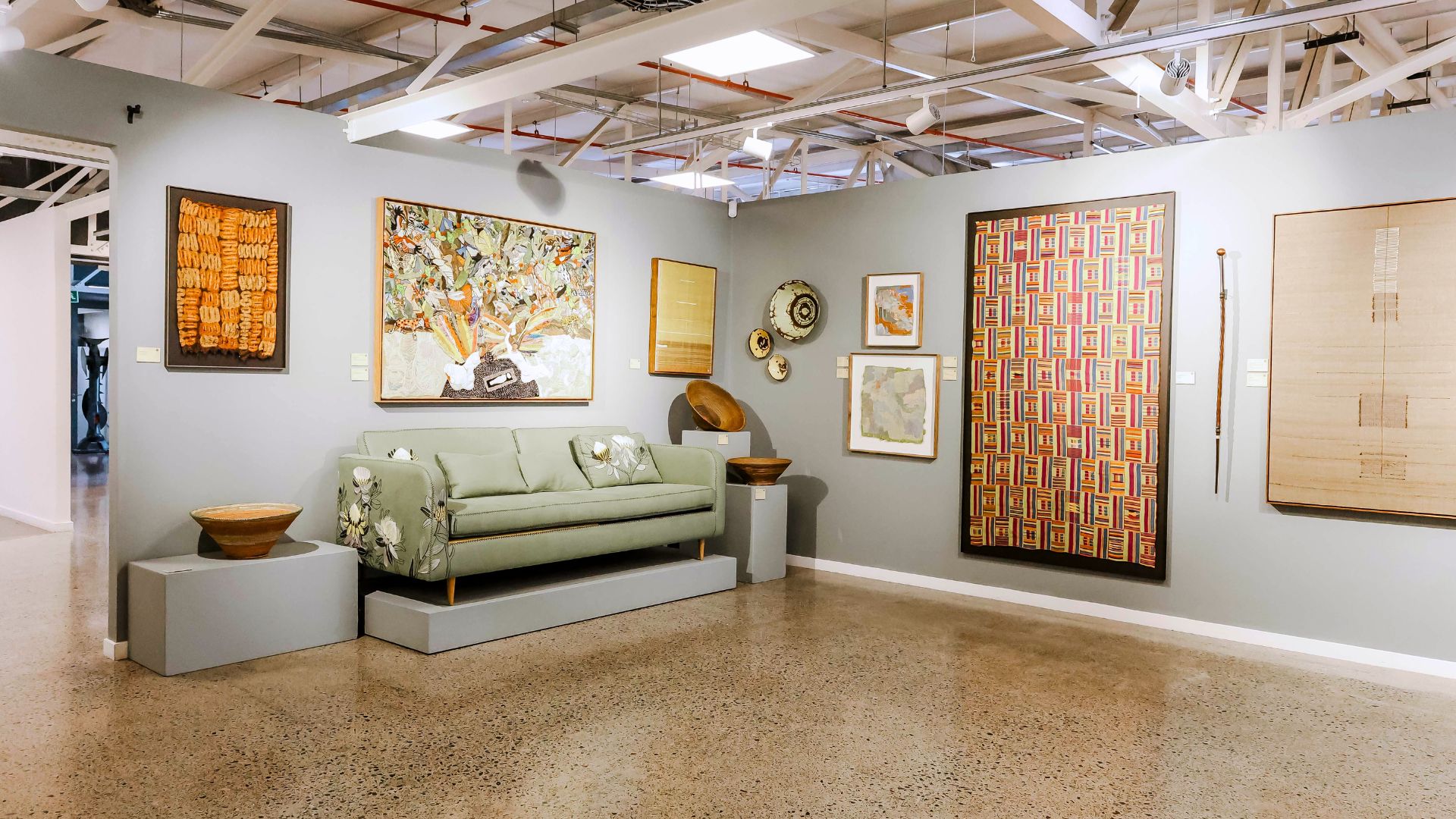
A strong contemporary thread runs throughout the sale, rooted in long-standing tradition. Works from Frances van Hasselt Studio, including the significant piece Radio Sonder Grense, continue the momentum of last year, offering hand-woven compositions that quietly explore landscape, materiality, and ecological attention. Leila Walter’s natural-fibre works bring a contemplative sensitivity, using texture and restraint to evoke states of interior and environmental stillness.
Contemporary textile practice is further represented by Sett & Beat, whose large-scale Children of the Same Sun echoes traditional West African strip-weaves while advancing a socially engaged approach to fibre. Through the inclusion of works from Mogalakwena Craft Art Development Foundation, Tintsaba and Mapula we recognise the contribution of rural initiatives to the fibre arts of Southern Africa. Amy Rusch’s works in synthetic materials offer pointed commentary on waste and evoke geological time, inviting viewers into a slowed, reflective encounter. Patrick Bongoy’s sculptural forms in recycled rubber extend the conversation into environmental materiality.
Selective historic textiles offer a vital counterpoint and illuminate the deep sources that continue to inspire contemporary makers. A focused group of Mbuti barkcloth, Kubavelvets, and Ewe prestige cloths appears not as an ethnographic survey but as a set of works whose abstraction, geometry, and surface intelligence remain profoundly influential.
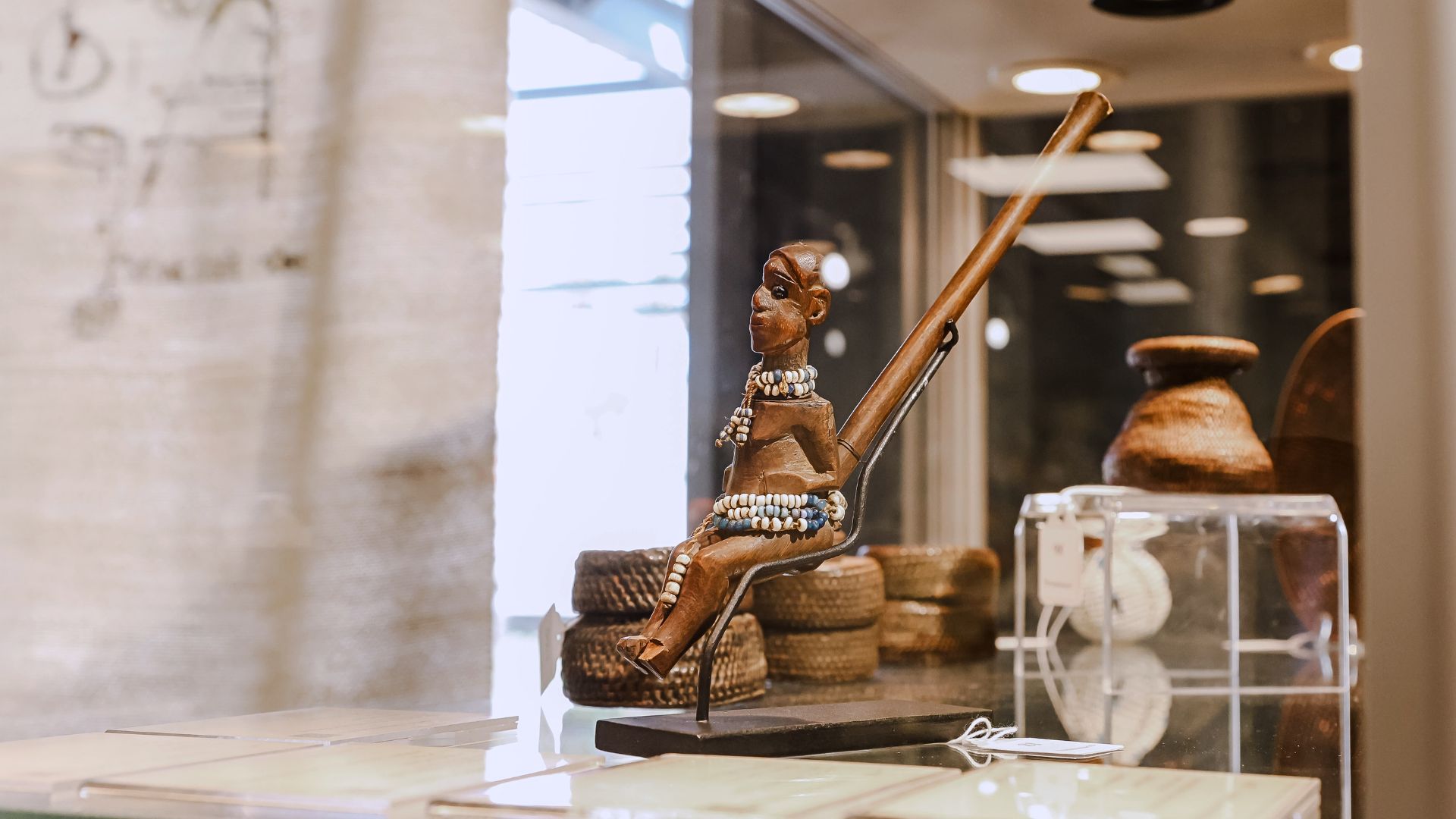
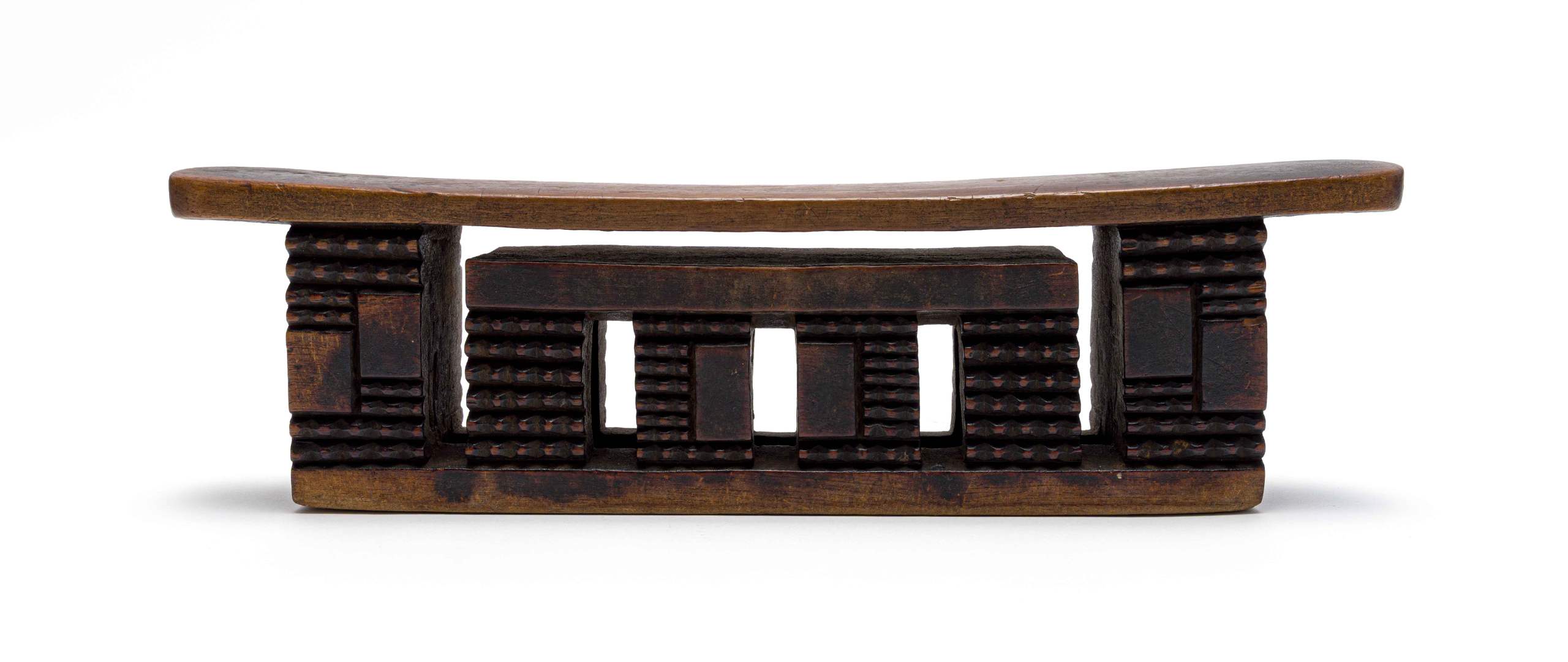
Fibre links to Form through finely crafted personal objects, including nineteenth-century wirework on Zulu snuff gourds and a Zulu wire-bound prestige club. The category is further represented by a rare nineteenth-century figurative pipe, bone snuff spoons, prestige staffs, and other notable carved works. Of particular importance are the published Zulu headrests from the Bruce Goodall Collection, admired for their sculptural balance and architectural clarity.
The sale also includes contemporary fibre spanning to form sculptural contributions, including Walter Oltmann’s evocative work, Ferox, and a nature inspire couch from the Casamento studio.
Woven Legacies: Fibre & Form 2026 positions Africa’s fibre artists and makers as leading voices in contemporary material culture, affirming that textile and tactile expression—whether woven, embroidered, coiled, carved, or sculpted—remains one of the most dynamic and innovative fields in African art today.
On view in Cape Town and online from 23 January – 24 February 2026 at Strauss & Co, 2nd floor Brickfield Canvas, 35 Brickfield Road, Woodstock, Cape Town
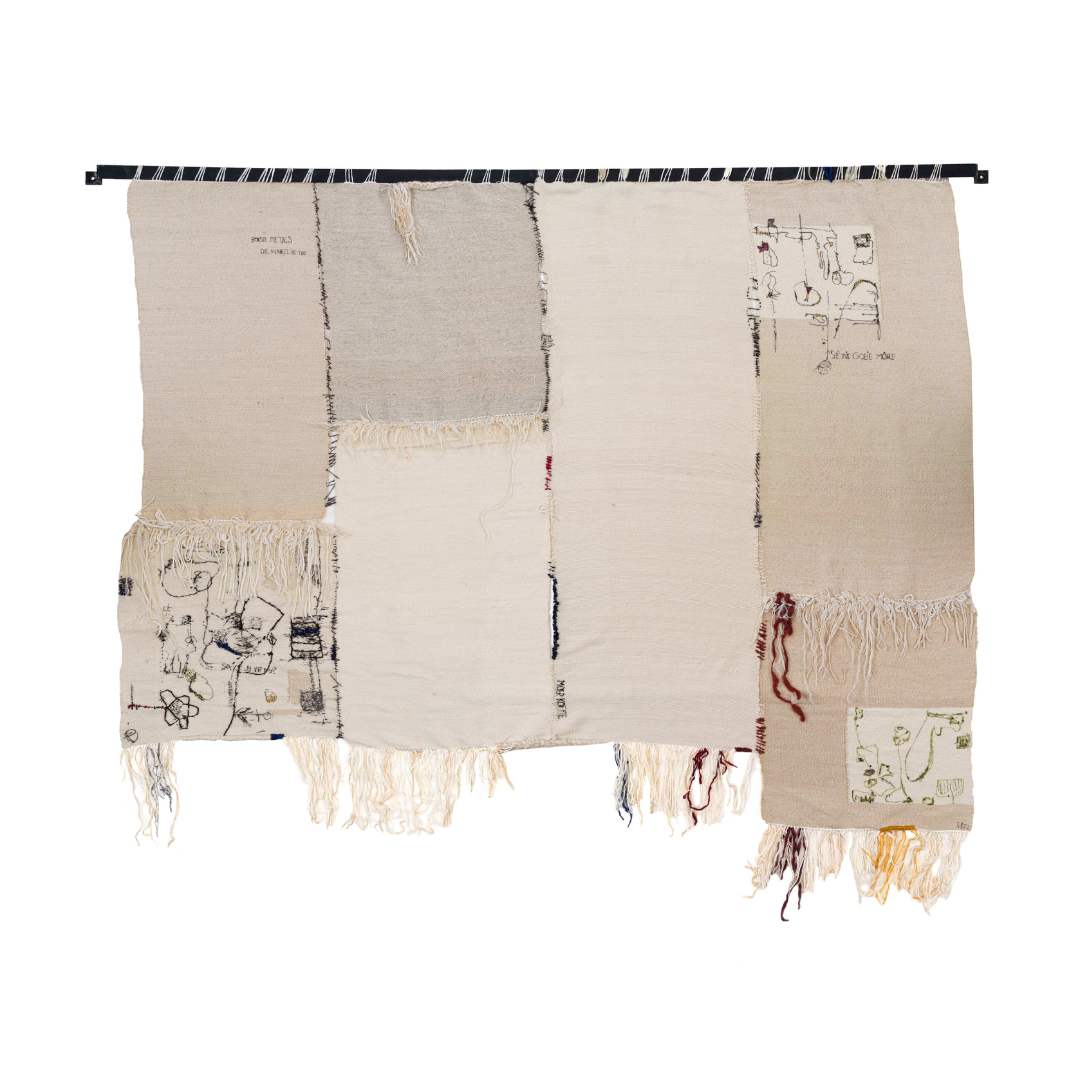
Frances van Hasselt Studio, Radio Sonder Grense, R 75 000 – 85 000
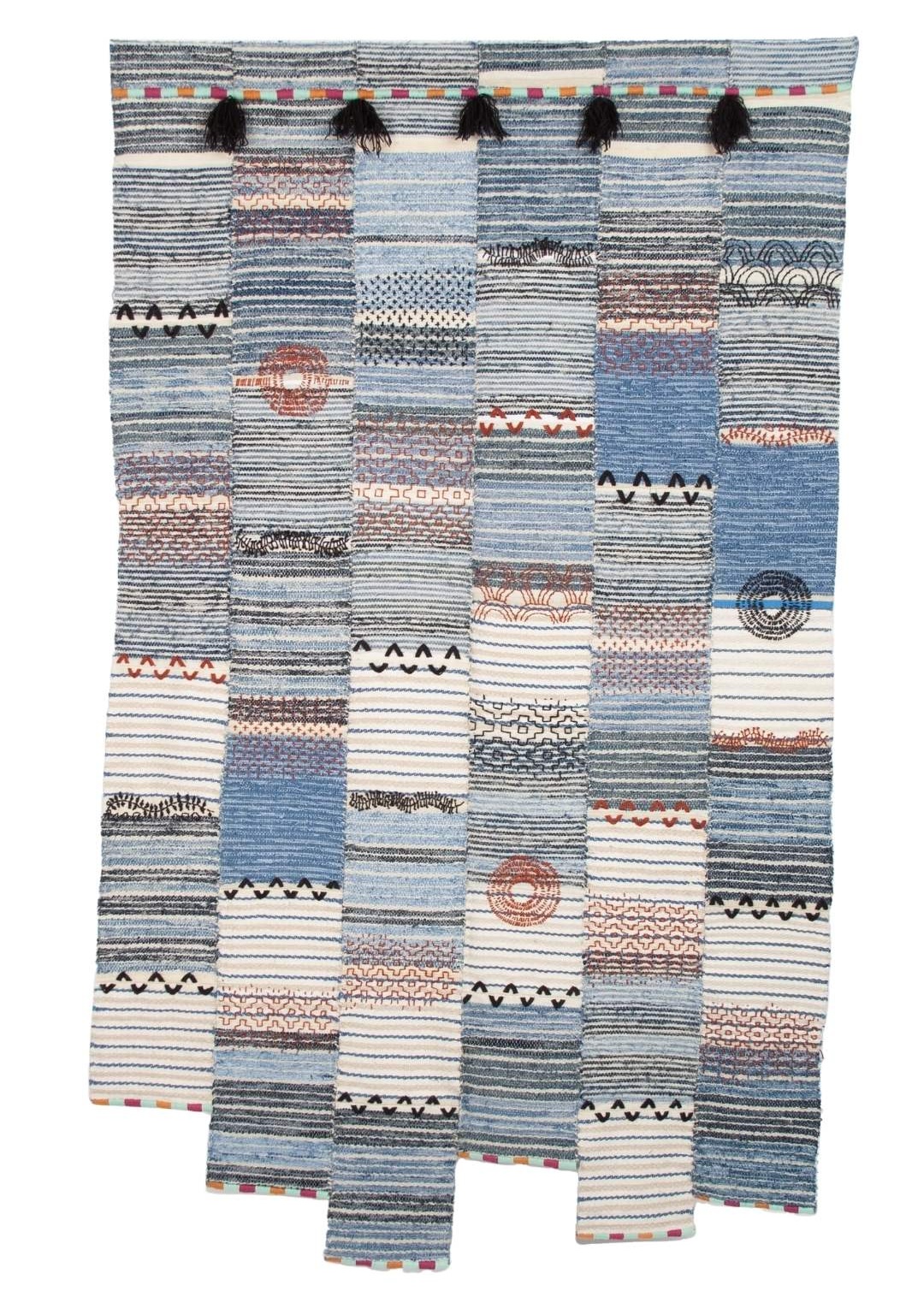
Sett & Beat, Children of the Same Sun, R 75 000 – 85 000
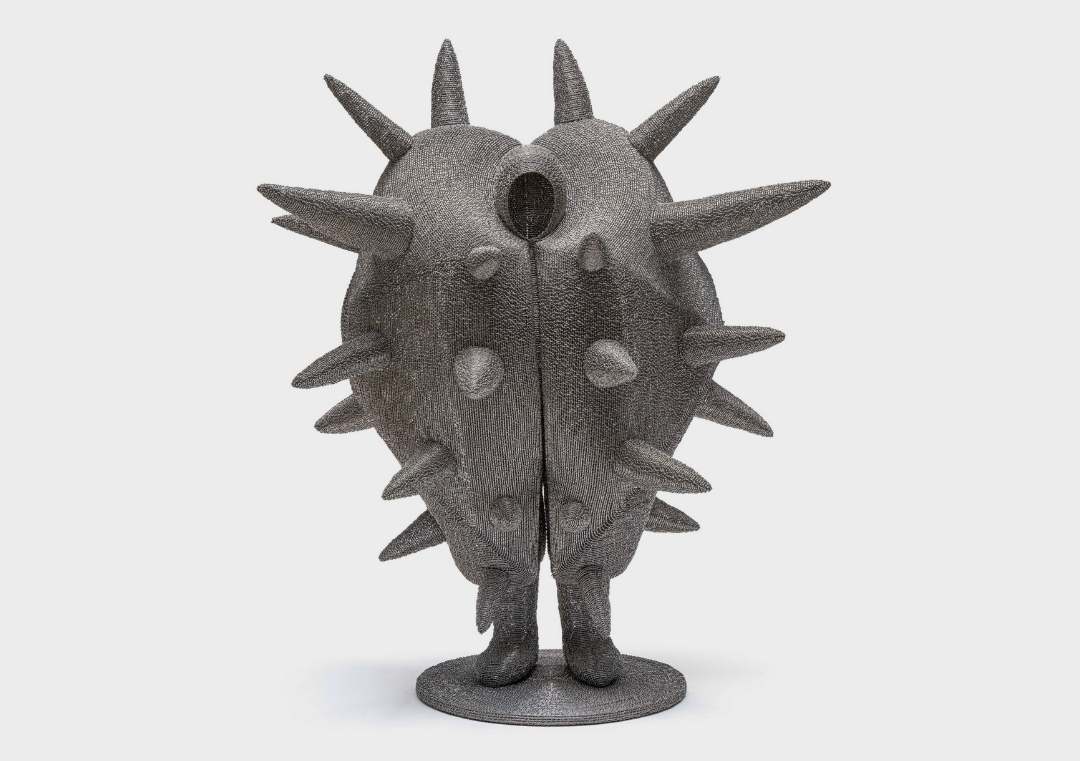
Woven Legacies:
Fibre & Form
23 January – 24 February 2026
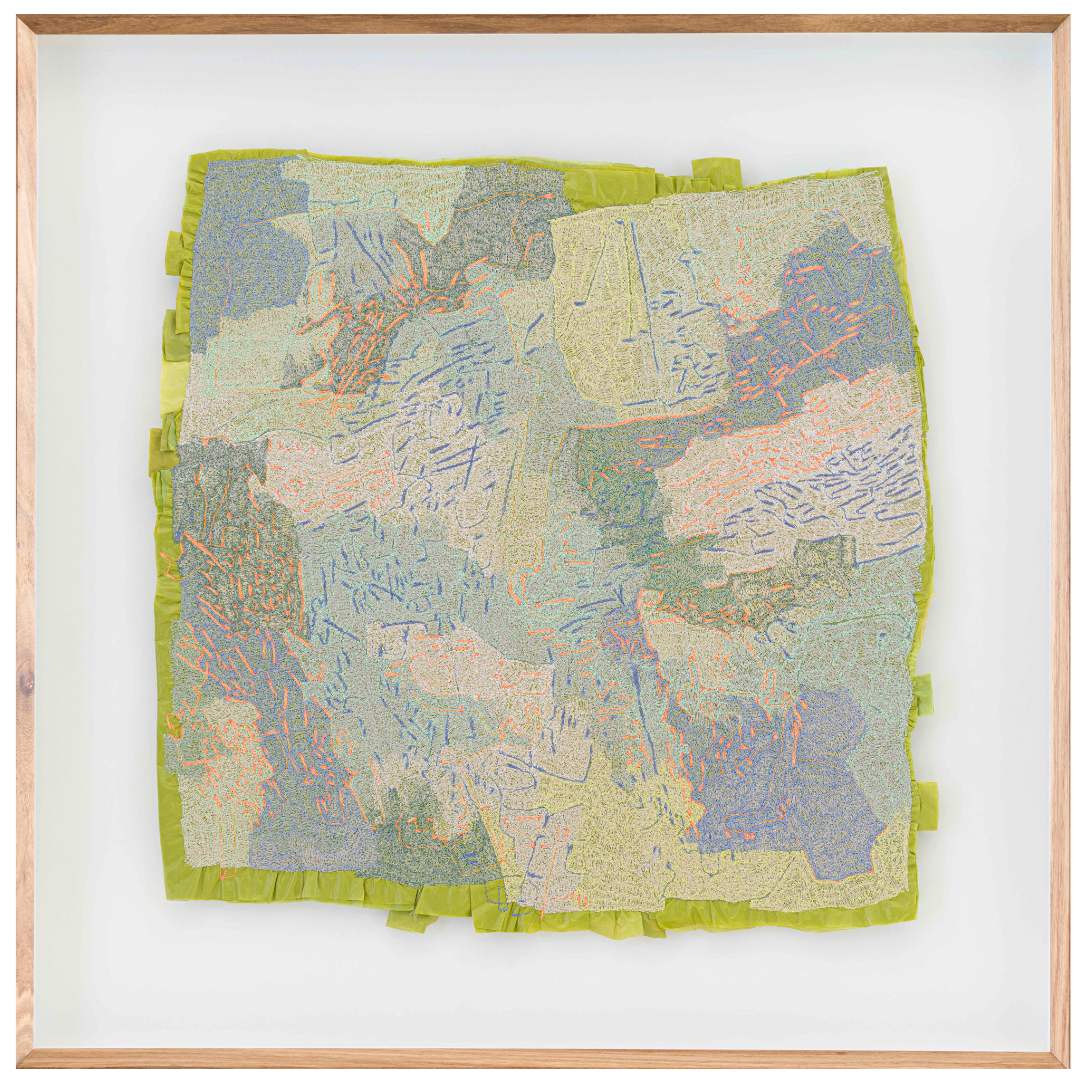
Amy Rusch, Sedimentary Wayfinding – (process 2)
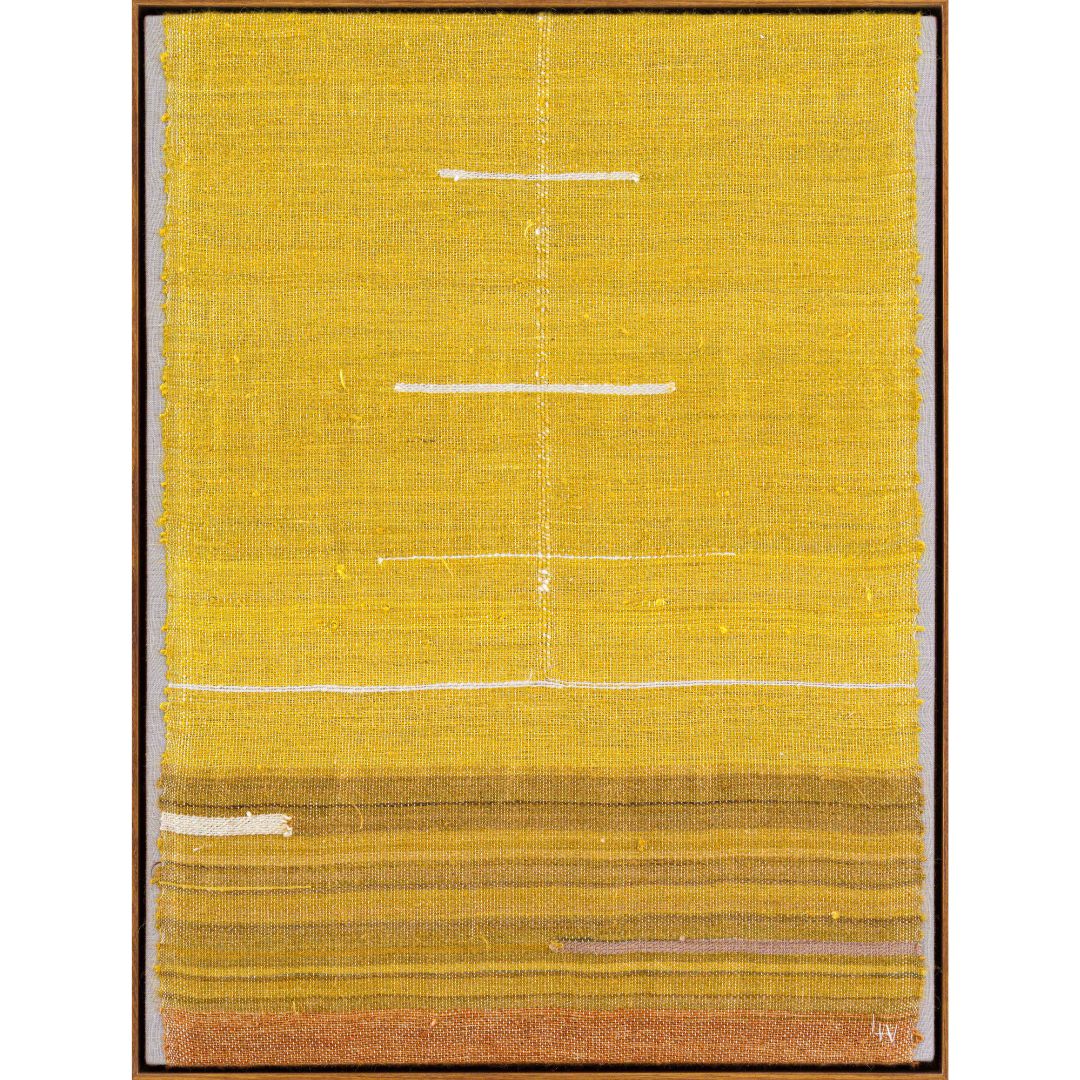
Leila Walter, Becoming Radiance
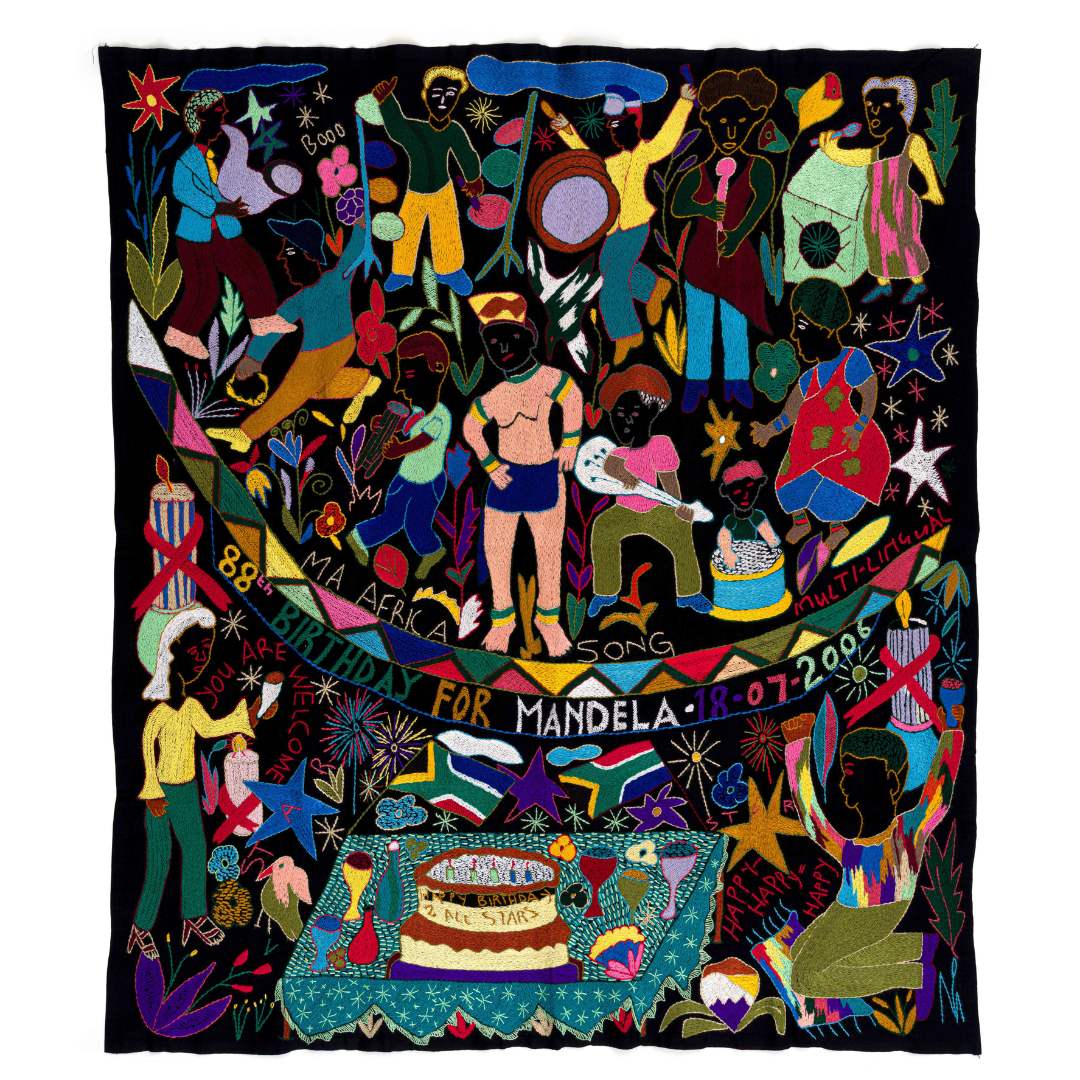
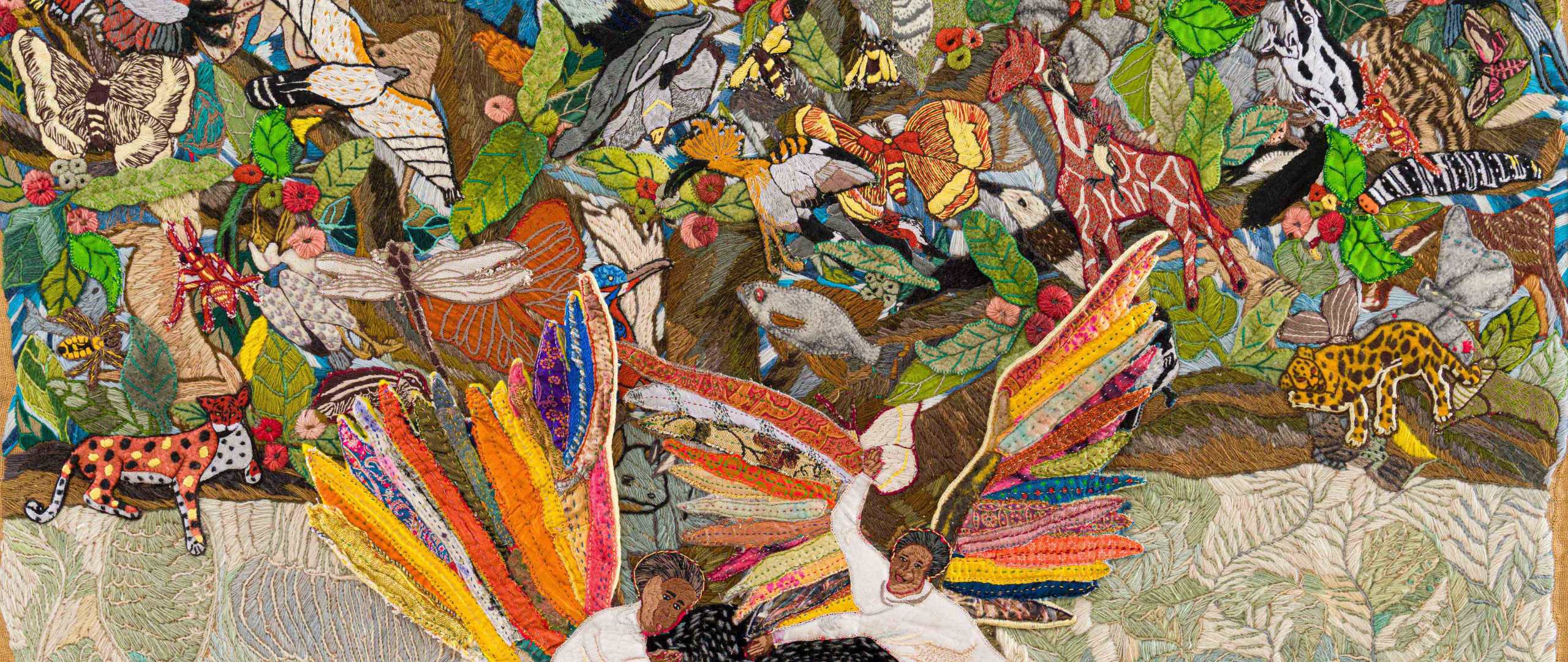
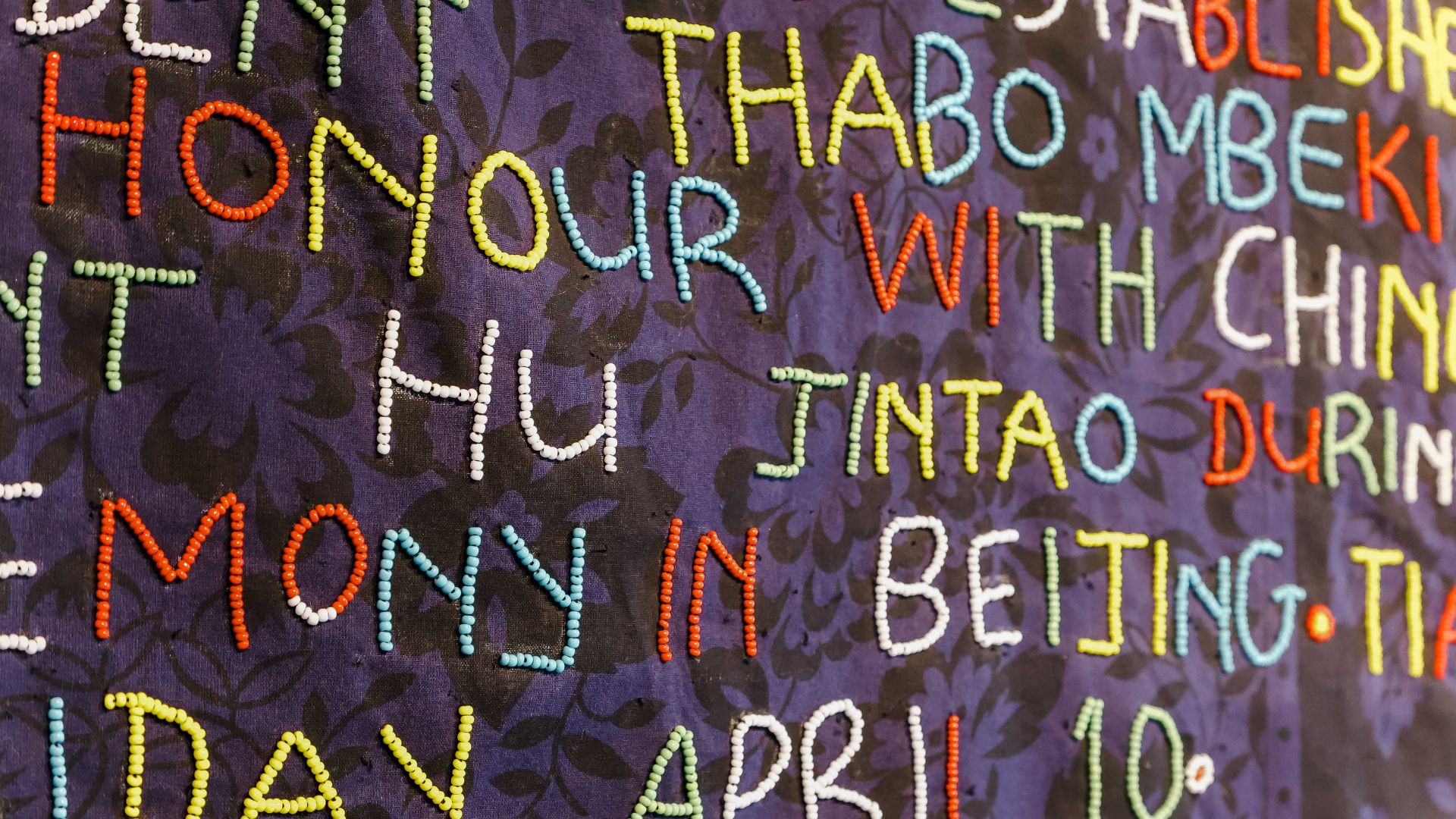
Mapula Embroidery Project, Mandela’s 88th Birthday
Woven Legacies: Fibre & Form 2026 positions Africa’s fibre artists and makers as leading voices in contemporary material culture, affirming that textile and tactile expression—whether woven, embroidered, coiled, carved, or sculpted—remains one of the most dynamic and innovative fields in African art today.


About
Traditional Textiles
The traditional textile offering in Fibre & Form 2026 derives from a collection assembled by Michael Heuermann from 1993 onward. Formed through annual field trips to West Africa and long-standing relationships cultivated via African Image, he acquired works of exceptional cultural, historical, and aesthetic significance.
Among the highlights is a fine Dida ceremonial cloth, woven through the now possibly extinct method of tubular oblique interlacing and recognised by UNESCO as an important form of intangible heritage. This example embodies the Dida people’s highly developed understanding of colour harmony, rhythmic patterning, and symbolic surface design, achieved through complex resist-dyeing processes unique to central Ivory Coast.
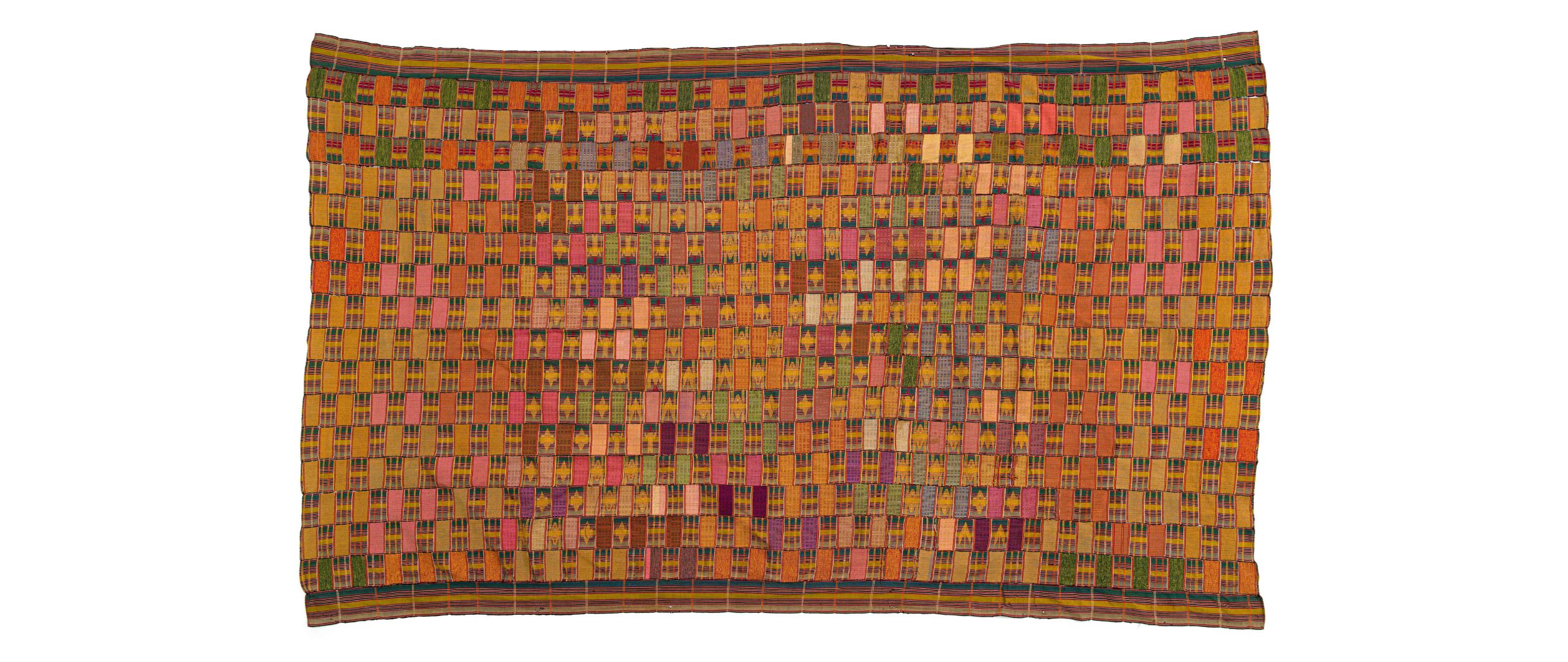
The two Ewe prestige cloths demonstrate the technical exactitude and visual intelligence that define the weaving traditions of Ghana and Togo. Produced on the double-heddle narrow-strip loom, each cloth is woven as a single continuous strip, then cut and assembled into a unified composition. Supplementary-float motifs introduce symbolic forms and heightened texture. Their geometry, saturated colour, and rhythmic interplay informed the experimentation of Western modernists such as Paul Klee, who drew heavily from African visual languages.
The Mbuti barkcloths from the Ituri Forest bring a contrasting aesthetic: fluid, improvisational, and deeply tied to cosmology. Painted by Mbuti women using natural pigments, their dispersed patterns and syncopated structures echo the group’s musical and performative sensibilities.
The Kuba and Shoowa raffia textiles offer a further dimension, with embroidered and cut-pile surfaces that display one of Africa’s most sophisticated traditions of geometric invention. Their interplay of variation and order continues to inspire contemporary designers.
Together, these works stand among Africa’s most conceptually refined textile traditions and remain enduring sources of influence for makers today.
About
Basketry
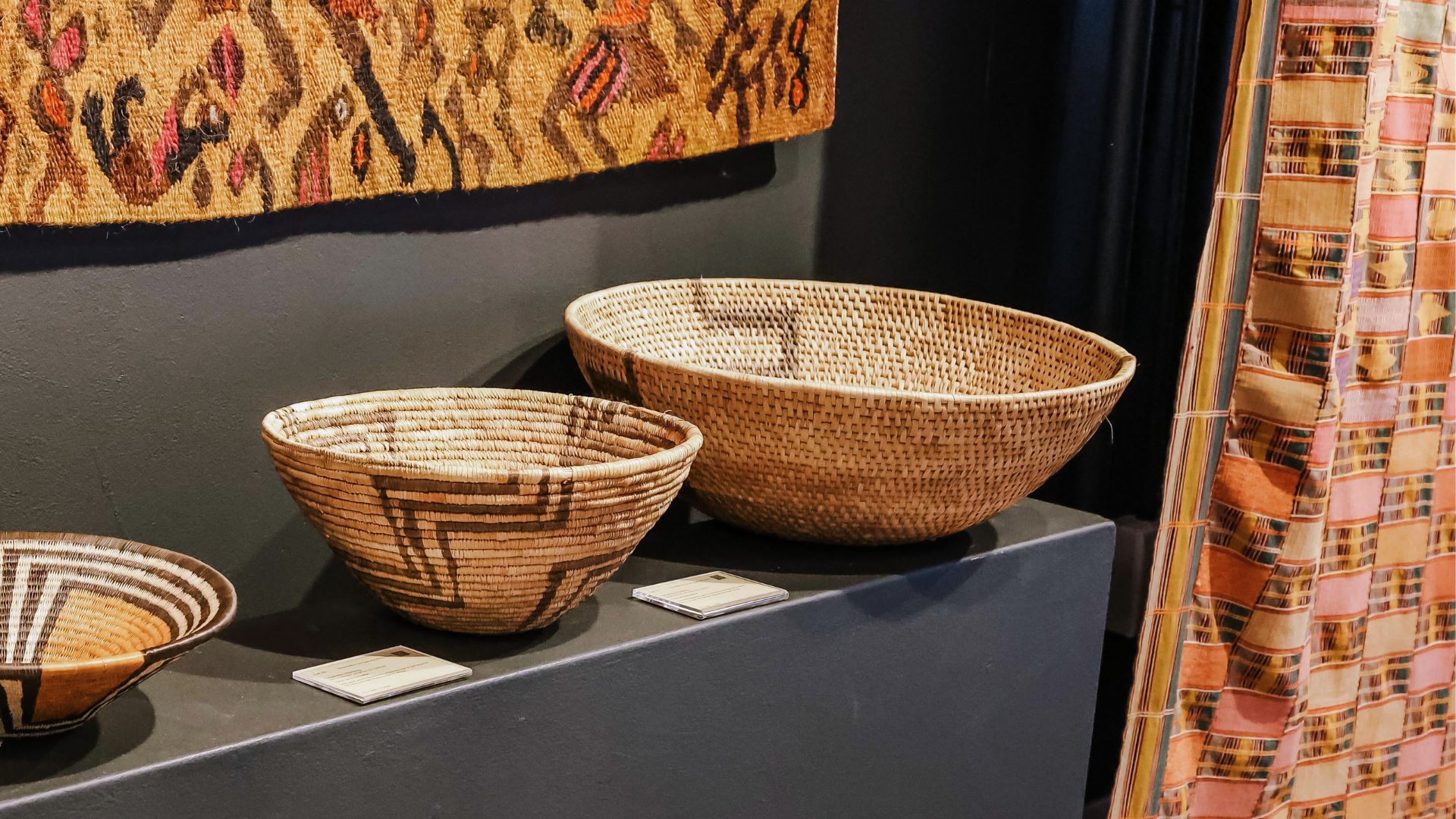
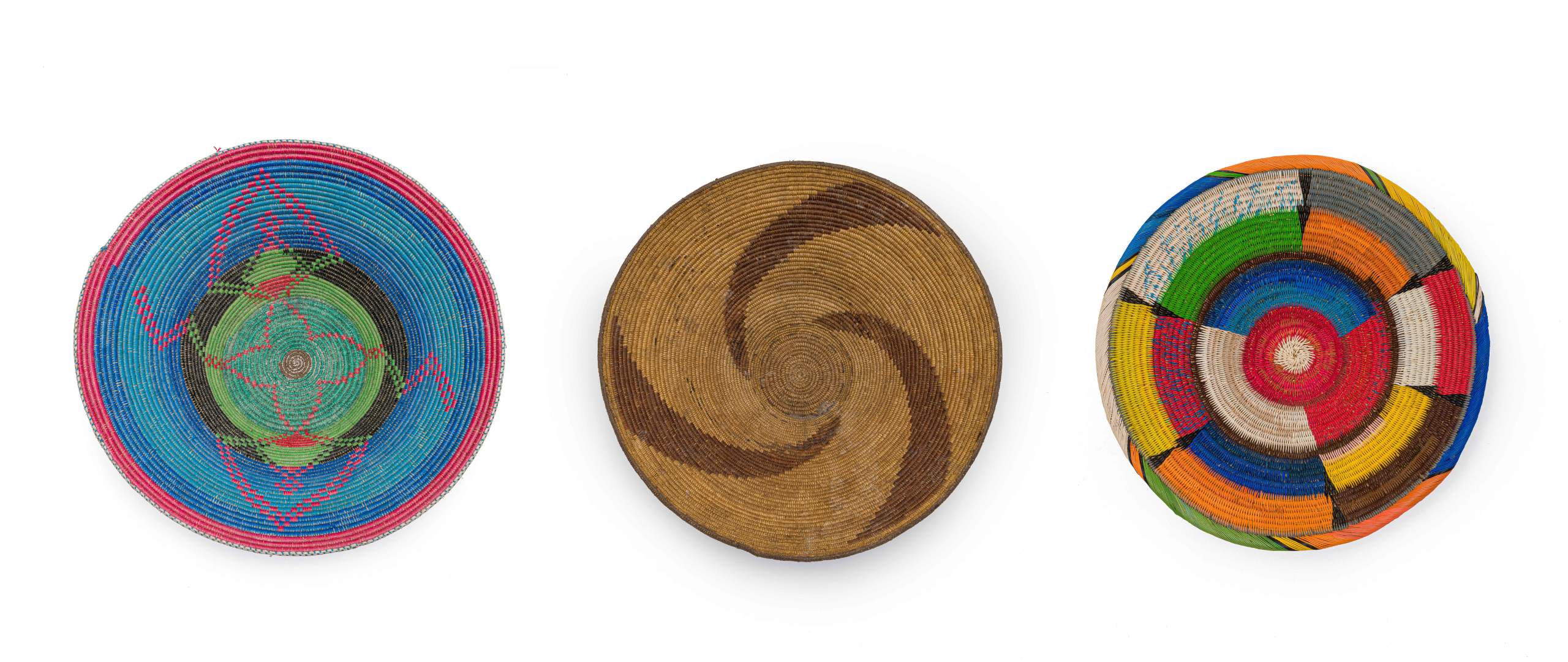
The basketry selection in Fibre & Form 2026 presents a broad view of southern and central Africa’s long-standing fibre traditions, alongside contemporary interpretations that extend the medium’s expressive range. Seldom-seen traditional baskets from Angola and the wider regiondemonstrate the technical refinement of women weavers who work with plant fibres sourced from their immediate environments. These pieces reflect a deep knowledge of coiling, plaiting, and openwork structures, where pattern is not merely ornamental but communicates identity, place, and social continuity. The sale also includes a fine group of early 20th-century Kuba baskets, as well as very early examples from the Lozi, Zambia, whose basketry was already admired in Europe by the mid-19th century.
Several works by highly skilled makers, including Thitaku Ester Kushonya and Thembisile Dlamini, show how basketry has moved into a modern artistic language, highlighting its capacity to function simultaneously as utilitarian object and expressive artwork. Balancing these are contemporary wire baskets, whose spiralling geometries and vivid colour fields demonstrate how industrial materials can be woven with the same precision and conceptual clarity as plant fibre, together with the minimalist copper baskets of Enock Ngubane. These works form a lineage of innovation, transforming a historically domestic craft into a striking contemporary art form.
Together, the baskets in this sale illustrate the durability, adaptability, and artistic intelligence of African fibre traditions, rooted in utility elevated through imagination.
About
Form
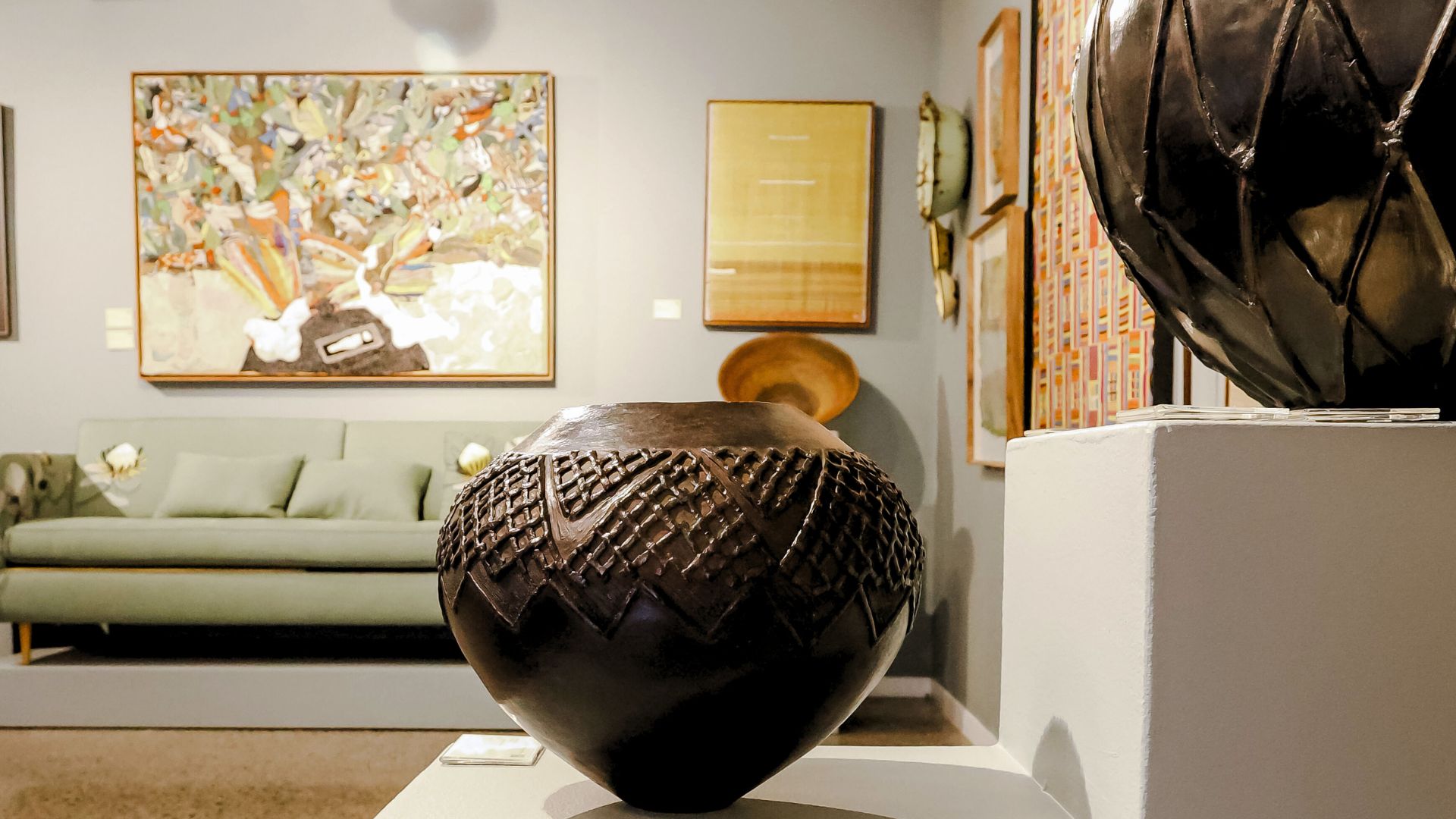
The Form component of Fibre & Form 2026 highlights the sculptural intelligence embedded in Africa’s personal and utilitarian objects—works that distil identity, status, and cultural meaning into refined, tactile form. These pieces, shaped by hand and softened through long use, demonstrate a precision of line and sensitivity to proportion that aligns them as closely with sculpture as with domestic function.
The selection includes fine 19th century prestige objects, such as a wire-bound Zulu iwisa, where dense wood and precisely wrapped metal bind reflect status and lineage, and a rare South Nguni figurative pipe, sculpted in the form of a woman’s torso with beaded ornament, stands out for its expressive interplay of curves and carved detail. Several snuff gourds and bone snuff spoons demonstrate the miniature artistry discernment embedded in even the smallest objects. A fine group of Zulu headrest, from the Bruce Goodall Collection. The works by Woya Miya and Ntuli Mchunu embody the architectural clarity and balanced geometry that define the form: elegantly tapered platforms, meticulously fluted legs, and amasumpa embellishments carved with perfect symmetry. These headrests are intimate objects, yet they carry the gravitas of masterful design.
Together, these works express the sculptural language of African form: objects shaped for the body, carried through life, and imbued with identity—where utility, artistry, and cultural presence converge. Found in personal adornment. Copper-wire inlay, geometric staples, deep bowls, and delicately incised cross-hatching reveal the refinement, symbolism, and aesthetic.